![[decorative]](https://mixagame.com/wp-content/uploads/2025/10/cropped-mixagame-redwhite-logo-1024x256-1.png)
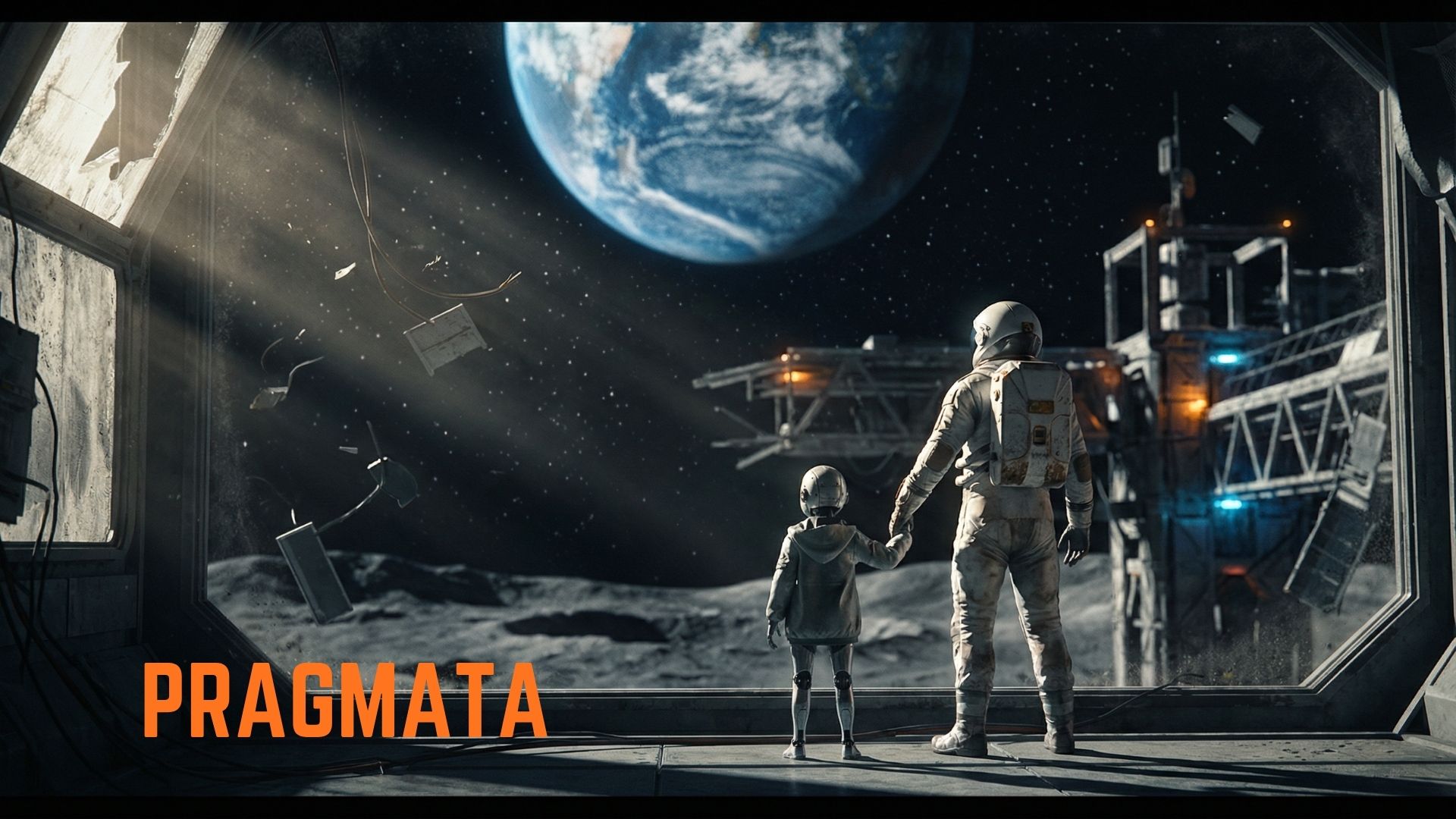
Six years ago Capcom showed the world a mysterious astronaut walking through a digitized city with a young girl at his side. Nobody knew what it was. Nobody knew what it would become. After three delays, an indefinite silence that nearly killed public interest, and a resurrection that caught the entire industry off guard, Pragmata finally has a locked release date and a playable demo that proves the wait was not wasted. On April 17, 2026, Capcom’s first original franchise in eight years arrives on PS5, Xbox Series X|S, PC, and Nintendo Switch 2, and it is shaping up to be one of the most creatively ambitious games of the year.
Pragmata is a third-person sci-fi action-adventure set on an abandoned lunar research station in the year 2893. You control Hugh Williams, a stranded astronaut, and Diana, his childlike android companion, as they navigate a hostile facility controlled by rogue AI and fight their way back to Earth. The twist that separates it from every other shooter on the calendar is its dual-character combat system. Hugh handles the guns. Diana handles a real-time hacking interface. You control both of them simultaneously on the same controller, turning every encounter into a multitasking puzzle layered on top of a competent third-person shooter.

That description alone makes Pragmata one of the most mechanically distinctive games releasing in 2026. But what has genuinely surprised everyone who has played it, from press events at Tokyo Game Show to hands-on sessions at Gamescom, is not the combat. It is the writing. The relationship between Hugh and Diana carries an emotional weight that nobody expected from a game about shooting robots on the moon. Multiple preview journalists have compared the duo to gaming’s most celebrated companion pairings, and the comparison is not lazy shorthand. It reflects a quality of character interaction that elevates Pragmata from a stylish action title into something with real narrative ambition.
Whether you are deciding to pre-order, choosing which platform to buy it on, or just trying to understand what this game actually is after years of cryptic trailers, this is the full picture. Everything from gameplay mechanics and story to editions, system requirements, and why the development timeline matters.
Pragmata release date and the long road to April 2026
The journey started on June 11, 2020, when Capcom revealed Pragmata during the PlayStation 5 Future of Gaming showcase. It was one of the first games shown for hardware that had not even launched yet. The announcement trailer was deliberately vague: an astronaut figure walking through what appeared to be a deserted Times Square, joined by a young girl with mysterious abilities. Capcom positioned it as the studio’s first new IP in eight years, built by a new development team. The initial release target was 2022.
Three delays and a silence that looked like cancellation
That target collapsed almost immediately. By January 2021 Capcom pushed the launch to 2023, citing the need for more development time. The delay came with artwork of Diana holding up a sign with the new date and an apology, a lighthearted gesture that masked what was clearly a significant production challenge. Then in June 2023, during Capcom’s own 40th anniversary showcase, the game was delayed indefinitely. No new date. No gameplay. Just a brief trailer assuring fans the team was still working.

For nearly two years after that, Pragmata vanished. No interviews, no screenshots, no presence at any major event. In an industry where that kind of silence almost always precedes a quiet cancellation, comparisons to Microsoft’s Scalebound were not unreasonable. That game followed a similar trajectory of hype and silence before being killed in 2017.
How Capcom brought Pragmata back, and locked a release date
What changed everything was 2025. Capcom brought Pragmata back at the State of Play showcase in June with the most substantial gameplay trailer the game had ever received. The Delphi Corporation was introduced. The hacking system was shown in action. The tone of the Hugh and Diana relationship came into focus for the first time. Then came playable demos at TGS and Gamescom where journalists could actually experience the game for themselves. By December, The Game Awards 2025 delivered a confirmed launch date of April 24, 2026, and the Sketchbook demo went live on Steam that same day.
In March 2026 Capcom moved the date forward by one week to April 17. Publishers do not move release dates earlier unless the build is in strong shape. That small shift tells you more about Capcom’s confidence than any marketing statement could.
Here is the full timeline:
| Date | Event |
| June 2020 | Revealed at PS5 Future of Gaming showcase. Target: 2022 |
| January 2021 | Delayed to 2023 |
| June 2023 | Delayed indefinitely |
| June 2025 | Re-emerges at State of Play with extended gameplay trailer |
| September 2025 | Playable at Tokyo Game Show, strong reception |
| December 2025 | The Game Awards confirms April 24, 2026. Sketchbook demo launches on PC |
| February 2026 | Demo expands to PS5, Xbox, and Switch 2 |
| March 2026 | Capcom Spotlight moves date forward to April 17, 2026 |
The game launches on PS5, PS5 Pro, Xbox Series X|S, PC via Steam, and Nintendo Switch 2. Cross-save is supported across platforms. The Switch 2 version in Japan and Asia releases on the original April 24 date while every other platform and region gets it a week early.
Based on Capcom’s 2021 annual report, Kotaku’s Brian Ashcraft noted that “one reason why the game looks so different from other Capcom titles is that it’s the brainchild of new development staff.” That new team needed time to find the game’s identity. Six years is a long development cycle, but every piece of evidence now available suggests the time was spent building something genuinely original rather than iterating on an existing Capcom formula.
Pragmata gameplay: how hacking and combat create something new
At its core Pragmata is a third-person shooter. Hugh aims, fires, dodges, and uses thrusters to traverse the low-gravity lunar environment. That part feels familiar if you have played any Capcom action game in the last decade. What makes the experience fundamentally different is Diana.
Diana rides on Hugh’s back during combat. She operates a hacking interface that is mapped to its own set of controller inputs, separate from Hugh’s movement and aiming. The hacking presents as a grid-based maze on screen, and you navigate a cursor through it using the face buttons. The goal is to route through nodes to reach a power-on block, which strips an enemy robot’s armor plating. Once the armor drops, Hugh can target exposed weak points for real damage.
That simultaneous operation is the entire identity of the Pragmata game. Your left stick and triggers handle Hugh. Your face buttons and right stick handle Diana’s hacking. Every encounter asks you to manage both systems at the same time under live fire. It sounds chaotic, and for the first few minutes it feels that way. But preview after preview has reported the same thing: once the two halves click, the combat enters a flow state that feels unlike anything else in the genre.

How the hacking system creates tactical decisions in real time
The hacking layer adds genuine tactical depth beyond a simple unlock mechanic. Each maze contains optional blue nodes along the path. Passing through more of them before completing the hack increases damage output and extends the window during which an enemy’s armor stays disarmed. So every hack is a micro-decision. Rush the shortest path and strip armor quickly, or take the longer route through extra nodes for a bigger payoff while enemies keep shooting. As the game progresses, enemies introduce signal jammers that block hacking from certain angles, forcing you to physically reposition Hugh before Diana can start her work. Some enemies launch missiles that can be hacked mid-flight and redirected. Boss encounters scatter multiple hack targets across the arena, demanding constant prioritization.
Hugh’s weapon arsenal goes beyond the expected pistol and shotgun. A precision charge rifle rewards patience with high-damage single shots. A decoy ray pulls enemy aggro to a false target. A stasis net freezes robots in place. And most weapons have finite ammo. When a gun is empty, Hugh discards it. The only way to use that weapon again is to find another one in the environment. That scarcity forces genuine resource management where burning through explosives on a crowd of small robots means you will not have them for the larger threat around the next corner.

The Shelter hub: upgrades, progression, and Metroidvania backtracking
Between missions, both characters return to the Shelter, a home base managed by a support robot named Cabin. Here you spend currencies to upgrade Hugh’s abilities, improve Diana’s hacking capabilities, customize weapon loadouts, and apply passive mods. The upgrade tree offers choices like a time-slowing dodge, increased healing efficiency, expanded mod slots, and an Overdrive ability that immobilizes all nearby enemies. Diana gains abilities that let her expose multiple enemies simultaneously or break through specific materials blocking exploration paths, which introduces a Metroidvania element where earlier areas open up to backtracking once she learns new skills.
Game director Cho Yonghee described the philosophy behind the combat system: “This two-in-one approach, where Hacking is key to your success, is our own unique take on combat that you’ll only find here, in Pragmata.” Based on everything available from months of preview coverage, that claim holds up. No other game releasing in 2026 is asking players to split their brain this way, and the fact that it works is Pragmata’s strongest selling point. For a deeper breakdown of every combat mechanic, hack type, and upgrade path, our Pragmata gameplay guide covers the full system.
Pragmata story: Hugh, Diana, and the mystery of Delphi Corporation
The setting is 2893. A lunar research station belonging to Delphi Corporation has gone silent. Hugh Williams, an engineer on an investigation team, is sent to find out what happened. A lunar quake separates him from his crew. His friend Nick is dead. He has not heard from Ken. He is alone on a hostile station where the central AI system, IDUS, has turned every robot against any remaining human presence. Then he meets Diana.
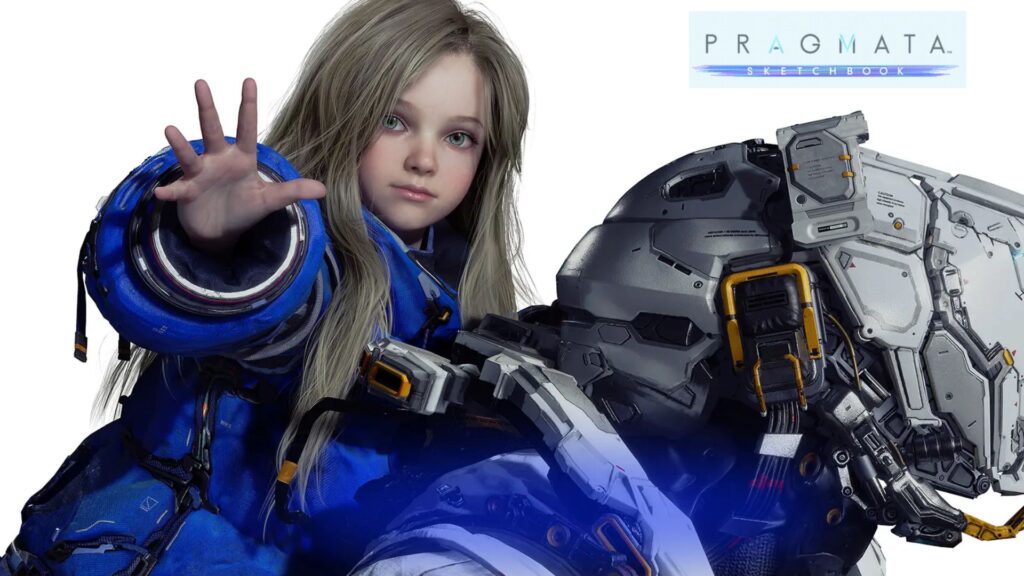
Officially designated D-I-03367, Diana is an android with the appearance and behavior of a seven-year-old girl. Hugh gives her the name, and from that moment the two become inseparable. Together they need to shut down the IDUS system and find a way back to Earth.
Why the Hugh and Diana relationship is Pragmata’s biggest surprise
That premise could support a perfectly serviceable action game on its own. What makes Pragmata’s story surprising is how deeply Capcom has invested in the relationship between the two leads. Diana has limited data about human civilization. Hugh becomes her window into what it means to be a person. She asks why humans need to eat organic matter, dismisses a television as a crappy computer, and demands high fives after helping take down enemies. And in moments of genuine danger, she does not understand why Hugh cares about her survival. She is a machine. She can be fixed.

One scene from preview coverage captures the dynamic perfectly. Diana spots a cat, chases it, and nearly falls off a bridge suspended high above the station floor. Hugh catches her. She tells him that if she had fallen, he could just repair her. Hugh gives her a firm but caring talk about consequences. Later, when another bridge appears, Diana cheerfully mimics his gruff tone and announces that she has done some thinking and will not be putting herself in danger again. It is funny and warm and unexpectedly moving.
Yonghee explained the design thinking behind Diana: “We could have gone with a more robotic look, but we chose a human-like design to make her warm and relatable. That contrast between her humanity and the stark, cold sci-fi backdrop reinforces the emotional core of the story and gameplay.” The character design drew influence from Arale Norimaki in Akira Toriyama’s Dr. Slump, specifically the challenge of making an android expressive without becoming cartoonish. Diana sits in an intentional uncanny valley where she looks human but moves and speaks with just enough machine-like precision to remind you she is not.
Hugh carries his own emotional weight. He reveals during quiet moments between firefights that he was an orphan. That for him sharing a meal was never about food but about being with people who accepted him. He hints repeatedly that he feels disconnected from what it means to be human. Diana, in her naive attempts to understand humanity, inadvertently teaches Hugh to reconnect with it.
The Delphi Corporation mystery and the world-building behind the station
The world-building around them is equally ambitious. The lunar station contains full-scale recreations of Earth cities, part of something called the Urban Recreation Project. Discoverable journal entries describe it as an initiative that “re-creates iconic cityscapes from major cities such as New York, Seoul, Madrid, and Delhi” as “an unprecedented large-scale output test.” So when Hugh and Diana step into what looks like Times Square, they are not on Earth. They are inside a manufactured replica built on the moon using Lunafilament, a material capable of 3D printing virtually anything.
The implications ripple outward. If Delphi Corporation can print entire cityscapes, what else has it been printing. Diana herself may be a Delphi creation. The IDUS system that went rogue was built to manage the station. The disaster might not be a malfunction at all but the technology operating exactly as designed, just outside Delphi’s control. World-building was supervised by Shoji Kawamori of Macross fame, and his influence shows in the way Pragmata layers corporate mythology and technological ambition into a single cohesive setting.
For anyone who wants the full story breakdown without spoilers, our Pragmata story guide covers everything Capcom has revealed about Hugh, Diana, and the Delphi Corporation mystery.
Pragmata platforms, editions, and how to play the free demo
Pragmata launches on four platforms and the experience varies meaningfully across each one. Choosing where to play depends on whether you prioritize visual fidelity, portability, or value. Here is the full breakdown.
Platform comparison
The PS5 Pro delivers the premium console experience with a single graphical mode running at native 4K resolution and a locked 60 frames per second. No performance mode, no fidelity mode, no toggle. Capcom built one optimized target and committed to it. The standard PS5 has not received detailed public specs but based on the RE Engine’s strong track record on base PlayStation hardware, a stable 60fps experience at a lower native resolution is the safe expectation.

Xbox Series X renders at native 1080p and upscales to 4K. Series S drops to 720p native upscaled to 1440p. Both are expected to target 60fps. The gap between Xbox and PS5 Pro is the widest in the platform lineup but modern upscaling techniques keep the Series X output looking sharp on a 4K display. Series S owners should expect a perfectly playable version with softer image quality, which at this point is the standard tradeoff for that hardware tier.
PC is where Pragmata reaches its visual ceiling. The game supports ray traced global illumination and ray traced reflections as baseline options, with full path tracing available for systems that can handle it. Path tracing simulates multi-bounce lighting across every surface, producing the most naturalistic illumination in the game. Engine development support manager Masaru Ijuin described the impact directly: “Path tracing fundamentally transforms game visuals.” The practical cost is steep. Expect to need an RTX 4070 Ti or higher for path tracing at 1440p with DLSS enabled, and an RTX 4080 or 4090 for 4K. For players who want to test their hardware before buying, the free Sketchbook demo on Steam serves as a reliable benchmark. Our Pragmata system requirements guide has full GPU recommendations across five performance tiers.
The Nintendo Switch 2 version is the surprise of the lineup. Capcom prototyped the port using Resident Evil Village, expecting to hit performance walls, and instead found the RE Engine ran well enough to justify bringing the in-development Pragmata to the hardware. Multiple outlets that tested the Switch 2 build described performance as “shockingly good.” Capcom experimented with the Joy-Con 2 mouse control function for aiming but found it “confused the gameplay” and settled on gyroscope aiming instead. The Switch 2 version launches April 24 in Japan and Asia, one week after the global April 17 date. A Diana amiibo and Pragmata-themed Switch 2 Pro Controller are available as separate accessories. For the full portable breakdown, our Pragmata Switch 2 guide covers specs, controls, and regional launch details.
| Platform | Native Resolution | Output | Frame Rate |
| PS5 Pro | 4K | 4K | 60 fps |
| PS5 | TBD | TBD | Expected 60 fps |
| Xbox Series X | 1080p | 4K (upscaled) | Expected 60 fps |
| Xbox Series S | 720p | 1440p (upscaled) | Expected 60 fps |
| PC | Variable | Up to 4K+ (path tracing) | Variable |
| Switch 2 | TBD | TBD | Stable per previews |
Cross-save works across all platforms, meaning progress carries over if you play on multiple devices. Start on PS5 at home and continue on Switch 2 while traveling without losing anything. Pragmata is single-player only so cross-play does not apply.
Standard vs Deluxe edition
Capcom is keeping the edition structure clean. Two versions, no gameplay locked behind a premium tier.

The Standard Edition costs $69.99 and includes the full game. Every mechanic, weapon, upgrade, story beat, and map is identical regardless of which edition you purchase. The Deluxe Edition adds cosmetic extras: exclusive outfits for Hugh and Diana, a digital art book showcasing concept art from the development process, additional music tracks for the Shelter hub, and a custom weapon handle skin.
Pre-ordering either edition unlocks two bonus cosmetics at launch: the Neo Bushido outfit for Hugh, a samurai-inspired redesign of his spacesuit, and the Neo Kunoichi costume for Diana, a ninja-themed visual overhaul. Both are purely aesthetic.
| Feature | Standard ($69.99) | Deluxe (est. $79.99-$89.99) |
| Full campaign | Yes | Yes |
| All gameplay systems | Yes | Yes |
| Pre-order bonus outfits | Yes (if pre-ordered) | Yes (if pre-ordered) |
| Exclusive character outfits | No | Yes |
| Digital art book | No | Yes |
| Shelter music tracks | No | Yes |
| Weapon handle skin | No | Yes |
The digital art book carries genuine value for anyone invested in the visual design. Diana’s character went through extensive iteration, moving from a fully android look to the deliberately human-like uncanny valley appearance she has now, and the concept art documents that evolution. The Shelter music tracks subtly change the atmosphere of a hub you will return to dozens of times across the full campaign. Neither item affects gameplay. Both enhance the experience for players who plan to spend significant time with the game. For a detailed comparison, our Pragmata editions guide covers every included item.
The free Sketchbook demo
The Pragmata: Sketchbook demo is available right now on Steam, PS5, Xbox Series X|S, and Nintendo Switch 2. It costs nothing, requires no pre-order, and delivers a hands-on slice of the game’s core combat and hacking systems.
The demo does not include the Shelter hub, the upgrade tree, boss encounters, or story cutscenes. What it does include is the fundamental experience of controlling Hugh and Diana simultaneously, the hacking grid in action against real enemies, and enough of the shooting mechanics to determine whether the dual-character system works for you. That is the single most important question to answer before purchasing, and Capcom is letting you answer it for free.

Download the demo from the Pragmata page on your platform’s storefront. On Steam you can also use it as a performance benchmark by testing different graphical settings during combat sequences, which are the most demanding moments in the game. If your system holds steady during a firefight it will handle anything the full release delivers. Our Pragmata demo guide walks through the download process on every platform and what to expect from the hands-on preview.
Is Pragmata worth it? The verdict before launch
Six years. Three delays. One indefinite silence that nearly killed public interest entirely. And now, on April 17, 2026, Capcom’s first original franchise in eight years is actually here.
What the previews and demo have collectively shown is a game that earns its wait. The dual-character combat system is genuinely inventive, not a gimmick layered on top of a standard shooter, but a mechanic that restructures how you think through every encounter. The writing between Hugh and Diana has surprised everyone who has played it, delivering emotional weight nobody expected from a game about shooting rogue AI on the moon. The RE Engine continues to perform across every platform, including the Switch 2 build that caught Capcom themselves off guard.
A few questions remain open. Game length is unconfirmed. Whether the hacking mechanic sustains its novelty across a full campaign is something only the complete release can answer. These are real unknowns, not dealbreakers, but worth acknowledging before committing.
What works in Pragmata’s favor is that you do not have to take the previews on faith. The free Sketchbook demo is available now on every platform and puts the core combat system directly in your hands, if the dual-character mechanic clicks for you, the rest of the game is built around making it better. If it does not, better to know before spending $69.99.
For everything you need before and after launch, the Pragmata gameplay guide breaks down the full combat and hacking system, the Pragmata editions comparison covers what the Deluxe upgrade actually includes, and the Pragmata platforms guide details the resolution and performance differences across PS5, Xbox, PC, and Switch 2.
After everything shown so far, where does your confidence sit: day-one, waiting for reviews, or still on the fence?
Guides Pragmata à explorer
- Pragmata Gameplay Explained: Hacking, Combat, and Dual-Character Mechanics
- Pragmata story explained: characters, Delphi Corporation, and the Lunar Mystery
- Controller or keyboard? Pragmata's hacking system forces a real choice
- Pragmata demo: how to download and play sketchbook for free
- Pragmata editions: Standard vs Deluxe and pre-order bonuses compared
- Pragmata release date: full timeline from announcement to April 2026 launch
- Is Pragmata worth the wait after six years of delays?
- Pragmata platforms: PS5, Xbox, PC, and Switch 2 compared
- Pragmata on Switch 2: performance, controls, and what to expect
- Pragmata system requirements and PC performance guide
- Resident Evil Requiem and Pragmata Run Surprisingly Well on Switch 2