![[decorative]](https://mixagame.com/wp-content/uploads/2025/10/cropped-mixagame-redwhite-logo-1024x256-1.png)
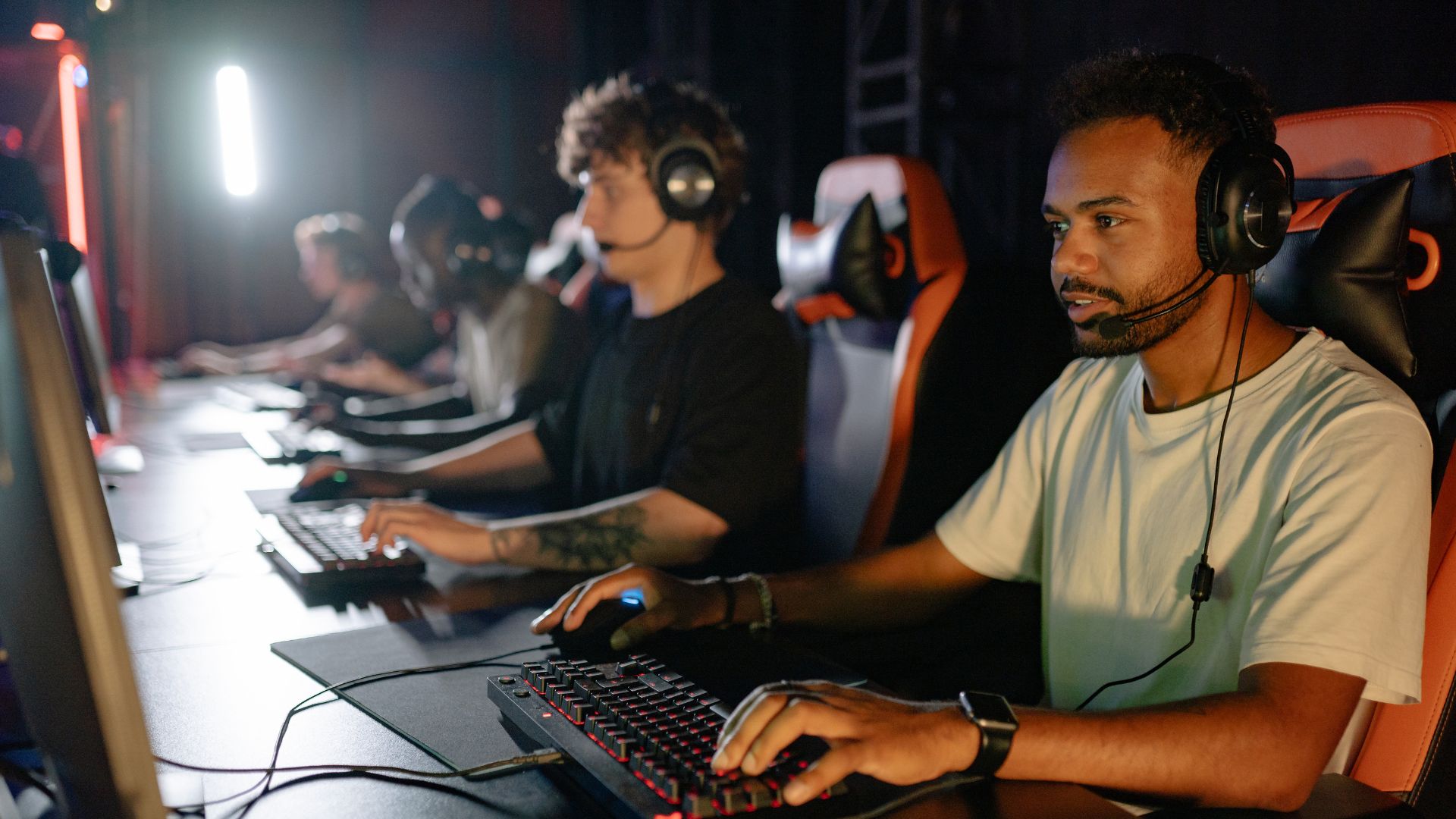
The deals that shape your gaming library for the next three years rarely happen at E3 or The Game Awards. They happen in hotel ballrooms, over coffee between panels, between people you have never heard of. On April 21, 2026, the gaming industry’s sharpest legal minds, most active investors, and most influential executives converge at UCLA’s Palisades Ballroom for the LA Games Conference, and the agenda this year reads less like a typical industry calendar entry and more like a stress test for the entire business of making games.
Not a Fan Convention. Something More Important.
LAGC occupies a lane that most gaming media largely ignores. It is a B2B summit, meaning no game demos, no cosplay, no reveal trailers. What it does offer is harder to package but arguably more consequential: unfiltered conversations between the people who decide which studios get funded, which IP gets licensed, and which legal frameworks will govern how games are made in an AI-saturated world.
This year’s conference brings together roughly 145 speakers, including senior executives from companies like Electronic Arts, Sony Interactive, Roblox, and Zynga. That is not a guest list assembled to generate headlines. It is a working group, and the work on the table in 2026 is unusually high-stakes.
The Capital Question Nobody Wants to Dodge
The opening keynote sets the tone bluntly. Titled “The Capital Markets Reset: Who is Funding Games in 2026?” the session digs into the current state of venture capital in interactive entertainment, new financing structures like revenue-based financing and slate funds, what makes a studio investable today, and the tension between private equity and strategic buyers.
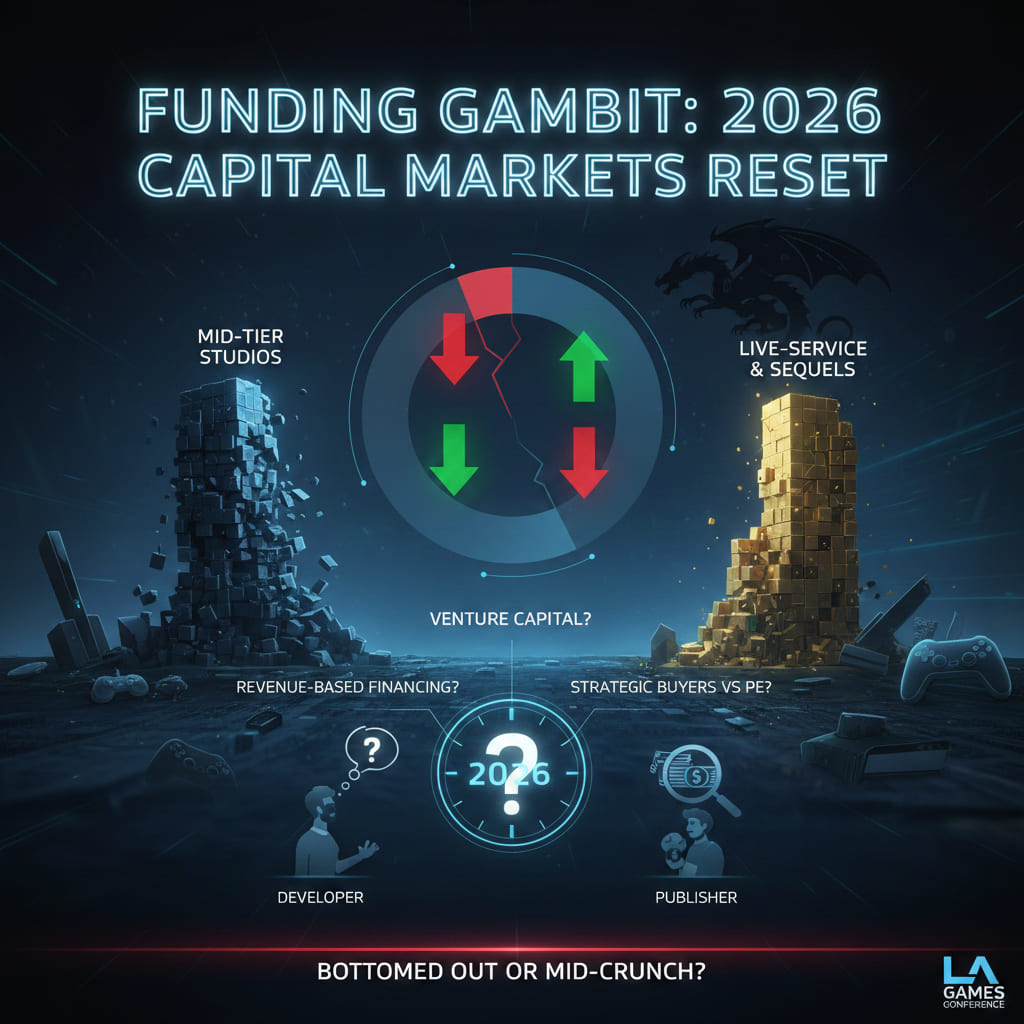
That framing matters. After two years of sweeping layoffs, studio closures, and deal collapses across the industry, the question of where the money is actually going is not rhetorical. The mid-tier studio ecosystem has been hollowed out. Several once-promising independents have shuttered or been absorbed. The conference’s opening discussion essentially asks: has the reset bottomed out, or are we still in the middle of it?
For developers and publishers watching from the outside, the answer to that question determines a lot. Tighter capital means fewer bets on experimental titles. It means more sequels, more live-service extensions, and more pressure on established IP. Understanding who is writing checks in 2026 and why is genuinely useful intelligence.
AI is Everywhere on the Agenda, and That’s Telling
Walk through the 2026 session list and one theme surfaces in nearly every track: artificial intelligence. Not in a celebratory way. More like an industry collectively trying to figure out what it just got itself into.
One session examines AI as a business multiplier for games, covering AI-assisted development, cost efficiency, AI-powered live ops and personalization, predictive player analytics, and the risks of over-automation versus competitive advantage. The phrasing is honest. Risks of over-automation is not language that comes from a press release.
The legal track is even more pointed. Separate sessions tackle who owns AI-generated game content, covering copyrightability of AI outputs, training data exposure risks, and licensing datasets, alongside a session on emerging US, EU, and Asia AI regulations, risk management strategies, and transparency and disclosure obligations.
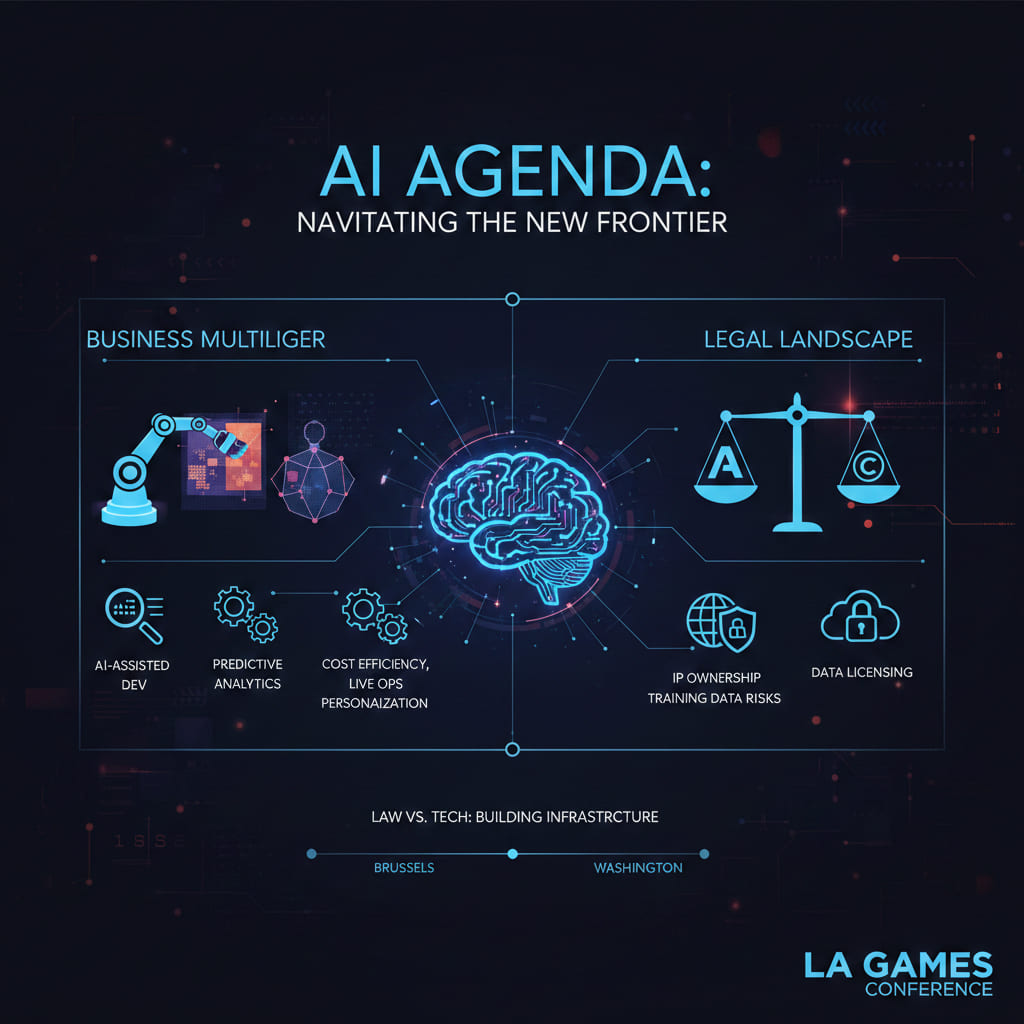
These are not abstract philosophical debates. Studios are already using AI tools in production pipelines. Voice acting, texture generation, narrative scaffolding, NPC behavior, all of it is being touched. But the legal infrastructure to govern these uses is still being built in real time, sometimes faster in Brussels than in Washington. LAGC is one of the few venues where the legal and business communities actually sit in the same room and work through those tensions together.
Women in Gaming: A Panel Worth Taking Seriously
The conference opens with a dedicated panel on women’s contributions to the gaming industry, featuring Andreea Enache, Chief Revenue Officer of Amber Studio; Dara Leung, Managing Director of The Raine Group; Holly Liu, Co-Founder of Kabam; and Haiyan Zhang, GM of AI Innovation and Science at Xbox, moderated by Cooper Jackson, SVP of Business Affairs at Electronic Arts.
Putting that session first is not accidental. It signals something about LAGC’s positioning as a conference. The gaming investment and legal space has historically been one of the industry’s least diverse corridors. Having that conversation anchored by the opening panel rather than scheduled as an afternoon sidebar sends a different kind of message.
The New Studio Model Is Not Optional Anymore
One of the more practically grounded sessions examines the new studio model, looking at lean teams leveraging AI tools, outsourcing versus in-house production, managing distributed global workforces, talent retention in an AI-assisted world, and labor relations in a changing creative culture.
This is the session that developers outside the conference walls will feel the most. The economics of game development have shifted significantly. A studio that once needed 200 people to ship a mid-size title can now prototype at a fraction of that cost, but only if it solves the workflow, the management culture, and the legal exposure that comes with AI-assisted pipelines. Those are not purely technical problems. They are organizational and legal ones, which is exactly why this conversation belongs at a law and finance summit and not just a developer conference.
Why This Event Belongs on Your Radar
LAGC is not trying to compete with GDC or Summer Game Fest. It sits upstream of all of that, in the conversations that precede the greenlight, the announcement, and the launch. The developers who eventually make the games you play exist, in large part, because someone in a room like this decided to fund them, structure the right deal, or clear the right legal path.
In 2026, with AI rewriting development economics, capital markets still recalibrating after years of contraction, and regulators in multiple jurisdictions circling the industry with increasing intent, the decisions made in those conversations carry more weight than usual.
Registration is open at the official conference site for those operating in the industry space. For everyone else, the agenda alone is worth reading as a map of where the business is actually headed.
What does it say about the gaming industry in 2026 that some of its most consequential conversations happen not at a consumer showcase, but in a law and finance summit that most players have never heard of?
Related articles
- SIGGRAPH 2026 in Los Angeles: why this graphics conference shapes the future of PC gaming
- MeetToMatch Las Vegas 2026: What to Expect From Gaming's Premier B2B Networking Event
- ICE Barcelona 2026: The Global Gaming Industry Gathers in Spain This January
- Pocket Gamer Connects London 2026: Where the Games Industry Shapes Its Future