![[decorative]](https://mixagame.com/wp-content/uploads/2025/10/cropped-mixagame-redwhite-logo-1024x256-1.png)
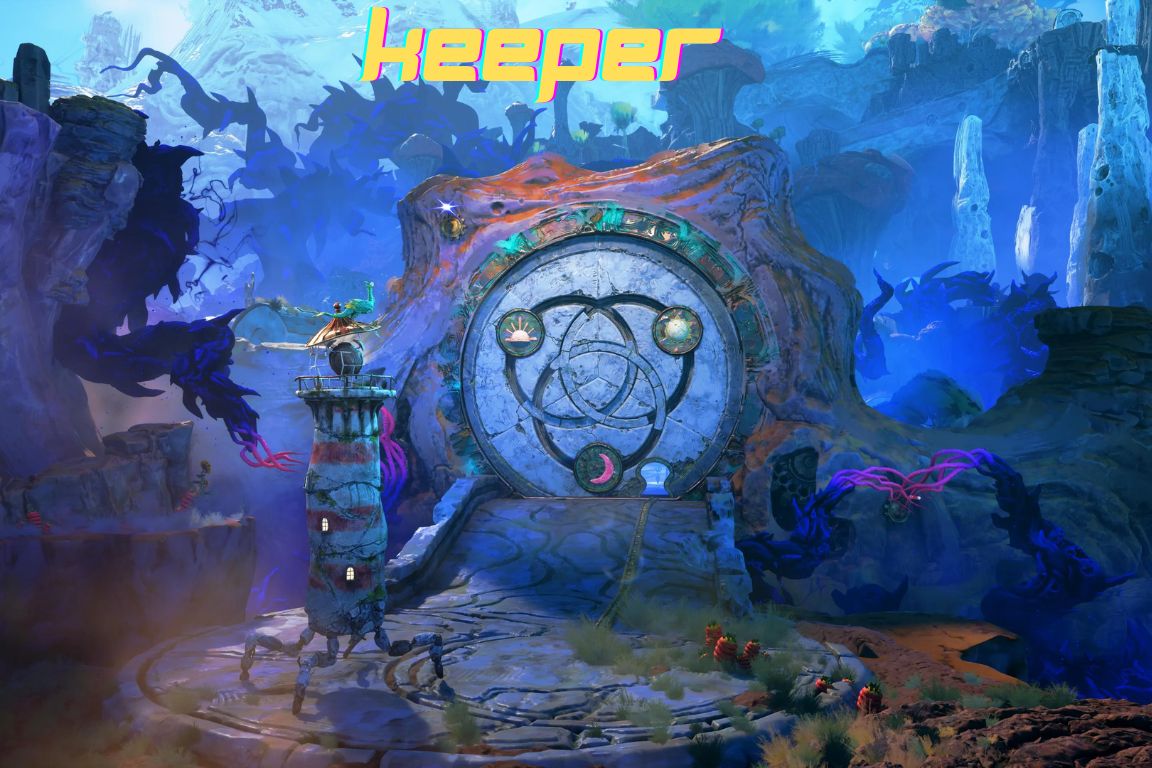
<strong>Verdict: Keeper is a sight to behold and a handful to play. The fixed camera, loose direction, and fussy interactions blunt the moment-to-moment flow. Yet the art direction is jaw-dropping. A walking lighthouse, a watchful bird, and a dreamlike coast create vignettes that feel painted, not rendered.
What works
- Visual poetry: painterly biomes, retro-surreal props, and wordless storytelling land with real emotion. A few late-game sequences are worth the ticket alone.
- Light-as-tool puzzles: illuminating creatures and devices opens paths, with brief time-play detours that reframe spaces in clever ways.
- Themes that linger: resilience, change, and companionship resonate without a single heavy-handed cutscene.
Where it stumbles
- Fixed camera friction: striking frames, but it can hide routes and make navigation feel sticky, especially in water sections.
- Aimless stretches: objectives are vague, leading to trial-and-error poking rather than intentional problem solving.
- Steady, not spicy, puzzle design: plenty of switches and placements, fewer true “aha” moments.
PC takeaways
- Presentation first: this is an art piece. Favor resolution scaling and texture clarity over heavy post-processing for cleaner compositions.
- Camera comfort: if the game offers FOV or camera shake toggles, tone them down for easier spatial reads.
- Input feel: a controller typically softens fixed-camera angles, while mouse can feel twitchy during fine placement. Test both and stick with what keeps you steady.
- Performance pacing: cap your frame rate to your display and keep frame time stable. The slower, cinematic beats play better without pacing hitches.
Bottom line: Keeper is more gallery than gauntlet. If you can live with the rough edges, the imagery and quiet storytelling will stick in your head long after the credits.
You might also like: HAVN HS 420 Review: The Fish Tank PC Case That Gets Form and Function Right.
## Story and World ContextKeeper unfolds as a wordless narrative journey through a mysterious coastal realm where lighthouses walk on mechanical legs and enigmatic birds serve as silent guides. Players assume the role of a lighthouse keeper navigating this surreal landscape, using light as both tool and metaphor to illuminate hidden paths and awaken dormant mechanisms. The world feels like a fever dream painted in watercolors, where giant mushrooms cast ethereal shadows and crystalline structures hum with otherworldly energy. Each biome tells its own visual story, from windswept cliffs adorned with impossible architecture to underground caverns that pulse with bioluminescent life. The absence of dialogue or text allows the environmental storytelling to breathe, though this artistic choice occasionally leaves players wondering about their immediate objectives in this Keeper game review PC experience.
The narrative touches on themes of isolation, duty, and the cyclical nature of guardianship without ever explicitly stating these concepts. Instead, the story emerges through interactions with the environment and the gradual revelation of the keeper’s purpose in this strange world. Ancient ruins hint at previous civilizations, while the walking lighthouse itself becomes a character, its mechanical movements suggesting both burden and purpose.
## Gameplay Length and PC PerformanceMost players can expect to complete Keeper in approximately 4-6 hours, depending on their pace and tendency to explore every painted corner of its world. The game’s length feels appropriate for its contemplative nature, though some may find themselves wishing for additional content after experiencing its most striking visual moments.
On PC, Keeper performs admirably across a range of hardware configurations. The system requirements remain modest: a GTX 1060 or equivalent handles the game comfortably at 1080p, while more powerful rigs can push the visual fidelity even higher. The painterly art style scales well, maintaining its artistic integrity whether running on budget hardware or high-end gaming systems. Load times are minimal, and the frame rate remains stable throughout most sequences, with only occasional stutters during the more visually intensive late-game moments.
The game supports both keyboard/mouse and controller input, though the latter feels more natural for navigating the deliberately paced world. Visual settings offer reasonable customization options without overwhelming casual players, and the game runs well on Steam Deck for those preferring portable play.
## Comparison to Genre PeersIn the walking simulator landscape, Keeper occupies a unique position between the emotional storytelling of What Remains of Edith Finch and the pure artistic expression of Journey. Like Journey, it relies heavily on visual communication and atmospheric storytelling, but lacks that game’s intuitive flow and seamless progression. The fixed camera angles and occasionally unclear objectives create friction that Journey’s elegant design carefully avoided.
Compared to What Remains of Edith Finch, Keeper’s narrative ambiguity feels less purposeful. While Edith Finch used environmental storytelling to support a clear emotional throughline, Keeper’s wordless approach sometimes leaves players adrift without sufficient context. However, Keeper’s artistic vision surpasses both comparisons in pure visual imagination, creating moments of wonder that rival the medium’s most memorable experiences.
The light-based puzzle mechanics echo elements from games like The Unfinished Swan or GRIS, but with less refined execution. Where those titles seamlessly integrated their core mechanics into the narrative flow, Keeper’s interaction systems occasionally feel disconnected from its artistic ambitions.
## Final Verdict and RecommendationsKeeper succeeds as an artistic statement while stumbling as an interactive experience.