![[decorative]](https://mixagame.com/wp-content/uploads/2025/10/cropped-mixagame-redwhite-logo-1024x256-1.png)
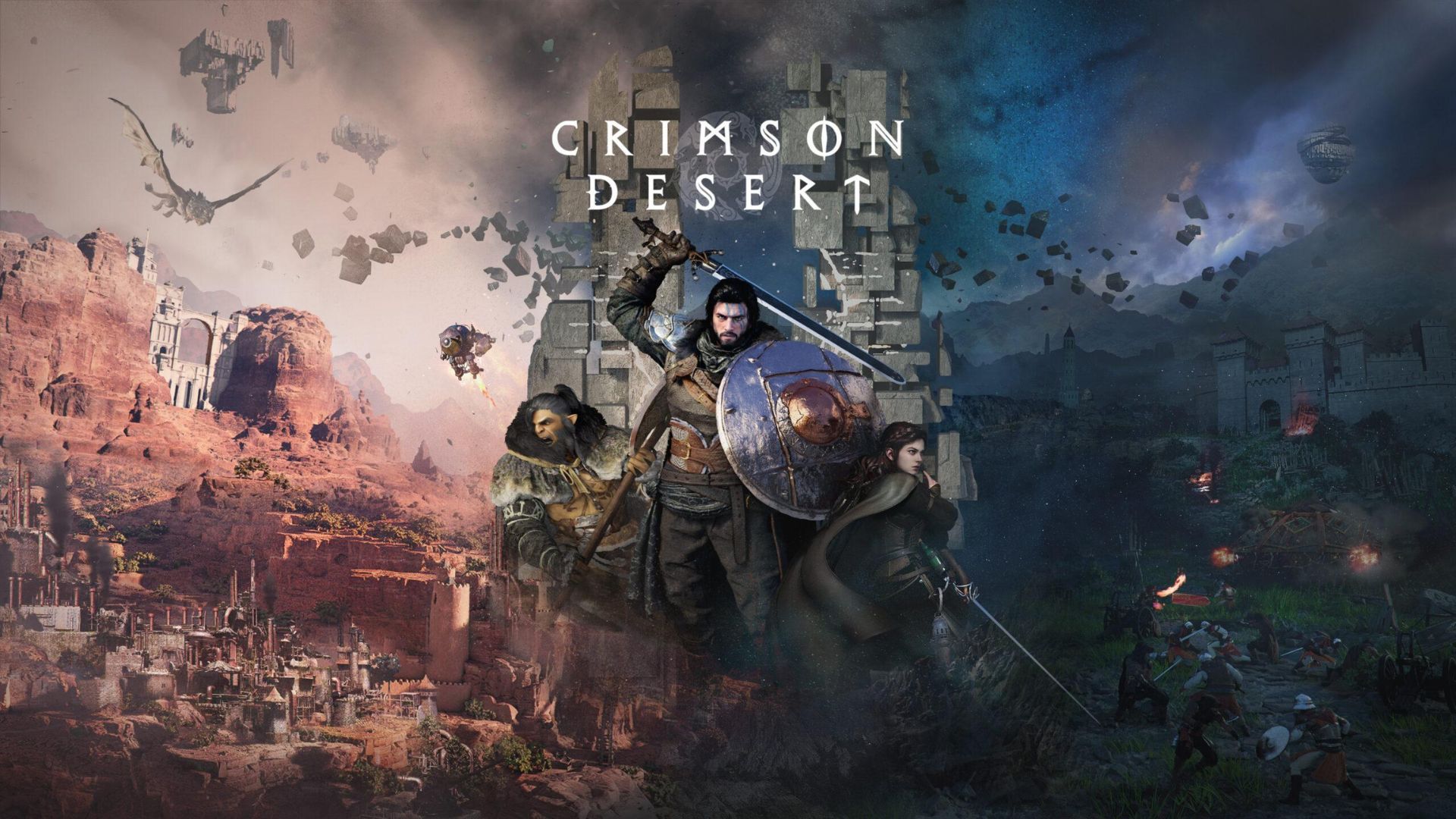
Eight years in development, and Pearl Abyss still could not decide what kind of game Crimson Desert wanted to be. That tension runs through every hour of this breathtaking, maddening, and deeply contradictory open-world action RPG that launched on March 19, 2026, and has divided critics and players ever since.
That division is not accidental. Crimson Desert is genuinely two games fighting for space inside the same product. One of them is extraordinary. The other is an exhausting design document masquerading as a video game.
From MMO prequel to standalone ambition
Understanding Crimson Desert requires knowing where it came from. When Pearl Abyss first unveiled Project CD back at G-Star 2019, it was pitched as a prequel to Black Desert Online. The studio then spent the next several years quietly scrapping that concept and rebuilding the game from scratch as a fully solo experience set in a brand-new universe. No MMO DNA, no shared lore, no prerequisite knowledge required.
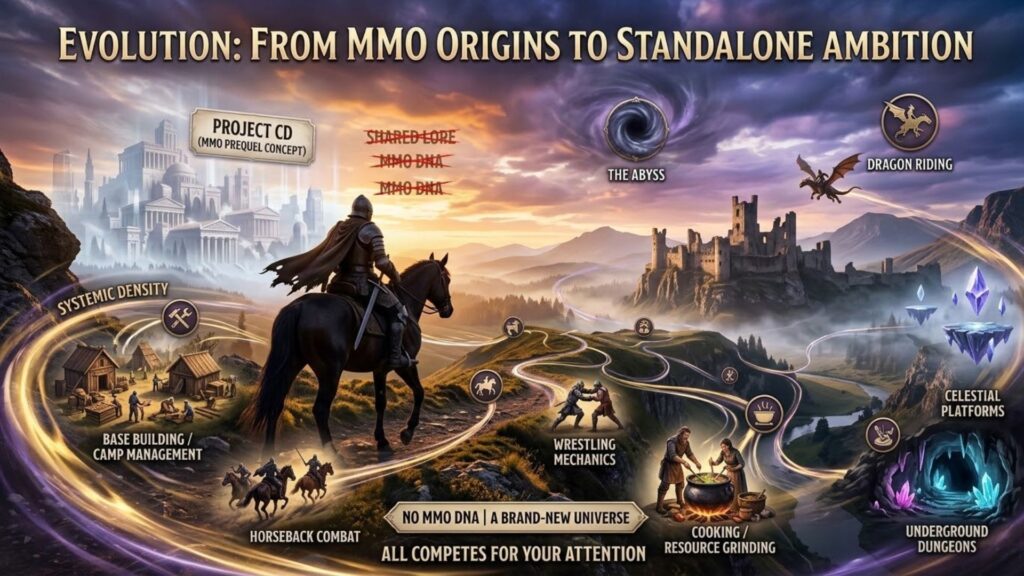
That pivot cost time and clarity. The result carries the DNA of both worlds, a single-player story RPG with the systemic density of a live service game. There are so many different features and mechanics in Crimson Desert that there is no way to properly describe everything. This is a game that wants to be everything, the textbook definition of an open world. Base building. Camp management. Horseback combat. Dragon riding. Wrestling mechanics. Cooking. Resource grinding. Underground dungeons. Celestial platforms. The Abyss. All of it is in here, and all of it competes for your attention at once.
The world of Pywel earns every comparison
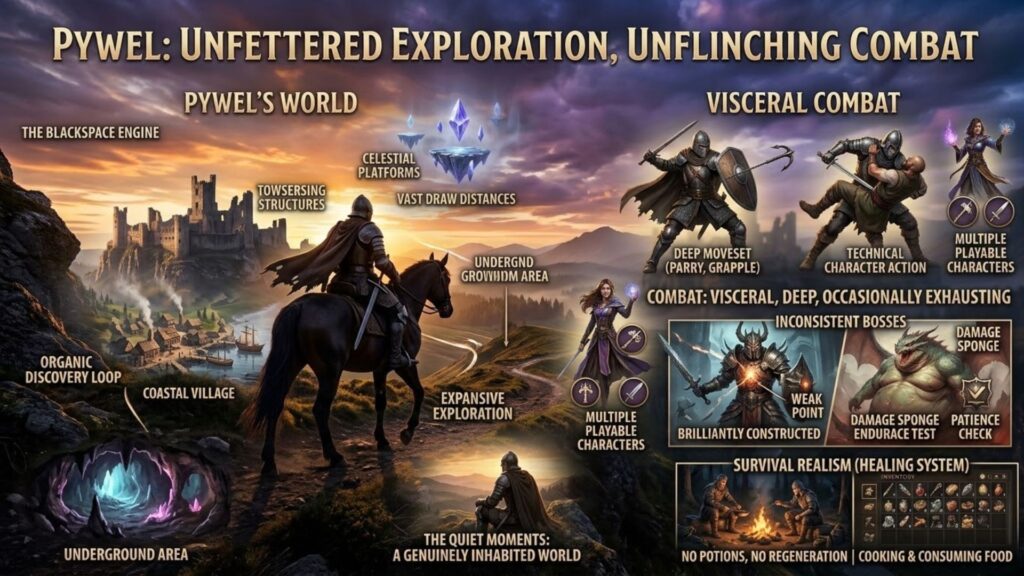
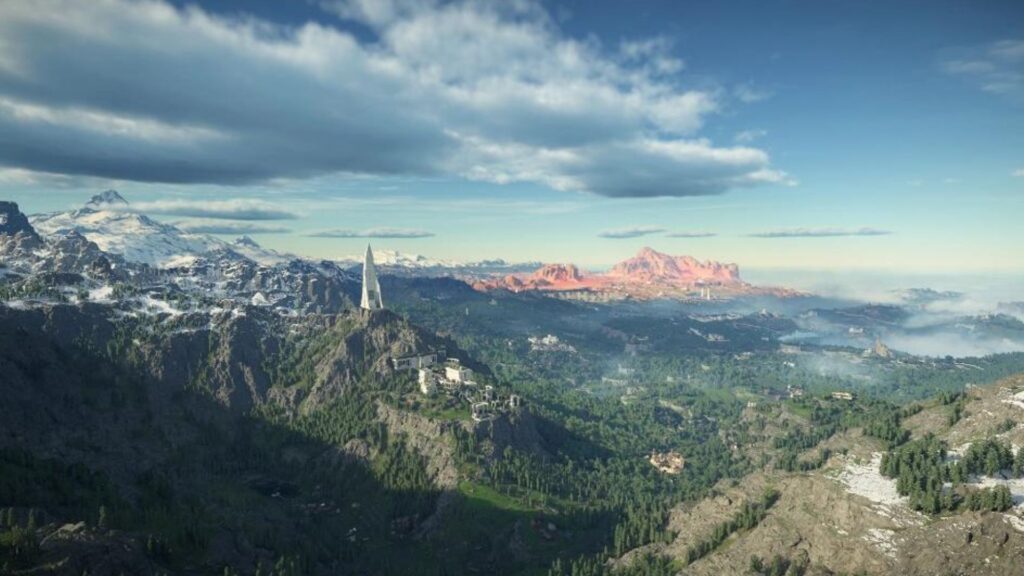
Strip away the system overload for a moment, and what you find underneath is one of the most physically impressive game worlds released in years. Powered by Pearl Abyss’ BlackSpace Engine, the world of Pywel features vast draw distances and a strong vertical design rarely matched by other games. Exploration feels expansive, from open plains to towering structures, hidden underground areas, and even celestial platforms.
The pre-release comparisons to Red Dead Redemption 2 were not entirely misplaced. Pywel has that same quality of feeling genuinely inhabited. You ride across a ridge and spot a coastal village below, smoke rising from chimneys, ships docked in the harbor. You go to investigate a noise, and four hours later you have fought a pirate boss named Sir Catfish on a ship navigating through a minefield. That kind of organic discovery loop is rare, and when Crimson Desert leans into it fully, the game becomes something special.
The quiet moments as I roamed the lands of Pywel were, by far, the most memorable parts. Many reviewers landed on the same sentiment. The world itself is the best character in this game. That is both a compliment and a warning.
Combat: visceral, deep, and occasionally exhausting
Crimson Desert’s combat system builds on the same real-time engine that made Black Desert Online famous in its genre. The result is a moveset so deep it takes real investment to master. Kliff can parry, dodge, fire arrows, cast elemental magic, use a grappling hook, execute wrestling throws, and chain dozens of combo strings depending on which weapon is currently equipped. Additional playable characters unlock later, each with distinct mechanics and playstyles.
Combat blends crowd control elements reminiscent of large-scale action games with more technical character action mechanics. The engine supports large enemy counts, with each foe having real health and offensive capabilities. Players can even learn new techniques by observing bosses in combat.
That last detail is genuinely smart design. Unfortunately, the boss encounters themselves are wildly inconsistent. Some feel brilliantly constructed, demanding the full range of your moveset in creative ways. Others are damage-sponge endurance tests with instant-kill attacks and teleportation spam that feel less like skill checks and more like patience checks. Crimson Desert has some of the most nauseatingly frustrating boss battles imaginable, except for the handful that bizarrely can be beaten immediately with very specific gimmicks.
The healing system compounds the frustration. Kliff can only recover health by consuming food from his inventory or cooking at campfires. No potions, no regeneration. That level of commitment to survival realism works well in the open world. Against a boss that kills you in three hits, it becomes a grind tax on your patience.
Kliff and the story problem
Crimson Desert opens with real force. Kliff and his mercenary crew, the Greymanes, are ambushed and wiped out in a brutal prologue. The tone is dark, personal, and promising. For a moment, it feels like this could be a character-driven story to match the scale of the world.
Then the open world takes over, and the narrative momentum largely evaporates.
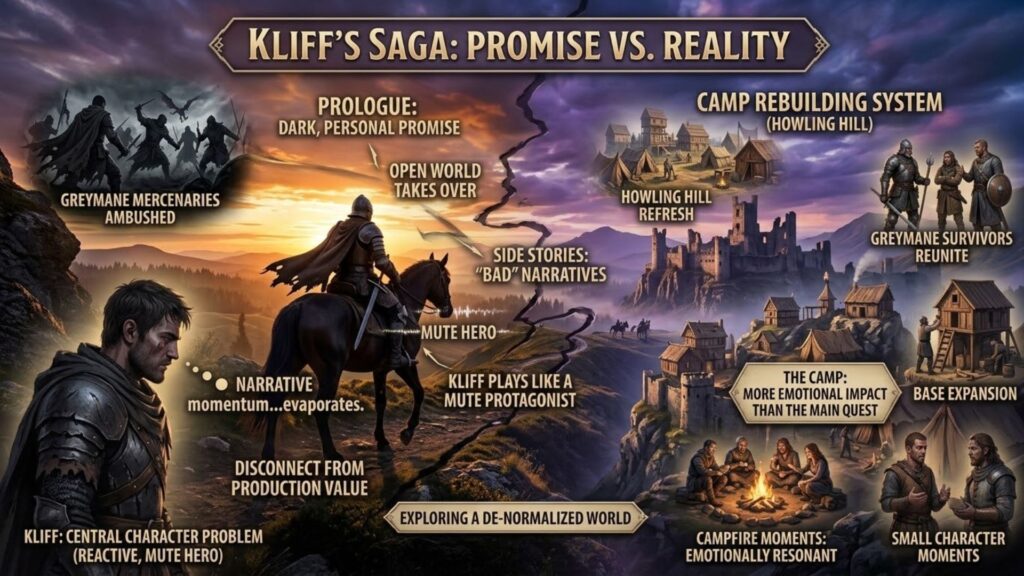
IGN wrote that the world is full of fun stuff to do, but the stories within it are consistently bad. That harsh summary reflects a real structural issue. Kliff himself is the central problem. He plays more like a mute protagonist who reacts to his environment than a proactive hero. For a game with this much production value poured into cutscenes and world-building, a reactive protagonist creates a disconnect that good side content cannot fully bridge.
The saving grace is the camp rebuilding system. As Kliff reunites Greymane survivors and expands the base at Howling Hill, the game creates something more emotionally resonant than the main quest ever manages. Small character moments around the campfire, the slow return of normalcy after loss, these land better than most of the major story beats.
A game that refuses to edit itself
| Strength | Weakness |
| World design and exploration | Bloated system count |
| Combat depth and variety | Inconsistent boss design |
| Visual fidelity (BlackSpace Engine) | Weak protagonist and story |
| Base building and camp management | No fast travel for most of the game |
| 100+ hours of content | Steep, overwhelming learning curve |
| Post-launch patch support | Clunky inventory and menus |
The review score divide tells the story clearly. Forbes awarded the game 9.5 out of 10, while IGN gave it a 6 out of 10, calling it an extremely ambitious open-world adventure where the ambition is what makes it both incredibly cool and gobsmackingly infuriating in almost equal measure. Both reviews are describing the same game. They simply weight the frustrations differently.
On Metacritic, Crimson Desert sits at 78 on PC based on 85 critic reviews, with 74% positive and 25% mixed. On OpenCritic, it carries a “Strong” rating with an 80 average. Those numbers are honest. This is a strong game with significant asterisks attached.
Steam tells a different story, with 86% of over 58,000 user reviews landing as Very Positive. Player audiences, who have more time and patience than critics operating on review deadlines, tend to find their footing with the combat system and exploration loop and stick with it. The 6 million copies sold within three months confirms the game connected with a wide audience despite the noise around its launch period.
Technical notes for pc players
Running on the BlackSpace Engine, Crimson Desert is one of the better-looking PC games of 2026. Performance on mid-to-high-end hardware is stable, and Pearl Abyss has been consistently active with patches since launch. One major caveat is that Intel Arc GPUs were not supported at launch and the situation remains imperfect even after subsequent updates. If you are running an Arc card, check the current patch status before purchasing.
The controls on keyboard and mouse are remappable and functional, but this game was clearly designed with a controller in mind. The moveset complexity makes a lot more intuitive sense with analog inputs. Playing on PC with a gamepad is the recommended approach.
Worth the $69.99?
At full price with no regional adjustments at launch, Crimson Desert asked players to take a genuine risk on an unknown IP from a developer whose resume is in MMO territory. Three months later, with the patch cadence Pearl Abyss has maintained and the community now large enough to sustain engagement, that risk calculation looks better than it did at launch.
This is not a perfect game. It is not even a consistently excellent game. But it contains hours of genuinely extraordinary open-world exploration, a combat system that rewards patience and skill, and a world that most studios cannot match on their best day. The frustrations are real and the IGN score is not wrong. Neither are the reviewers who gave it a 9.
Crimson Desert is exactly the kind of game where your personal tolerance for friction determines everything about how you experience it. The bones are exceptional. The editing is not.
Given that Pearl Abyss is actively updating and expanding the game into late 2026 and beyond, the most honest take today is that Crimson Desert may be significantly better six months from now than it was on day one. Whether that matters to you at this price point is a decision only you can make.
If Pearl Abyss genuinely learns from the structural criticism leveled at Crimson Desert, what kind of game could they build if they ever made a proper sequel with this engine and these ambitions, but a much tighter editorial hand?