![[decorative]](https://mixagame.com/wp-content/uploads/2025/10/cropped-mixagame-redwhite-logo-1024x256-1.png)
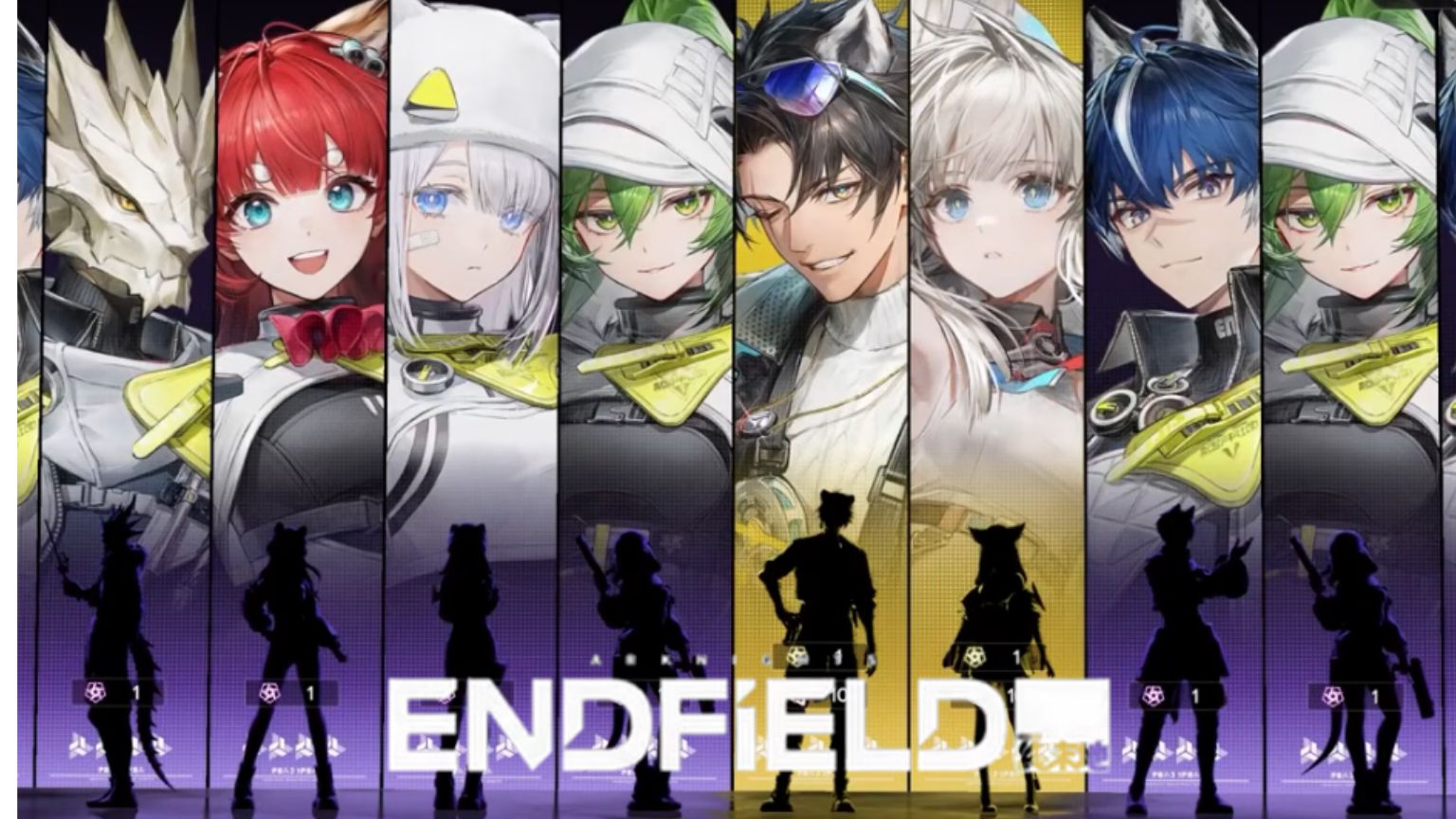
Four years is a long time to wait for anything in gaming. It is an eternity in gacha. When Hypergryph first teased Arknights: Endfield back in March 2022, the premise alone felt like a dare: take one of mobile gaming’s most respected tower defense franchises and rebuild it from the ground up as an open-world action RPG with factory automation baked into the DNA. Now that the game is finally here in 2026, after countless beta cycles and a hype train that never really slowed down, the question is not whether Endfield is good. It is whether “good” is enough in a genre this crowded.
The answer, after dozens of hours on the surface of Talos-II, is complicated. And that complexity is actually one of the most interesting things about it.
Update, July 2026: This review reflects our impressions at launch in January 2026. The game has since reached Version 1.4 “Homecoming” (July 16, 2026), and several of the weaknesses noted below have been partially addressed. Hypergryph added a genuine endgame challenge mode, Contingency Contract, in Version 1.3, which softens the “lacks late-game difficulty” criticism further down. The roster has also grown considerably with operators like Arcane, Camille, and Mi Fu. Our core verdict on the factory system and combat still holds. See the current tier list for how the roster has evolved.
My 40 Hours With Endfield: What I Actually Experienced
I played Endfield on PC for roughly 40 hours across the first three weeks after launch, mostly in two-hour sessions after work. I went in skeptical of the factory pitch, I have put over 300 hours into Satisfactory, so my bar for automation done well is unfairly high, and came out surprised by how much of that itch it actually scratched, even at a fraction of the complexity.
The moment that sold me was rebuilding my Valley Pass relay network after I discovered, about two hours in, that I had routed three ore veins through a single conveyor bottleneck my refineries could not keep up with. Nobody warns you this can happen. I only found out because production silently stalled overnight and I woke up to empty output bins the next morning. Tearing it down and rerouting power took roughly 45 minutes, and it was the first time a gacha game made me actually think in systems instead of tapping through menus.
On the gacha side, I spent about 25 euros on the Perlica banner during launch week, partly curiosity, partly to see the pity system in action, and lost the 50/50 at 61 pulls, landing a duplicate four-star instead of the featured Operator. That single pull is what made the no-carryover spark system click for me: if you are not ready to commit a full spark’s worth of pulls to one banner, do not gamble on a partial budget the way I did.
There is also a specific bug worth flagging if you are on PC: during the Wuling City questline, dialogue audio occasionally desynced by two to three seconds after alt-tabbing out to check a wiki, and the only fix was a full client restart. It happened to me three times over those 40 hours, always right after tabbing out mid-cutscene.
My favorite Operator ended up being Snowshine, not because she is mechanically the strongest but because her kit rewards the patient positioning that the early-game story keeps telling you not to bother with. If I am honest, I skipped a good chunk of the Valley Pass dialogue on my second playthrough of a friend’s account, and the game lost nothing for me by doing that.
None of this is universal. Your mileage on bugs, pulls, and favorite Operators will differ from mine. But if you are trying to decide whether the factory system is worth the early friction, my honest answer, after 40 hours of actually building the thing, is yes.
A World Worth Exploring, If You Can Survive the Tutorial
Endfield drops you into the boots of the Endministrator, a figure who wakes up after a decade of hibernation with no memory and a planet-sized to-do list. Talos-II is a collapsed cyberpunk frontier, thick with industrial decay, corrupted anomalies, and factional power struggles. The setup borrows from a well-worn sci-fi playbook, amnesiac protagonist, mysterious threats, a fractured civilization in need of a savior, but the execution of the world itself is what earns attention.
Visually, Endfield is a stunner. This is not hyperbole. Multiple reviewers and community voices have pointed to it as the best-looking gacha game currently available, and the claim holds up. The weather systems are remarkably detailed. Rain soaks fabric textures differently depending on the material. Metal stays dry. Sweaters look damp. Ray-traced shadows and reflections give environments a weight and atmosphere that most games in this space simply do not attempt. One content creator, Tennai, captured the sentiment well when he noted that the material-specific rain effects alone made him realize “how serious Endfield is about visual details.” It is one of those small touches that, once you notice, reframes how you see the whole production.

The problem is getting there. Endfield’s opening hours are front-loaded with exposition, forced tutorials, and dialogue sequences that could be trimmed by half without losing anything meaningful. The first region, Valley Pass, functions mostly as an extended onboarding experience. The writing during this stretch leans sterile, stuffed with jargon and repeated exposition that the voice cast, as talented as they are, cannot entirely rescue. Perlica’s unwavering loyalty feels one-note. The Endministrator’s lack of emotional response to a decade of lost memories is oddly flat. For a studio that already delivered a more compelling amnesiac story in the original Arknights, this feels like a missed opportunity.
Things do improve, meaningfully, once you reach the second region. Wuling City introduces bamboo-lined streets, a humid atmosphere heavy with mystery, and characters who actually feel like they have agendas. The villain Nefarith, a leather-clad matriarch with a voice that walks the line between elegant and menacing, is a genuine highlight. The tonal shift between regions is sharp enough that it almost feels like a different writing team took over. If Endfield’s early hours test your patience, the middle game rewards it.
Factory Building Is the Secret Weapon
Strip away the gacha mechanics, the combat loop, and the story, and what you are left with is a genuinely compelling automation game wearing a different skin. This is where Endfield makes its most distinctive play.
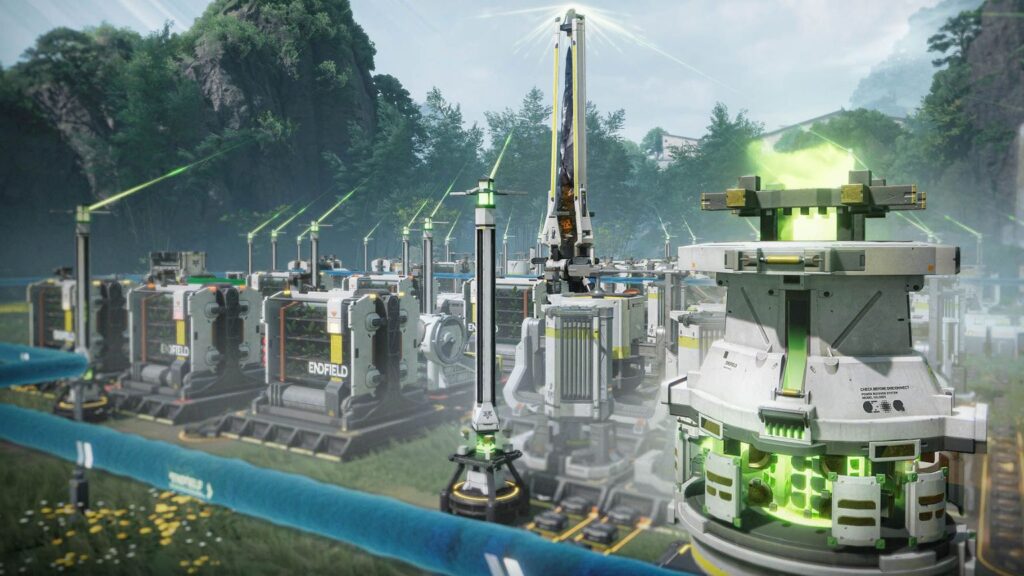
The factory system asks you to mine resources, refine them through increasingly complex production chains, manage power distribution across relay towers, and ultimately build self-sustaining industrial networks that feed into both your combat progression and the broader world. If you have spent any time with Factorio or Satisfactory, the fundamentals will feel familiar. The difference is in the scale. Endfield’s automation sits at roughly half the complexity of those dedicated sims, a deliberate choice that makes the system accessible without stripping away the satisfaction of watching a well-designed production line hum.
What makes it work within the gacha framework is how deeply the factory loop is woven into everything else. Gear is crafted from factory-produced materials. There is no RNG-based gear drop system here, a genuinely refreshing departure from genre norms. Your factories keep running while you are offline, which creates an ongoing incentive to log in, check production, adjust layouts, and push efficiency further. A stock market system lets you sell manufactured goods for profit, which feeds back into expansion and gear crafting. It is a virtuous cycle that, when it clicks, feels like the kind of thing that could hold attention for months.
There is one caveat worth flagging, and it is one the community has not discussed enough. Due to server-side processing limitations, only two regions can have their factories running while you are offline. As new regions are added, older factories may effectively go dormant unless you are actively playing. Hypergryph has not yet clarified how this will scale, and it has real implications for long-term engagement. If your Valley Pass factory becomes obsolete once a third or fourth region introduces better resources, the emotional investment of building it could feel wasted.
For now, though, the factory system is Endfield’s strongest card. It is the feature most likely to hook players who would otherwise never touch a gacha game, and it is the feature most likely to retain them once the novelty of everything else wears thin.
Combat That Shines on the Surface
The action RPG combat is competent and, in its best moments, genuinely satisfying. You control a party of four Operators simultaneously, switching between them to chain combos, trigger elemental reactions, and juggle enemies with coordinated team attacks. The visual payoff on connecting hits is excellent. Animations are fluid, character-specific fighting styles reflect their personalities, and the dodge-and-punish rhythm feels responsive without demanding excessive mechanical skill.
The roster design deserves particular praise. Snowshine, with her oversized buster sword and fuzzy bear shoes, is immediately endearing. Arclight moves like a cyberpunk Energizer bunny, all sparks and sharp angles. Hypergryph clearly invested heavily in making each Operator feel distinct, both aesthetically and kinetically. When you pull a character you wanted, there is a genuine thrill in learning their kit.
The issue is depth. Or rather, the lack of it over time. After the first 15 to 20 hours, combat rotations become largely automated. You figure out the optimal sequence, you execute it, and the variation between encounters narrows considerably. Multiple reviewers have noted this flattening effect. As one put it, the gameplay at level 20 is essentially the same as at level 60. The framework clearly has room to grow, and harder late-game content may eventually demand more tactical consideration. But in its current state, combat is the kind of thing you enjoy in the moment and forget about between sessions.
| Aspect | Strength | Weakness |
|---|---|---|
| Visuals and World Design | Best-in-class for gacha; stunning weather and material detail | Early regions feel angular and repetitive |
| Story and Writing | Improves significantly in region two; strong villain design | Slow, exposition-heavy opening; flat protagonist |
| Factory Building | Deep, rewarding automation loop; no RNG gear system | Offline processing limited to two regions; long-term scaling unclear |
| Combat | Fluid animations; satisfying team combos; great character design | Becomes repetitive; lacks strategic depth over time |
| Gacha and Monetization | Duplicate token system softens bad pulls; deterministic gear | Stingy rates; convoluted pity system; no carryover on spark |
The Gacha Elephant in the Room
Let’s talk about the monetization, because this is where Endfield stumbles most noticeably for a game of this profile.
The base six-star pull rate sits at 0.8%, with a soft pity kicking in at 65 pulls and a hard pity at 80. So far, standard fare. The wrinkle is in the limited banner structure. Losing the 50/50 does not guarantee the featured character on your next six-star pull. Instead, it dumps you into a combined pool that includes standard characters and future limited characters at equal probability. The true safety net is a spark system at 120 pulls, which does not carry over between banners.
At 500 crystals per pull, that is 60,000 crystals to guarantee a single copy of a rate-up character. The weapon banner adds another layer, requiring arsenal tickets earned through character pulls, with its own separate pity system that also does not carry over. It is, to put it plainly, a convoluted structure that asks for significant resource hoarding or spending.
Community sentiment has been vocal. Players who came in expecting something closer to the original Arknights’ relatively generous model, where new Operators periodically joined the standard pool and stat-based dupes were the norm, have found Endfield’s economy noticeably tighter. Beta feedback requesting pity carryover was apparently not implemented.
The saving grace is that Endfield’s deterministic gear system means you are never locked behind RNG for your equipment. And the game does hand out meaningful freebies early: a free six-star healer within three days of login, 40 guaranteed pulls through the New Horizon event, and additional pulls tied to authority level progression. It is enough to get you through the story without hitting a wall. But for players who want to collect and build specific teams across multiple patches, the math is unforgiving.
The Bigger Picture for Gacha in 2026
Endfield arrives at a moment when the open-world gacha space is more competitive than it has ever been. Zenless Zone Zero proved that style and combat depth can carry a game. Wuthering Waves demonstrated that ambitious world design attracts a dedicated audience even with rough edges. And the shadow of Genshin Impact still looms over everything.
What Endfield brings to the table that none of its competitors do is the factory automation layer. That alone makes it worth paying attention to, not just as a game, but as an experiment in genre blending. The question is whether Hypergryph can evolve the formula fast enough. The combat needs more depth. The story needs to maintain the quality jump it makes in region two. The offline factory limitations need a clear long-term solution. And the gacha economy needs to find a balance point that does not alienate the free-to-play audience it needs to sustain the game’s population.
The Arknights brand carries enormous weight in mobile gaming, and Endfield’s production values are undeniable. This is a game that will almost certainly stabilize near the top of revenue charts. But revenue and player satisfaction are not always the same thing, and the gap between a successful launch and a lasting one is measured in the updates that follow.
Endfield has built something genuinely interesting on Talos-II. The foundations are strong, the factory loop is addictive, and the world is beautiful enough to get lost in. Whether it becomes something truly special or settles into the comfortable middle of the gacha rotation depends entirely on what Hypergryph builds next. And in a genre where attention is the scarcest resource of all, how long can a factory sim keep the conveyor belts running before players start looking for the next assembly line?
Related articles
- Why Arknights Endfield is the gacha game that finally respects your time in 2026
- Silent Hill f Review: When Tradition Meets Terror in 1960s Japan
- Cronos: The New Dawn Review: Puzzle Brilliance Meets Post-Apocalyptic Horro
- Crimson Desert review: a jaw-dropping world that gets in its own way
Is Arknights Endfield Worth Playing in 2026?
The gacha market is oversaturated with games demanding your wallet and your sanity. Most titles follow the same exhausting formula: log in daily or fall behind, spend money or hit walls, grind endlessly or watch stronger players leave you in the dust. After years of this cycle, many players have simply given up on the genre entirely.
Then Arknights: Endfield dropped in January 2026 and quietly changed the conversation.
Done With Pay‑to‑Win?
Build a Squad That Actually Matters.
Arknights: Endfield is a real‑time action RPG in the Arknights universe. Explore Talos II, build your base, and lead a four‑operator squad across PC, PS5 and mobile with full cross‑progression.
Hypergryph didn’t just make another gacha game with a fresh coat of paint. They built something that feels genuinely different from the competition. A game where factory automation meets action RPG combat. Where exploration actually rewards curiosity instead of punishing deviation from optimal paths. Where free-to-play players can build competitive teams without emptying their bank accounts.
I’ve been gaming for over fifteen years and covering the industry for nearly a decade. Endfield is the first gacha title in recent memory that made me excited about the genre again rather than resigned to its usual tricks.
The factory system nobody expected to love
Let’s address the elephant in the room. When Hypergryph announced that Endfield would include Factorio-style automation mechanics, the community was skeptical. Base building in a gacha game? Conveyor belts and production chains alongside anime characters? It sounded like a gimmick designed to differentiate the product without adding real depth.
The skeptics were wrong.
The Automated Industrial Complex isn’t a side feature you can ignore. It’s the backbone of progression that generates resources passively while you’re offline, crafts gear that makes your operators stronger, and produces trade goods that fund everything else you want to accomplish. Players who engage with the factory system progress faster than those who skip it, but the beauty is in how the game teaches these mechanics gradually rather than overwhelming newcomers.
You start with simple chains. Refine some ore into basic materials. Sell those materials for credits. Expand your power grid to reach new mineral deposits. Before you know it, you’re importing community blueprints for mega-factories producing eighteen high-tier items per minute and wondering how you became someone who cares about conveyor belt efficiency.
The factory scratches an itch that most mobile and gacha games never touch. It rewards planning and optimization in ways that feel satisfying rather than tedious. And critically, it respects players who can’t log in every few hours by generating value continuously in the background.
Combat that actually requires thinking
Most gacha games reduce combat to watching auto-battle or occasionally pressing an ultimate button when it glows. Endfield demands more without becoming punishing for casual players.
The combo system links your four-operator squad through elemental reactions and coordinated abilities. Applying electrification with one character amplifies damage for another. Freezing enemies creates opportunities for physical damage dealers to shatter them for bonus effects. Stacking buffs before a boss enters their stagger state multiplies your burst damage dramatically.
You can button mash through early content if you want. The game lets you play casually without constant friction. But the ceiling for skilled play is genuinely high, and players who learn proper rotations tear through challenges that stop less prepared teams cold.
This balance between accessibility and depth is rare in the genre. Endfield doesn’t force hardcore optimization on everyone, but it rewards players who invest time in understanding its systems. That’s a design philosophy more games should adopt.
Free-to-play done right
Every gacha game claims to be free-to-play friendly. Most of them are lying. Endfield actually delivers on the promise in ways that surprised me.
The electro element team, which performs competitively against all current content, consists entirely of four and five-star operators. You get Perlica free at the start. The other core members appear on standard banners with reasonable pull rates. Building a strong electro squad requires zero six-star characters and zero premium spending.
Launch rewards and ongoing promotions provide enough premium currency for multiple pity guarantees within the first month. Daily activities generate steady income without demanding hours of grinding. The battle pass exists but doesn’t lock essential progression behind its premium tier.
I’ve played Endfield extensively without spending a dollar, and my account clears the same content as players who invested hundreds. The spending advantages exist but feel like acceleration rather than gatekeeping. You can pay to progress faster or collect more characters, but you don’t have to pay to actually enjoy the game.
That distinction matters enormously after years of predatory monetization across the industry.
Exploration that feels like discovery
Open world gacha games often create vast empty spaces filled with repetitive tasks designed to waste your time. Endfield’s approach to exploration actually makes wandering worthwhile.
The regions of Talos-II contain hidden collectibles, environmental puzzles, resource deposits, and story fragments scattered organically throughout the landscape. Zipline networks you construct create personalized fast travel systems that evolve with your exploration progress. Side activities connect to main progression systems rather than existing as isolated distractions.
Wuling, the second major region, introduces entirely new mechanics including water-based production and wireless power systems. The environmental shift feels like entering a different game rather than just a reskinned version of the starting area. Future updates will presumably expand the world further, but even the current content offers dozens of hours of genuine exploration.
The world design encourages curiosity. Climbing that distant cliff might reveal a Protocol Datalogger that unlocks new factory technology. Investigating that strange glow could lead to rare ore deposits that transform your production capabilities. The game consistently rewards players who look around instead of rushing between objective markers.
The community makes it better
Endfield launched with robust systems for player collaboration that extend beyond typical friend lists and guilds. Shared facilities in the open world receive repairs from other players, creating ambient cooperation. Blueprint import codes let the community share optimized factory designs freely. Interactive maps aggregate collectible locations so completionists don’t need to search blindly.
The subreddit, Discord servers, and content creator ecosystem exploded within weeks of launch. Guides for every system exist in multiple formats. Rotation videos demonstrate optimal combat sequences. Tier lists debate character rankings with genuine analytical depth. The community engagement suggests that Endfield has staying power beyond the typical honeymoon period.
Hypergryph also communicates actively with players about upcoming changes and responds to feedback faster than most gacha developers. Balance adjustments, quality of life improvements, and bug fixes arrived within the first two weeks based on community reports. That responsiveness builds trust that the game will continue improving rather than stagnating after launch hype fades.
What could be better
No game is perfect, and pretending otherwise would undermine everything else in this piece. Endfield has genuine weaknesses worth acknowledging.
The story pacing drags during early chapters with exposition-heavy dialogue that tests patience before the narrative finds its footing. Voice acting quality varies noticeably between characters. Some daily activities feel like chores rather than engaging content, particularly depot node deliveries before you’ve built comprehensive zipline infrastructure.
The factory system’s complexity intimidates players who just want action RPG gameplay without logistics management. While you can minimize engagement with the AIC, you can’t skip it entirely without handicapping your progression. Players allergic to base building might bounce off despite enjoying everything else.
At launch, late-game content lacked the challenge that hardcore players crave, with the difficulty curve flattening once your team reached sufficient power. That gap has since narrowed. Version 1.3 introduced Contingency Contract, a genuine endgame challenge mode, giving optimized teams something to actually test themselves against.
The verdict for 2026
Arknights: Endfield represents what gacha games could be if developers prioritized player experience alongside monetization. It’s not revolutionary in any single aspect, but the combination of factory automation, engaging combat, generous free-to-play systems, and rewarding exploration creates something that feels fresh in a stale market.
The game respects your time in ways that most competitors don’t. Progress happens even when you’re offline. Skill matters alongside character investment. Free players compete meaningfully with spenders. Content updates promise long-term support rather than abandonment after launch profits.
If you’ve been burned by gacha games before and swore off the genre, Endfield might be worth reconsidering your stance. If you’re actively playing other titles and wondering whether switching is worthwhile, the answer depends on whether the factory mechanics appeal to you. If you’re completely new to gacha games, this is a genuinely solid entry point that won’t teach you to expect predatory practices as normal.
Hypergryph built something special here. Whether it maintains that quality over months and years remains to be seen, but the foundation is stronger than anything else I’ve played in the genre recently.
Getting started the right way
New players jumping into Endfield should grab every available reward code before doing anything else. The premium currency and materials from these promotions compound into meaningful advantages that accelerate early progression substantially. Codes expire without warning, so claiming them immediately prevents missing limited-time offerings.
From there, focus on understanding one system at a time rather than trying to master everything simultaneously. Let the factory tutorials teach you production basics. Build one strong elemental team before spreading resources across multiple compositions. Establish daily routines that feel sustainable rather than exhausting.
The depth is there when you’re ready for it. Endfield doesn’t force complexity on players who want casual sessions, but it rewards those who choose to engage deeply with its interconnected systems. That flexibility is perhaps its greatest strength in a genre that typically demands total commitment or punishes you for having other priorities.
Talos-II is waiting. The question is whether you’re ready to see what gacha games can become when developers actually try something different.
For complete coverage of every system including factory blueprints, operator tier rankings, daily routines, and combat rotations, the ultimate Arknights: Endfield guide provides everything you need to build a strong account from day one.
Done With Pay‑to‑Win?
Build a Squad That Actually Matters.
Arknights: Endfield is a real‑time action RPG in the Arknights universe. Explore Talos II, build your base, and lead a four‑operator squad across PC, PS5 and mobile with full cross‑progression.




1 Comment