




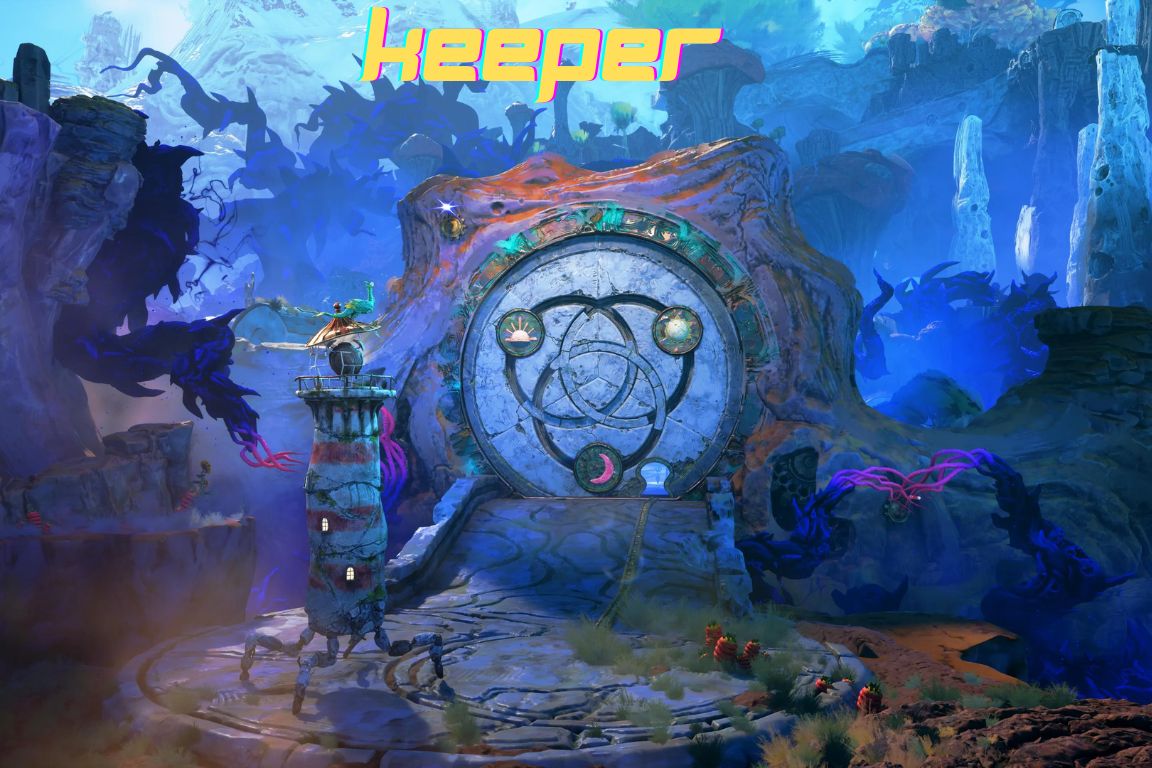
Verdict: Keeper is a sight to behold and a handful to play. The fixed camera, loose direction, and fussy interactions blunt the moment-to-moment flow. Yet the art direction is jaw-dropping. A walking lighthouse, a watchful bird, and a dreamlike coast create vignettes that feel painted, not rendered.
What works
- Visual poetry: painterly biomes, retro-surreal props, and wordless storytelling land with real emotion. A few late-game sequences are worth the ticket alone.
- Light-as-tool puzzles: illuminating creatures and devices opens paths, with brief time-play detours that reframe spaces in clever ways.
- Themes that linger: resilience, change, and companionship resonate without a single heavy-handed cutscene.
Where it stumbles
- Fixed camera friction: striking frames, but it can hide routes and make navigation feel sticky, especially in water sections.
- Aimless stretches: objectives are vague, leading to trial-and-error poking rather than intentional problem solving.
- Steady, not spicy, puzzle design: plenty of switches and placements, fewer true “aha” moments.
PC takeaways
- Presentation first: this is an art piece. Favor resolution scaling and texture clarity over heavy post-processing for cleaner compositions.
- Camera comfort: if the game offers FOV or camera shake toggles, tone them down for easier spatial reads.
- Input feel: a controller typically softens fixed-camera angles, while mouse can feel twitchy during fine placement. Test both and stick with what keeps you steady.
- Performance pacing: cap your frame rate to your display and keep frame time stable. The slower, cinematic beats play better without pacing hitches.
Bottom line: Keeper is more gallery than gauntlet. If you can live with the rough edges, the imagery and quiet storytelling will stick in your head long after the credits.