![[decorative]](https://mixagame.com/wp-content/uploads/2025/10/cropped-mixagame-redwhite-logo-1024x256-1.png)
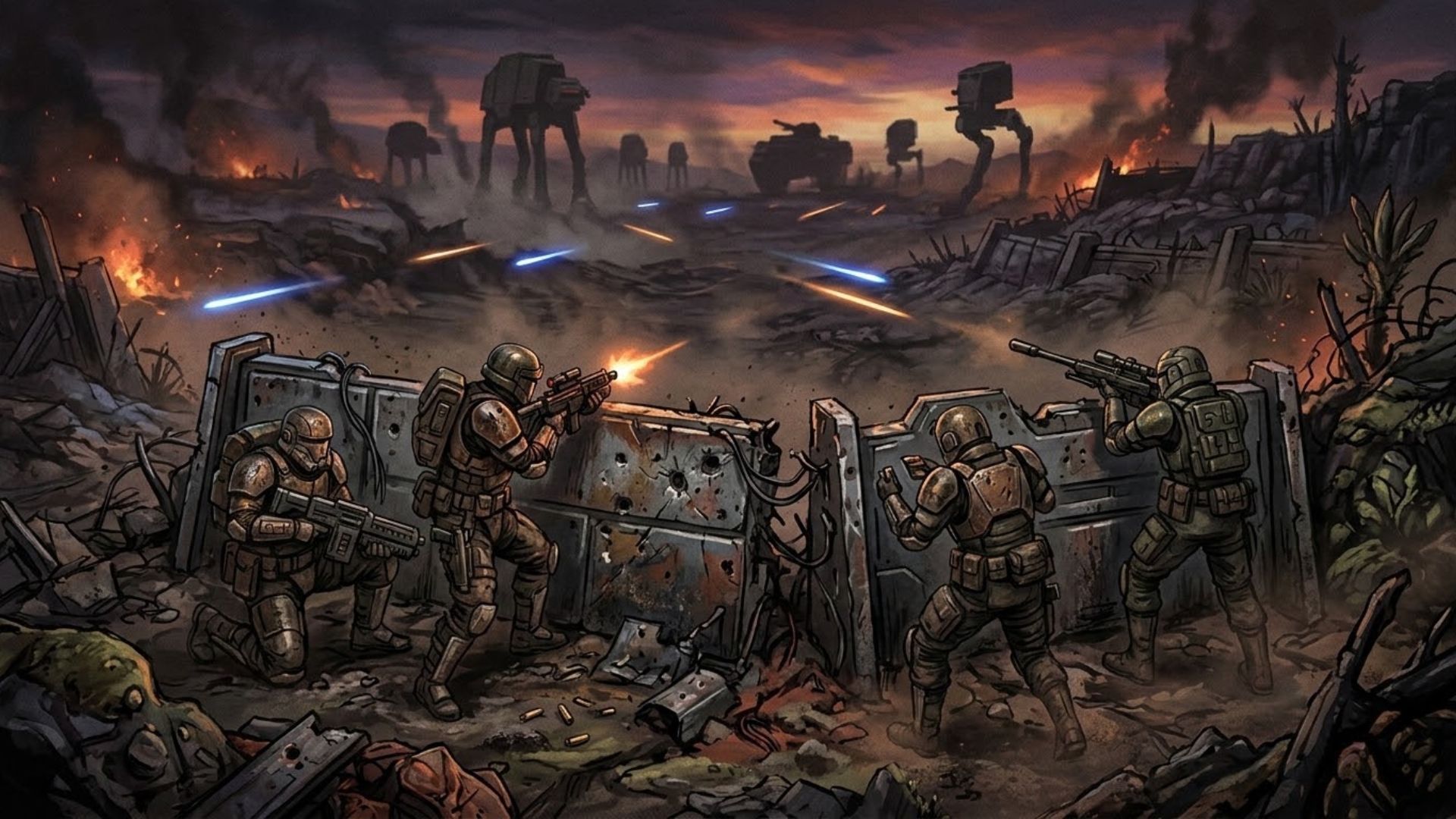
For a decade, XCOM was the ghost every tactics game got measured against, and almost none of them got to wear a hundred-million-dollar license while doing it. Star Wars Zero Company changes that math. When it launches on August 27, 2026 for PC, PlayStation 5, and Xbox Series X, it becomes the rare turn-based tactics game backed by both Electronic Arts and Lucasfilm, built by a studio stacked with the people who made XCOM matter in the first place. That combination is either a genre validation or a very expensive gamble. Probably both.
The pedigree is the whole story
Bit Reactor is not a household name yet, but its resume is. The studio was founded by veterans of Firaxis, the team behind the modern XCOM reboots and Marvel’s Midnight Suns. Greg Foertsch, XCOM’s longtime art director, runs the show as CEO and creative director. So when previews call Zero Company “a very safe XCOM descendant,” that is not lazy shorthand. It is the literal creative lineage.
What makes this interesting is the backing. Respawn Entertainment, the Titanfall and Jedi: Survivor studio, is co-developing and, by Foertsch’s own account, gave Bit Reactor a free hand while acting as the best publisher he has worked with. Lucasfilm Games, for its part, explicitly asked for a strategy game first and a Star Wars game second. In an era where big publishers keep chasing live-service revenue, three of them lined up behind a single-player, offline, turn-based tactics title. That alone is worth a raised eyebrow.

A Clone Wars story told from the margins
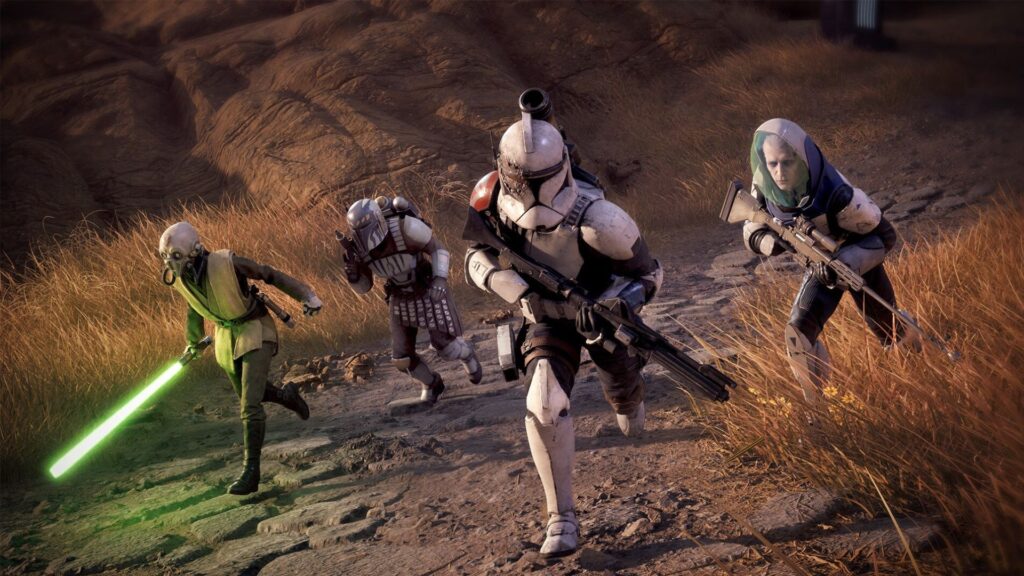
Zero Company sidesteps the obvious. Instead of another Jedi power fantasy, you play Hawks, a fully customizable former Republic officer leading a ragtag outfit of mercenaries and specialists operating in the shadows of the Clone Wars. The campaign pits them against the Infinite Coil, a Separatist-aligned organization, with familiar faces like Anakin Skywalker surfacing along the way. It is Star Wars from the gutter view, the black-ops angle the films rarely lingered on.
The mechanical hook lives in the squad bonds. Previewers singled out the relationships between operatives as the standout feature and the main source of variety, the Midnight Suns DNA showing through the XCOM skeleton. Combat pushes you to spend resources, take risks, and commit under pressure rather than turtle up and wait for the perfect shot. That is a deliberate design philosophy, and it is the most promising thing about the early builds.
Not everything landed in hands-on sessions, though. Critics flagged a story that has not yet proven itself, a campaign that looks scripted and linear enough to raise longevity questions, and text-based operations between missions that could wear thin. Optimism, with an asterisk.
What PC players actually need to know
Here is where Zero Company gets refreshingly honest. EA published detailed, native-resolution PC requirements, meaning the numbers below assume no upscaling crutch from DLSS, FSR, or XeSS. In a market where publishers routinely bake upscalers into their spec sheets to hide the real cost, that transparency is worth applauding.
| Tier | CPU | GPU | RAM | Target |
|---|---|---|---|---|
| Minimum | Core i5-8400 / Ryzen 5 2600X | GTX 1080 / RX 5600 XT / Arc B580 | 16 GB | 1080p, 30 FPS, Low |
| Recommended | Core i7-10700K / Ryzen 7 3700X | RTX 3080 / RX 7800 XT | 32 GB | 1440p, 60 FPS, High |
Read that table closely and the picture is reassuring. This is not a game demanding a science-fiction rig to open its front door. A GTX 1080, a card from 2016, clears the minimum bar. The install is only around 50 GB, a fraction of Jedi: Survivor’s 130 GB, thanks in part to Unreal Engine 5 efficiency. There is no required internet connection, so the whole thing runs offline. For a big EA release in 2026, that is a small miracle.
But two details deserve a flag. First, the 32 GB RAM recommendation. That number would have looked absurd on a tactics game a few years ago, and it signals that modern campaign-driven strategy titles are no longer automatically light on memory. Second, the previews came with a hardware caveat: one outlet noted the build pushed an RTX 4070 laptop to its limits at times, and complained about the lack of a battlefield zoom-out. So while the floor is generous, a truly polished 1440p high-settings experience may still ask more than the recommended sheet suggests. Wait for launch benchmarks before assuming smooth sailing.
Why this launch matters beyond Star Wars
Zero Company arrives at a telling moment. It ships August 27, deliberately ducking the September avalanche that includes Marvel’s Wolverine, The Blood of Dawnwalker, and Control: Resonant. EA gave it breathing room on the calendar, which reads like quiet confidence, not a game being buried.
The bigger stakes are genre-wide. Turn-based tactics has thrived in the mid-budget and indie space for years, but blockbuster publishers mostly abandoned it. If a Star Wars tactics game with this much money and talent behind it connects with a mainstream audience, it could reopen a door the industry quietly shut after the XCOM heyday. If it stumbles, it reinforces the idea that the genre belongs to smaller studios and smaller ambitions.
That is the real tension under the lightsabers. Zero Company is not just trying to be a good Star Wars game. It is trying to prove that deliberate, cerebral, one-move-at-a-time combat still has a place at the premium table in a market obsessed with speed and spectacle. The specs are friendly, the pedigree is elite, and the concept is genuinely fresh for the license. Now it has to stick the landing on a story and a campaign that previews left uncertain.
So here is the question worth chewing on before August 27: are you ready to slow down, think three turns ahead, and let a Star Wars game punish your mistakes, or has the blockbuster crowd forgotten how to sit still?