



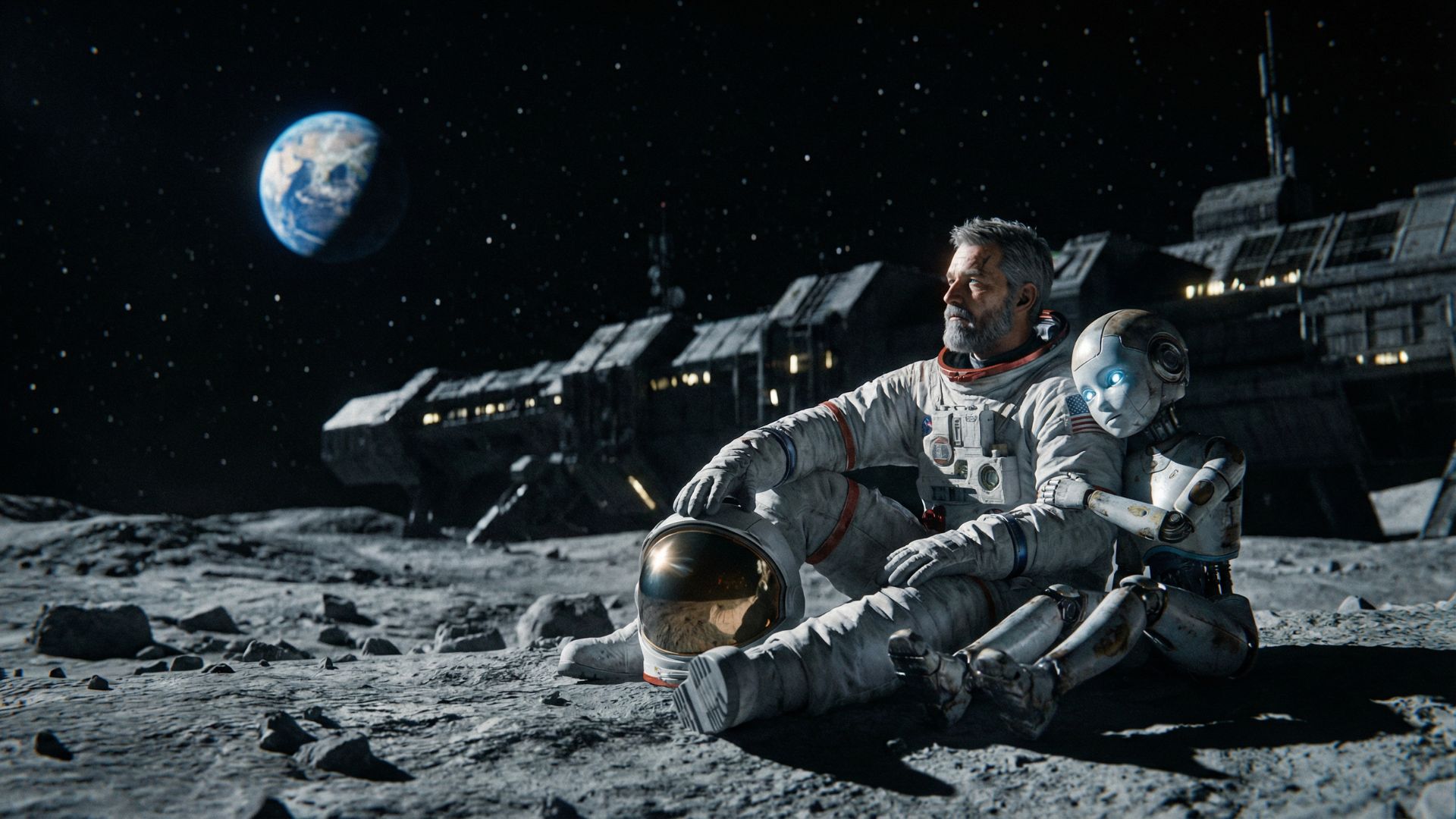
There is a moment in one of the recent Pragmata previews where Diana, the android companion, discovers a child’s slide in the Shelter hub. She has no idea what it is. She figures it out within seconds and starts going up and down it with pure joy. Then she gets sad because the slide is too small for Hugh to use with her. That single interaction tells you more about what Capcom is building with Pragmata than any trailer ever could. After six years of delays, false starts, and an indefinite silence that almost killed public interest entirely, the question is no longer whether this game exists. It is whether the final product can deliver on what these preview moments keep promising.
A development history that would have buried most games
Pragmata was revealed on June 11, 2020, during the PlayStation 5 Future of Gaming showcase. It was Capcom’s first original IP announcement in eight years and one of the earliest titles shown for the then-unreleased PS5 hardware. The initial target was 2022.
That window collapsed within months. By January 2021, Capcom pushed the release to 2023. Then in June 2023, during the publisher’s own 40th anniversary showcase, Pragmata was delayed indefinitely. No new date. No gameplay. Just a brief trailer assuring fans the team was still working.
For nearly two full years, Pragmata disappeared. No interviews, no screenshots, no presence at any major event. In an industry where that kind of silence almost always precedes a quiet cancellation, the comparisons to Scalebound were not unfair. Microsoft’s ambitious action game from PlatinumGames followed a similar arc of hype, silence, and eventual death in 2017. Pragmata looked like it was heading the same direction.
What saved it, or at least what changed the narrative, was 2025. Capcom brought Pragmata back at the State of Play showcase in June with a substantial gameplay trailer that introduced the Delphi Corporation, the dual-character combat system, and the tone of the Hugh-Diana relationship. Then came playable demos at Tokyo Game Show and Gamescom that let journalists actually experience the game. By December, The Game Awards 2025 delivered a confirmed release date. The Sketchbook demo went live on Steam that same day.
Every subsequent preview has reinforced the same message: whatever Capcom spent those extra years doing, it was not wasted time.
What the previews keep getting right
The gameplay has been covered extensively by this point. Hugh shoots, Diana hacks, and the two systems run simultaneously on one controller. It is inventive and mechanically distinct. But the element that keeps surprising people across every hands-on session is not the combat. It is the writing.
Multiple preview journalists have compared the Hugh-Diana dynamic to gaming’s most celebrated companion duos. Joel and Ellie. Booker and Elizabeth. The comparisons are not lazy shorthand. They reflect a genuine quality of character interaction that nobody expected from a game that spent most of its public life looking like a stylish but narratively thin action title.
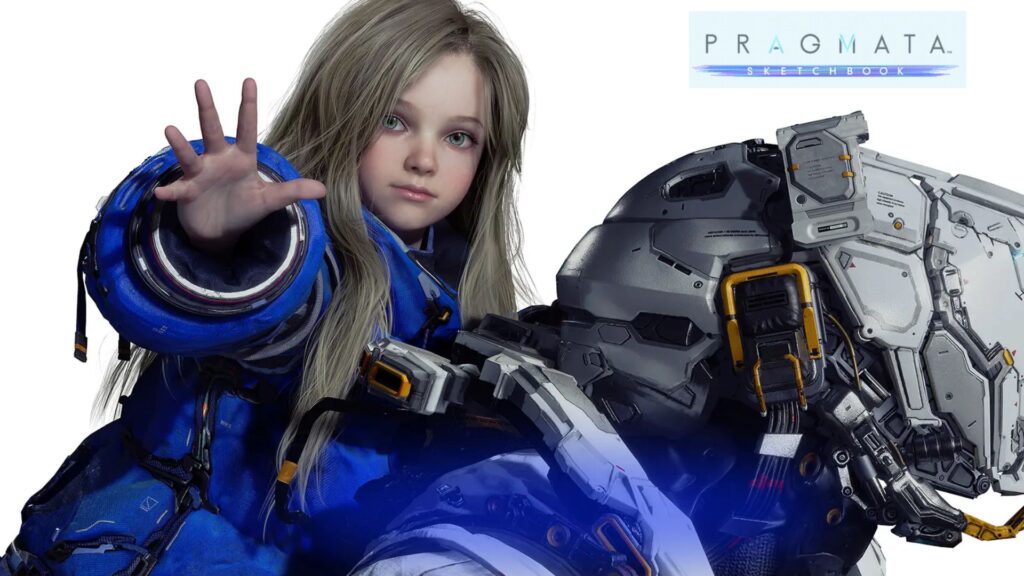
Hugh is a sarcastic engineer who reveals, in quiet moments between firefights, that he was an orphan. That dinner was never about food for him. It was about being with people who accepted him. Diana is an android with the curiosity of a seven-year-old and zero frame of reference for human experience. She asks why humans waste time eating organic matter. In one memorable moment, she dismisses a television as “a crappy computer.” After helping Hugh take down enemies, she demands high fives.
The bridge scene that has circulated through preview coverage captures the dynamic perfectly. Diana chases a cat, nearly falls to her death, and does not understand why Hugh is upset. She is a machine. She can be repaired. Hugh, who sees her as a child regardless of what she is made of, cannot process that logic. He gives her a talk about consequences. Later, when another bridge appears, Diana cheerfully mimics his gruff tone and announces she has learned her lesson. It is funny, warm, and unexpectedly moving.
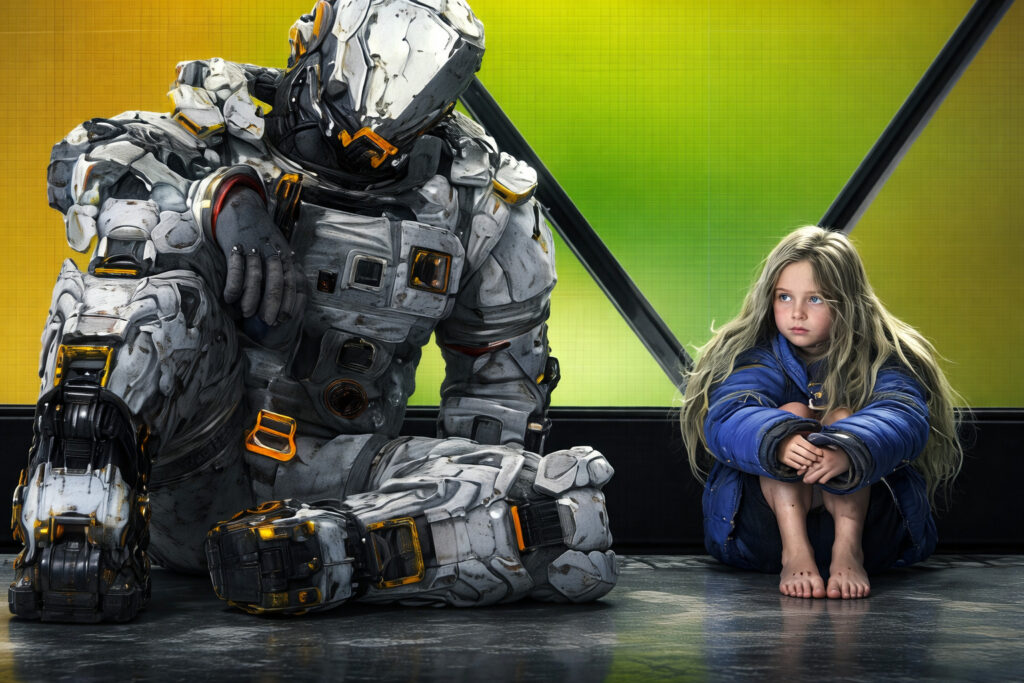
Game director Cho Yonghee has been clear about the intent: “We could have gone with a more robotic look, but we chose a human-like design to make her warm and relatable. That contrast between her humanity and the stark, cold sci-fi backdrop reinforces the emotional core of the story and gameplay.”
How Pragmata fits into Capcom’s 2026
Context matters when evaluating a new IP. Pragmata is not launching in isolation. It arrives in a year where Capcom has already shipped Resident Evil Requiem to five million copies in five days and universal critical acclaim. Monster Hunter Stories 3: Twisted Reflection is on the calendar. Onimusha: Way of the Sword is coming later in the year. The Mega Man Star Force Legacy Collection drops the same month as Pragmata.
Capcom is having one of the most productive publisher years in recent memory, and Pragmata sits at the center of its new-IP ambitions. This is not a side experiment buried in the release schedule. It anchors the company’s strategy to prove it can still create original franchises, not just iterate on established ones. If Pragmata succeeds commercially and critically, it validates a pipeline that extends beyond Resident Evil, Monster Hunter, and Street Fighter. If it underperforms, it reinforces the industry’s growing belief that only sequels and remakes are financially safe.
The stakes are higher than they appear for a game about shooting robots on the moon.
The concerns that still linger
No preview is a finished game, and a few recurring observations across hands-on sessions are worth flagging.
Length is the most common question mark. Multiple journalists have noted that Pragmata’s structure, linear levels accessed from a central hub, combined with its puzzle-focused combat, suggests a tighter experience. One preview explicitly wondered whether the game might “run out of steam around the six to eight hour mark.” That is not inherently a problem. Resident Evil 4 Remake proved that a focused, replayable campaign can be more satisfying than a bloated open world. But if players expect 20 hours and get eight, the reception could be mixed regardless of quality.
The scan-and-follow navigation system also drew mild criticism. In the recreation of New York within the lunar station, Hugh asks Diana where to go, and she tells him to scan. The scan reveals the exact path forward, which deflates the exploration potential of what is otherwise a visually stunning environment. It is a familiar complaint in modern AAA games, and Pragmata does not seem to have solved it.
Finally, the hacking system’s long-term variety is an open question. The grid-based maze is compelling in short sessions, but whether routing through nodes stays engaging across an entire campaign depends on how much Capcom escalates the complexity. Early enemy encounters use simple mazes. Boss fights introduce signal jammers and multi-target hacking. If that escalation curve is steep enough, the system should hold. If it plateaus, repetition could set in.
A new IP that earned its shot
Six years is a long time to wait for any game, and Pragmata tested patience more than most. But the evidence stacking up across months of preview coverage paints a consistent picture: this is a mechanically inventive, narratively surprising, visually polished action-adventure from a studio operating at peak confidence. The combat is distinct. The characters have genuine chemistry. And the world-building, supervised by Macross creator Shoji Kawamori, gives the setting an identity that stands apart from the generic sci-fi template.
Whether Pragmata becomes a sleeper hit, a cult classic, or a genuine blockbuster depends on whether the full campaign sustains the quality of these preview slices. Every indication says it will. But until April 17, that remains the one question nobody can answer from a demo alone.
For a full breakdown of everything launching with Pragmata, from gameplay mechanics and editions to platform comparisons and the free demo, our complete Pragmata game guide has it all in one place.
After everything you have seen from the previews and the demo, where does your confidence level sit: day-one purchase, wait-for-reviews, or still on the fence?