




Thirty people. That’s all it took to craft what might be the most impressive RPG of the decade, and honestly, that fact alone should have every major publisher sweating bullets right now.
Clair Obscur Expedition 33 arrived without the marketing blitz of a blockbuster release, without the backing of a massive corporation, and without the safety net that comes with an established franchise. What it did arrive with was something far more valuable: unbridled creative ambition executed with surgical precision. After spending over 60 hours exploring every corner of this haunting world, I can say without hesitation that Sandfall Interactive has delivered something genuinely special.
A premise that hooks you from the first minute
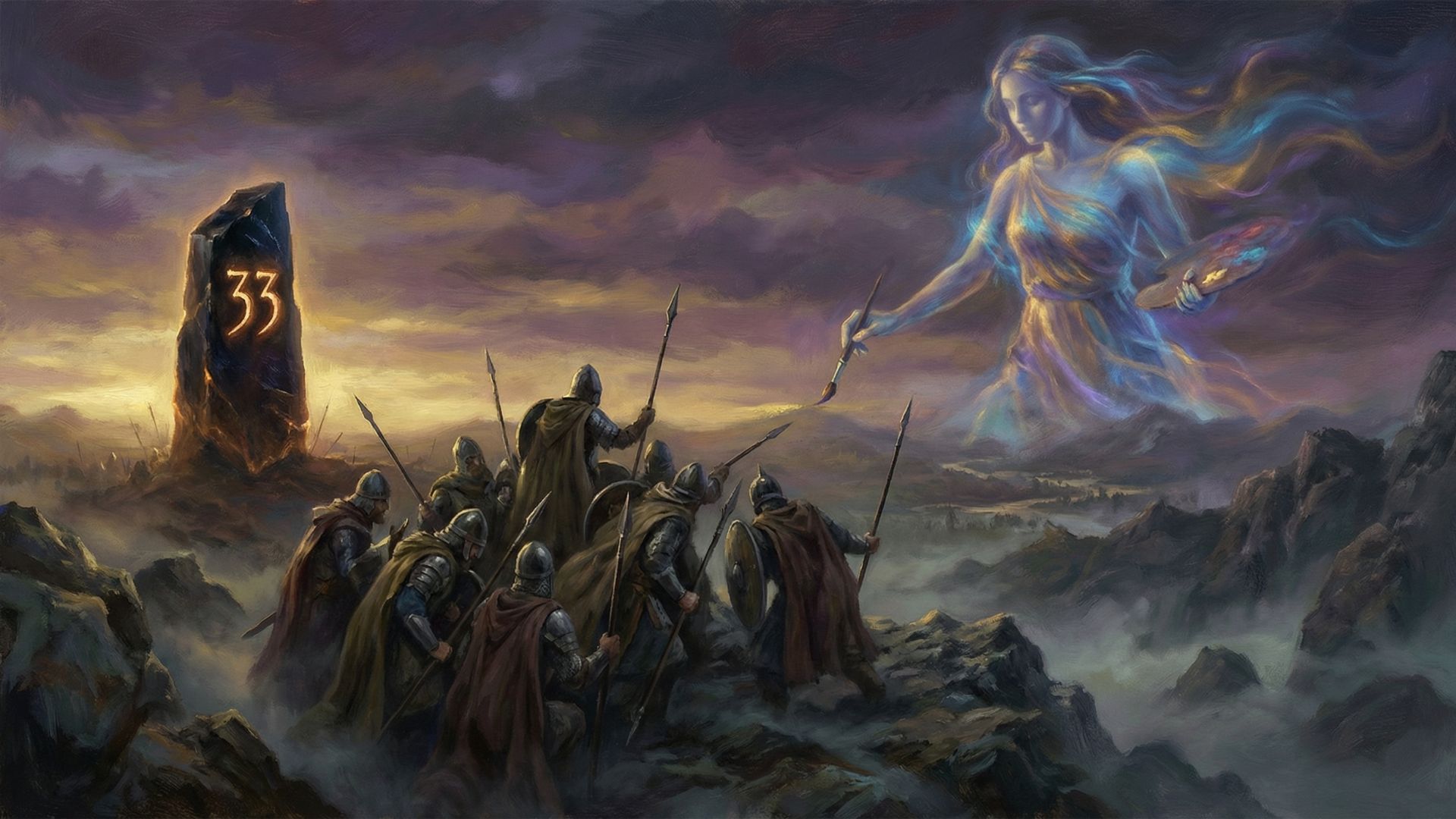
The setup sounds almost too good to be true for storytelling purposes. Every year, a godlike entity called the Paintress marks a number on a distant monolith, and everyone that age or older simply vanishes into nothingness. This year marks number 33, meaning anyone 33 and above faces oblivion when the number inevitably drops to 32.
Into this nightmare steps Expedition 33, a band of doomed souls who know they’re living on borrowed time. These aren’t your typical heroes motivated by glory or treasure. They’re people facing extinction, marching toward almost certain death because doing nothing guarantees annihilation anyway. Talk about raising the stakes right out of the gate.
What makes this premise work isn’t just the existential dread it creates, though there’s plenty of that to go around. The brilliance lies in how it contextualizes every relationship, every sacrifice, and every moment of levity throughout the journey. When characters joke around at camp or share personal stories, those moments carry extra weight because everyone involved knows the clock is ticking.
Combat that actually keeps you awake
Turn-based RPGs have a reputation problem. Mention the genre to casual gamers and watch their eyes glaze over as they imagine waiting around while numbers flash across the screen. Clair Obscur throws that stereotype out the window and sets it on fire for good measure.
The real-time elements woven into the combat system transform every encounter into an active experience. When enemies attack, you’re not passively watching damage numbers appear. You’re timing parries and dodges, reading attack patterns, and staying engaged throughout every single turn. Miss a parry and you eat damage. Nail it perfectly and you counter with devastating force while banking action points for your next offensive.
The Persona influences in the slick menu design and stylish flourishes are unmistakable, but the moment-to-moment gameplay feels more like Sekiro married a traditional JRPG and they had a very talented child. Boss fights demand genuine attention and skill, not just grinding until your numbers exceed theirs.
| Combat Feature | Description |
|---|---|
| Active Parry System | Time-based defensive inputs that reward precision with counterattacks and AP |
| Picto System | Equipable perks providing stat boosts and special abilities |
| Lumina Customization | Deep character building through stackable skill modifiers |
| Synergy Building | Party compositions that create devastating combo potential |
| Free Aim | Real-time aiming for applying status effects and break damage |
The depth of character customization through the Picto and Lumina systems deserves its own standing ovation. Initially, the three equipment slots per character seem limiting. Then you discover that using any Picto for four battles unlocks its ability text as a separate Lumina you can apply independently. Suddenly you’re stacking synergies, building counterattack specialists, creating tanks who absorb damage for the entire party, or constructing glass cannons protected by strategically placed buffs.
By endgame, I had party members dealing over 200,000 damage in single turns through carefully layered ability combinations. The ceiling for optimization feels almost limitless, which is exactly what veteran RPG players crave.
Visual storytelling that punches above its weight class
Here’s where the whole “thirty person team” thing becomes almost impossible to believe. Clair Obscur looks absolutely stunning, delivering visuals that rival productions with ten times the headcount and budget.
The art direction draws heavily from French artistic traditions, creating an aesthetic that feels distinctly European without abandoning the fantastical elements that make RPGs compelling. Ethereal landscapes give way to brutal battlefields strewn with bodies from failed expeditions. Whimsical environments contrast sharply with the ever-present reminder that death awaits everyone eventually.
Throughout my entire playthrough, I encountered zero bugs. Not a single crash, not one graphical glitch, not any of the jank that typically accompanies ambitious indie projects. The level of polish here would shame plenty of full-price releases from established studios.
Performances that deserve award recognition
The voice cast assembled for this project reads like a who’s who of acting talent. Andy Serkis, the man who brought Gollum to life and revolutionized motion capture performance, delivers work here that proves his involvement wasn’t just a marketing grab. His contributions become increasingly central as the story progresses, and he absolutely nails the material.
Every single performance lands with emotional authenticity that elevates the already strong writing. Dialogue flows naturally, with characters speaking like actual humans rather than exposition delivery vehicles. The small moments between party members at camp feel genuine, building relationships organically rather than through forced cutscenes.
When major story beats hit, and they hit hard multiple times throughout the journey, the performances sell every moment completely. I wouldn’t be shocked if this game dominates the performance categories at awards season.
Old school soul with modern execution
Sandfall Interactive clearly grew up playing the same games that defined the genre for many of us. The overworld design takes direct inspiration from classic SNES and PlayStation era RPGs, with a miniaturized world map connecting distinct locations. Unlocking new traversal methods opens previously inaccessible areas, rewarding exploration with secrets, superbosses, and side content that could easily add another 20 hours to the experience.
The absence of a traditional quest log initially feels strange, but it actually reinforces the old school philosophy driving the design. Discoveries feel genuinely earned because you stumbled upon them yourself rather than following a checklist. Hidden locations contain entire minigames, competitive arenas, and story content that flesh out the world without cluttering the main narrative.
One particularly memorable moment involved finding what turned out to be essentially “Only Up” but transplanted into this game’s engine. A character challenges you to reach the top of a towering structure, and suddenly you’re playing an entirely different genre. The game constantly surprises with these diversions, each one polished enough to stand alone as its own experience.
The weight of mortality
Thematically, Clair Obscur explores grief, sacrifice, and legacy with surprising maturity. The recurring phrase “for those who come after” becomes the expedition’s rallying cry, emphasizing that this fight isn’t about personal survival but ensuring future generations get a chance to exist at all.
Different characters process their impending doom in different ways, and the writing explores how grief can become destructive when it consumes someone entirely. These aren’t superficial character arcs tacked on for emotional manipulation. The story earns every emotional beat through careful setup and genuine payoff.
Without spoiling anything specific, I’ll say that certain revelations completely recontextualized my understanding of events I’d witnessed hours earlier. A second playthrough reveals countless details that hint at later developments, rewarding attentive players who catch the breadcrumbs scattered throughout.
Minor quibbles in an otherwise flawless package
Finding genuine criticisms feels almost petty given the overall quality, but a few quality-of-life improvements would push an excellent experience toward perfection.
Loadout saving would dramatically improve the late-game experience when you’ve accumulated dozens of Pictos and Luminas. Different encounters benefit from different builds, and manually reconfiguring everything each time becomes tedious. The ability to save and swap between preset configurations would streamline experimentation considerably.
A minimap during dungeon exploration would help track which paths you’ve already explored. The linear design keeps you moving forward, but occasionally backtracking to find missed items leads to momentary confusion about where you’ve already searched.
The Picto menu interface gets cluttered once you’re managing fifty-plus options on a cramped screen. Some organizational improvements would make the already excellent customization system even more accessible.
The verdict: buy this game yesterday
Clair Obscur Expedition 33 represents everything independent development should aspire toward. Creative vision uncompromised by committee decisions. Passionate execution that prioritizes quality over quarterly earnings. Respect for players intelligent enough to engage with deep systems without excessive hand-holding.
At fifty dollars, this game offers more value than most seventy dollar releases from major publishers. Game Pass subscribers get access day one, removing any barrier to experiencing what might become a genre-defining moment for turn-based RPGs.
The combat system alone would justify the purchase, but combined with stunning presentation, phenomenal performances, and a story that actually has something meaningful to say about mortality and legacy, Clair Obscur becomes essential playing for anyone who cares about the artistic potential of video games.
Sandfall Interactive should be immensely proud. They’ve created something that will be remembered, discussed, and referenced for years to come. In an industry increasingly dominated by safe sequels and service games designed to extract maximum revenue, this stands as proof that creativity and passion can still triumph.
Score: 9.5/10
Have you started your expedition yet, and if so, which party composition has become your go-to for tackling the toughest encounters?