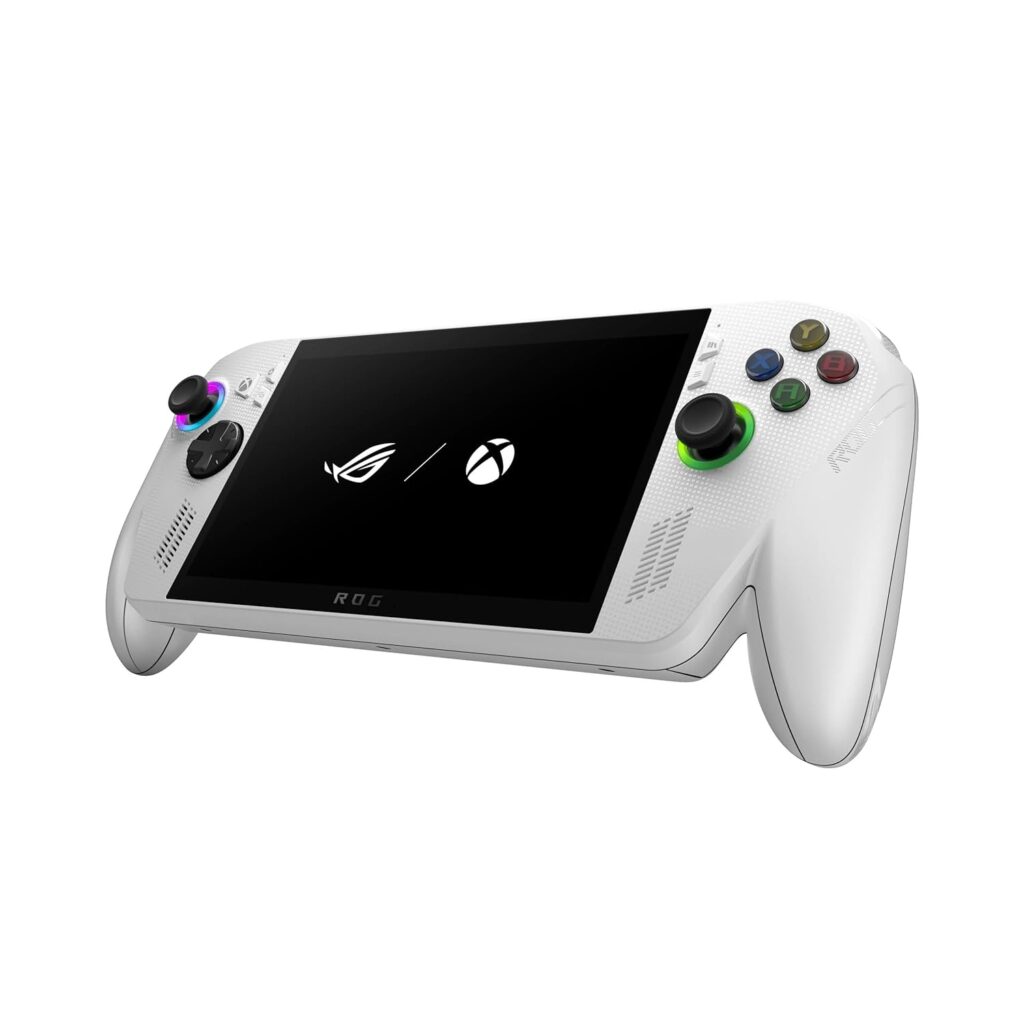




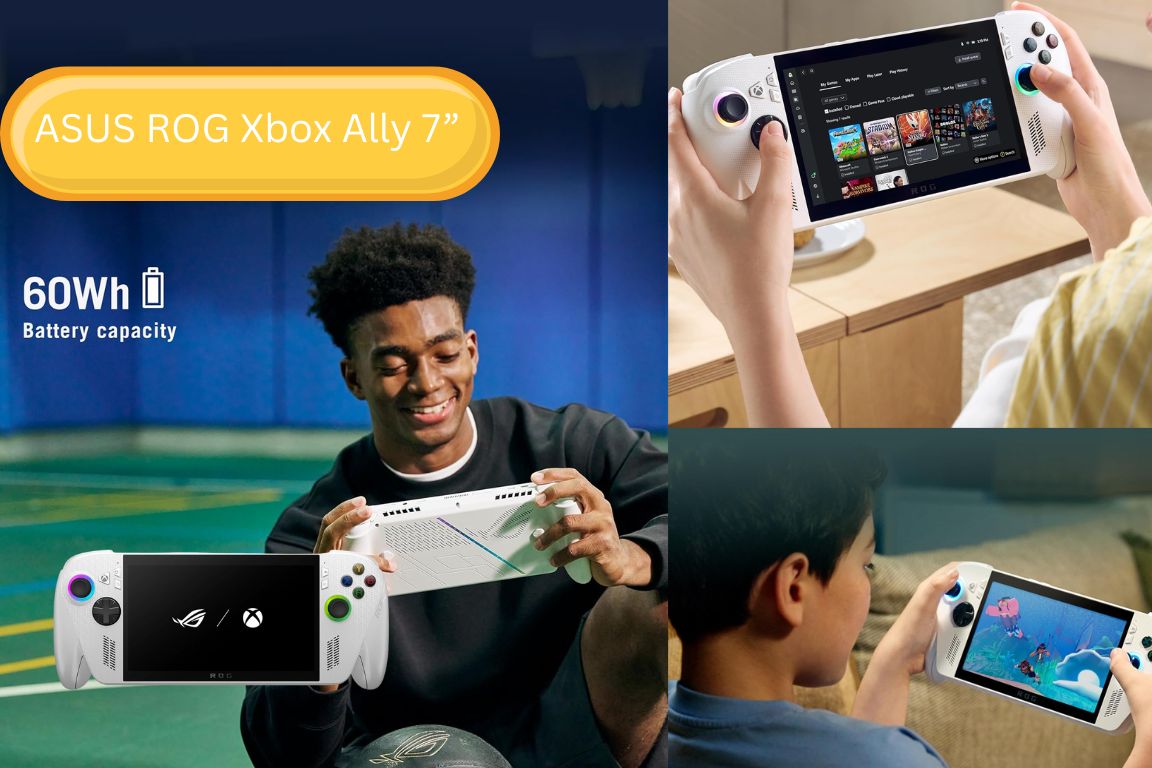
Razer Kishi, Legion Go, Steam Deck OLED, Ayaneo 2S – every handheld nails something. The ASUS ROG Ally 7 feels like the most balanced pick right now for playing full PC games without babysitting settings. Here is the fast take that matters.
Verdict
A sharp 7 inch 1080p 120 Hz screen with VRR, a fast AMD Ryzen Z2 A APU, 16 GB RAM, and a quiet cooling design give the Ally 7 the smoothest Windows handheld experience for the money. Battery life is average and Windows still needs a few tweaks, but frame pacing and game compatibility are excellent once you set per title profiles.
Key specs
- 7 inch IPS 1080p touch at 120 Hz with VRR
- AMD Ryzen Z2 A APU with RDNA graphics
- 16 GB LPDDR5 memory
- 512 GB NVMe storage with microSD expansion
- Hall effect sticks, responsive triggers, back buttons
- Windows 11 with Armoury Crate SE launcher
What it means for PC games
Frame rate and smoothness
The combo of 120 Hz and VRR cleans up stutter when a title bounces between 50 and 80 fps. Competitive shooters and fast indies feel much closer to a desktop with adaptive sync active.
Visual presets
At 1080p, most modern games sit at Medium to High once you cap to 60 or enable frame generation mods where allowed. For 120 Hz targets, push 720p or 900p with FSR. The APU handles esports titles comfortably at high refresh.
Anti cheat and launchers
Because it is Windows, anti cheat compatibility is better than on Linux based devices. Battle.net, EA, Ubisoft, Epic, and Game Pass PC all install normally. Keep an on screen keyboard hotkey for odd login fields.
Thermals and noise
Under sustained load the fan curve is audible but not harsh. The chassis stays comfortable in long sessions. A 25 to 30 W turbo profile is great docked with a charger, while a 10 to 15 W profile balances heat and battery on the go.
Battery reality
Expect 2 to 3 hours for new AAA games at 60 fps, 3 to 5 hours for indies and retro friendly titles, and much longer for cloud streaming. A 30 to 45 W power bank is a smart add.
Controls and feel
Hall effect sticks prevent drift, triggers are consistent, and the rear buttons are perfect for crouch or ping. Haptics are modest yet helpful in menus.
Storage
512 GB fills fast. Move big libraries to microSD for single player and keep shader heavy multiplayer on the internal SSD for faster loads.
Software notes
Armoury Crate SE organizes your library and power profiles. Create per game TDP caps and refresh rate presets. Turn on background app kills and set a quick toggle for VRR. Use the built in FPS overlay to confirm frame time consistency.
Where it beats rivals
- Better Windows compatibility than Linux handhelds
- VRR plus 120 Hz feels meaningfully smoother than fixed 60 on similar screens
- Price to performance is strong, especially if you also want a mini console when docked
Where it falls short
- Battery life trails Steam Deck OLED at similar settings
- Windows UI still needs touch first polish
- The base SSD is small for a modern PC library
Buy if
- You want day one support for anti cheat heavy games
- You value VRR and a crisp 1080p panel
- You plan to dock at a TV or monitor and use it as a tiny PC
Skip if
- You need 5 plus hour unplugged sessions
- You prefer a console like interface over Windows