




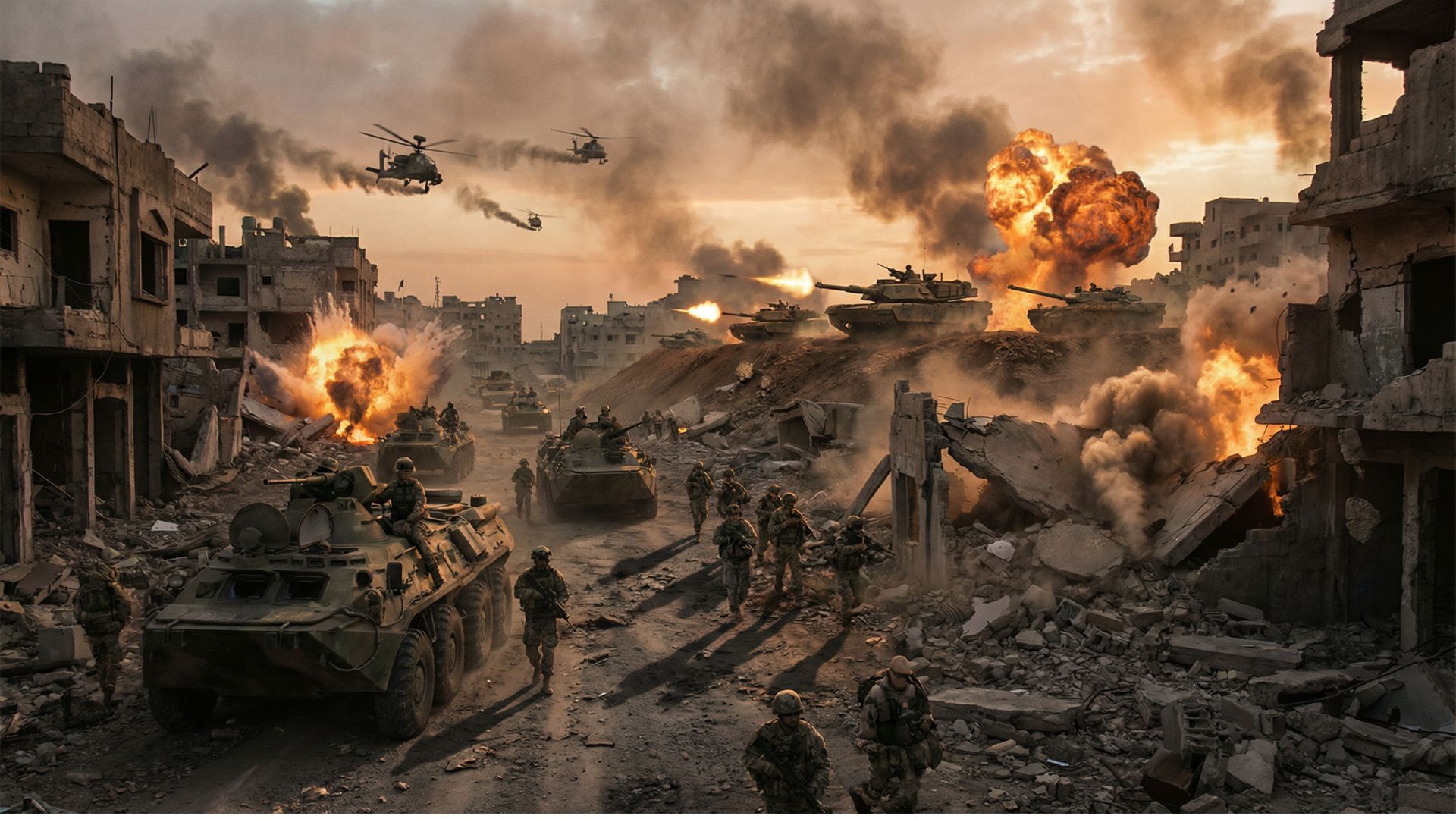
With 700,000 concurrent players on Steam and millions more on console, Battlefield 6 isn’t just having a good launch. It’s having a historic one.
After the disaster that was Battlefield 2042, skepticism ran high leading into this release. Could DICE and EA actually deliver the large-scale warfare experience fans had been craving? After putting in serious hours with the final build following extensive beta testing, the answer is a resounding yes, with a few caveats that deserve honest discussion.
This isn’t just a return to form. This is Battlefield operating at a level the series has never reached before. The gunplay sings. The destruction stuns. The teamwork mechanics create moments of genuine tension and triumph. But there’s also a forgettable campaign and some always-online headaches that warrant attention before you drop your money.
Let’s break down everything that works, everything that doesn’t, and why this might genuinely be the future of first-person shooters.
What makes battlefield 6 special
The magic of Battlefield has always been its scale. While Call of Duty excels at tight, fast-paced encounters, Battlefield makes you feel like one soldier in a massive conflict. Running toward frontlines with bullets whizzing past, hopping into vehicles to provide fire support, coordinating with squadmates to capture objectives. When this formula works, nothing else in gaming matches it.
Battlefield 6 perfects this formula.
The 64-player conquest matches deliver exactly what longtime fans wanted. Enormous maps representing full city blocks, military installations, and varied terrain create battlefields that evolve throughout matches. What starts as an urban assault can become a desperate defensive stand as the map literally transforms around you.
Speaking of transformation, the destruction system deserves its own monument. Buildings don’t just take damage. They crumble brick by brick, floor by floor, creating dynamic cover opportunities and eliminating camping spots in real-time. Matches that last 30-40 minutes can leave maps looking completely unrecognizable from their starting states. The technical achievement here is genuinely remarkable.
Core gameplay strengths:
| Element | Execution | Impact |
|---|---|---|
| Gunplay | 45 weapons, all excellently balanced | Every gun feels viable and satisfying |
| Destruction | Full building collapse physics | Maps evolve dynamically |
| Scale | Massive maps, 64 players | True warfare experience |
| Time-to-Kill | Fast and punishing | Rewards positioning and teamwork |
| Vehicles | Tanks, helicopters, transport | Integrated naturally into combat |
The weapons and how they feel
Let’s talk about what matters most in any shooter: how the guns feel in your hands.
Battlefield 6 ships with 45 weapons spanning pistols, assault rifles, SMGs, shotguns, sniper rifles, and grenade launchers. Every single one I’ve tested extensively feels distinct, useful, and satisfying. The M4 delivers reliable performance for standard engagements. Sniper rifles punish exposed enemies at range. Shotguns dominate close-quarters building clearing.
The time-to-kill sits on the faster end of the spectrum, rewarding players who position well and aim true. Unlike some shooters where you can absorb multiple hits while spinning to return fire, Battlefield 6 punishes mistakes harshly. Get caught in the open? You’re dead. Miss your first shots? Your target will likely kill you before you correct.
This lethality might frustrate players coming from more forgiving games, but it creates genuine tension in every engagement. Survival feels earned rather than assumed.
Weapon customization adds depth without overwhelming. As you accumulate kills and complete objectives, you unlock attachments including extended magazines, reload speed enhancements, and various optics. The system provides meaningful progression without creating massive power gaps between new and veteran players.
The class system controversy
Here’s where opinions diverge sharply within the community.
Battlefield 6 features four distinct classes: Assault, Engineer, Support, and Recon. Each brings unique abilities to the battlefield. Assault excels at direct combat with armor plates and explosives. Engineers keep vehicles operational and deploy defensive structures. Support provides healing, revives, and ammunition. Recon spots enemies and engages at extreme range.
The controversial element? Unlocked weapons.
Unlike earlier Battlefield titles where classes had restricted weapon access, Battlefield 6 allows any class to equip any weapon. A Recon can run an LMG. A Support medic can carry a shotgun. This freedom creates interesting possibilities but also undermines class identity for some players.
Class overview:
| Class | Primary Role | Special Abilities |
|---|---|---|
| Assault | Frontline combat | Armor plates, explosives, mines |
| Engineer | Vehicle support | Repairs, defensive structures |
| Support | Team sustain | Revives, healing, ammo distribution |
| Recon | Intelligence | Enemy spotting, long-range engagement |
The game does offer some locked-weapon playlists for purists, but they represent a minority of available modes. More locked-weapon options would satisfy players who preferred the strategic considerations of traditional class restrictions. Two shotgun-wielding medics camping a building and mass-reviving each other shouldn’t be quite so effective.
The campaign nobody asked for
Nine missions. That’s what you get for single-player content, and honestly, you’re not missing much by skipping it entirely.
The story follows your squad battling Prox Armada, a paramilitary force that has somehow replaced NATO and conquered most of the planet. You fight through Georgia, New York, and other locations trying to liberate humanity from this new global threat.
The premise strains credulity past the breaking point. The voice acting ranges from mediocre to actively bad. Animations frequently look off in ways that break immersion. The whole thing functions essentially as a glorified tutorial, introducing mechanics you’ll use in multiplayer without providing any compelling reason to care about the characters or conflict.
This isn’t unusual for Battlefield campaigns, which have rarely matched the quality of dedicated single-player shooters. But it remains disappointing when games like Titanfall 2 proved that multiplayer-focused franchises can deliver memorable campaigns.
Always-online headaches
Even the campaign requires constant internet connection, leading to frustrating situations that shouldn’t exist for single-player content.
Login queues plagued launch day, with waits exceeding 400,000 players at peak times. Getting disconnected mid-match sends you back to the end of that queue. Server instability occasionally booted half a lobby, replacing human opponents with bots mid-match. Imagine fighting a tense battle only to realize your enemies suddenly became AI opponents.
These issues will likely improve as servers stabilize and EA provisions additional capacity. But the fundamental design choice of requiring always-online for single-player content remains questionable. If my internet hiccups during a campaign mission, why should I lose progress?
Launch issues experienced:
| Problem | Frequency | Severity |
|---|---|---|
| Login queues | Every session | Moderate to severe |
| Mid-match disconnects | Occasional | Frustrating |
| Bot replacements | Rare | Immersion-breaking |
| Campaign interruptions | Occasional | Unnecessary |
The maps deserve celebration
Nine maps at launch might seem slim compared to Call of Duty’s typical count, but these aren’t comparable products. A single Battlefield 6 map contains more playable space than entire Call of Duty map rotations.
We’re talking full city blocks. Multiple neighborhoods. Industrial complexes. Military bases with layered defenses. Each map supports different playstyles and strategies depending on where fighting concentrates. Urban maps favor infantry and close-quarters specialists. Open terrain advantages vehicles and snipers. Mixed environments create natural front lines that shift as matches progress.
The variety satisfies across the nine offerings, though one desert gas station map feels weaker than the rest. Even that “worst” map provides engaging gameplay. There are no true duds in the rotation.
Teamwork isn’t optional
Most game modes feature shared team lives, meaning deaths matter beyond personal statistics. Those 200 shared spawns sound generous until you realize careless play drains them rapidly. However, revives don’t count against the total, creating powerful incentives for medic play and careful advancement.
This system transforms the experience compared to typical shooters where individual performance dominates. Lone wolves running behind enemy lines to pad kill counts actively hurt their teams. Medics who prioritize revives over personal glory become heroes. Engineers keeping tanks operational enable sustained pushes. Recons spotting enemies prevent ambushes.
Coordination between strangers happens naturally because the game mechanically rewards it. Winning feels genuinely earned because it required actual teamwork rather than simply having better individual players.
The battle royale question
Rumors and leaks suggest a Battlefield 6 battle royale mode exists in some form of completion. Given how excellently the gunplay, destruction, and vehicle systems work, this mode could be exceptional. Why EA isn’t launching it alongside the base game remains mysterious.
Perhaps they’re spacing content releases to maintain player interest. Perhaps technical issues require additional polish. Regardless, the foundation here would support an incredible battle royale experience, and waiting feels unnecessarily frustrating.
The verdict
Battlefield 6 delivers the large-scale warfare experience fans have craved since Battlefield 4’s glory days. The gunplay feels incredible. The destruction technology astounds. The teamwork mechanics create meaningful cooperation rather than just aesthetic squad groupings. The maps support varied playstyles across extended matches.
The campaign exists but shouldn’t influence purchasing decisions. Always-online requirements create unnecessary friction. The unlocked weapons system divides opinion. But these complaints feel minor against the overwhelming success of the core multiplayer experience.
EA set a goal of 100 million players. Based on the launch numbers and gameplay quality, that target seems achievable. This feels like a franchise back at peak form, potentially establishing a new standard for multiplayer shooters.
After 65 hours in the beta and substantial time with the final release, the improvements are clear and meaningful. Maps are larger. Balance is tighter. Exploits are removed. What remains is pure, satisfying, large-scale combat that nothing else on the market matches.
Final Assessment:
| Category | Rating | Notes |
|---|---|---|
| Gunplay | Excellent | 45 balanced weapons |
| Maps | Excellent | Massive, varied, destructible |
| Teamwork | Excellent | Mechanically encouraged |
| Campaign | Poor | Forgettable, skip it |
| Server Stability | Improving | Launch issues expected to resolve |
| Overall | Highly Recommended | Best Battlefield in years |
Have you jumped into Battlefield 6 yet, and if so, which class and playstyle has become your go-to for those massive conquest battles?