



Eighteen months is a lifetime in live-service gaming. Most free-to-play titles peak within their first quarter and spend the rest of their existence managing decline. Once Human launched in mid-2024, pulled in enormous player numbers, weathered a privacy policy controversy, survived the skepticism that follows every NetEase-published title, and somehow came out the other side with a player base that is still growing. That alone makes it worth examining. But player retention does not automatically mean a game is good. It means the game is doing something right. The question is whether that something is enough.
After spending significant time with Once Human across multiple seasonal resets and the 2026 system overhauls, the answer is a qualified yes. This is a genuinely good game with real problems that it mostly manages to outweigh with creativity, generosity, and a willingness to reinvent itself every few weeks.
The World Is the Whole Point
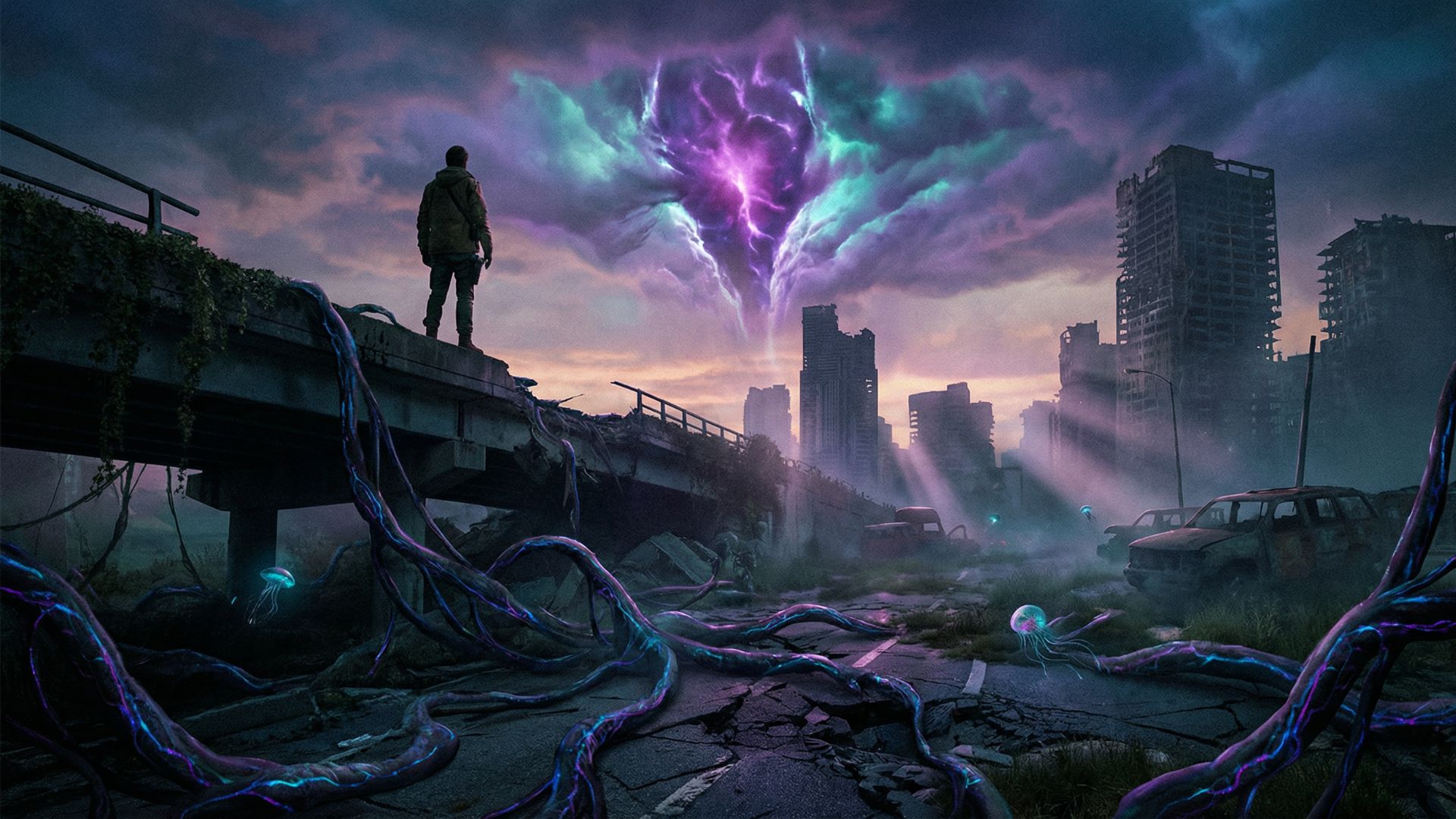
If Once Human only had one thing going for it, the world would be enough to justify the download. Starry Studio built a post-apocalyptic setting that feels nothing like the dozens of zombie wastelands cluttering up Steam. The alien infestation premise means that anything in the environment can become a monster. Not just people. Anything. You will fight a light bulb that mutated into a giant spider. A creature with a traffic cone jammed onto its head. A tree that used to be a pregnant woman. A boss with a phone tower growing out of its skull.
This commitment to weirdness keeps exploration rewarding in ways that most survival games cannot sustain. When every new zone might contain something you have genuinely never seen before, the motivation to push into the next area stays strong long after the crafting loop becomes familiar. The environmental storytelling leans into supernatural horror and interdimensional strangeness without ever becoming oppressive or edgy about it. It is weird in a fun way. Weird in a way that makes you screenshot things and send them to friends.
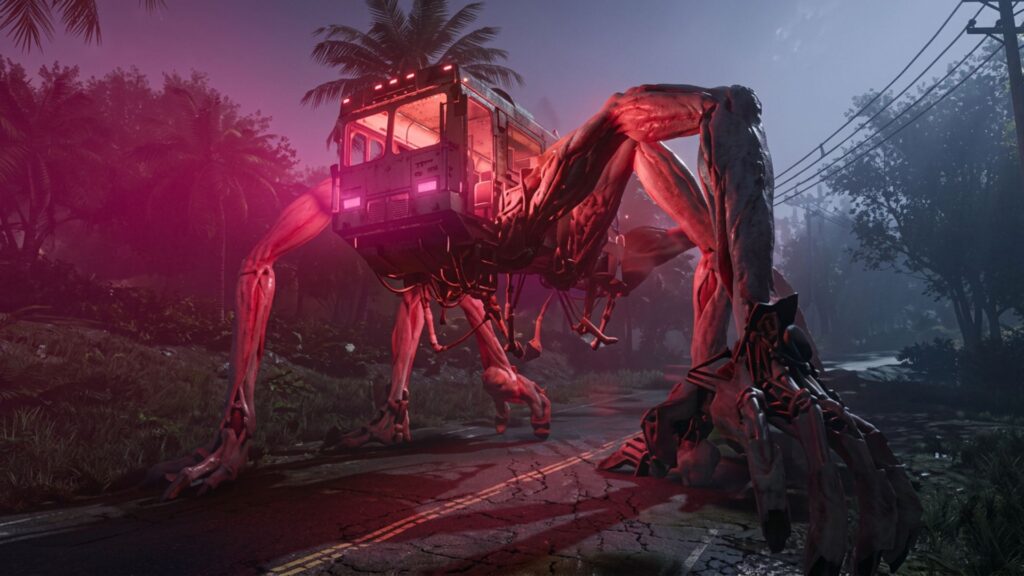
The map itself is huge, dense with points of interest, and remarkably free of dead space. Strongholds function like Ubisoft-style clearable locations with their own enemy compositions, loot tables, and completion objectives. Open spaces between them are filled with dynamic events, roaming bosses, jumping puzzles, ghost riddles, and hidden secrets that reward curiosity. There is a spider bus that stomps through city streets. Houses that lift off their foundations and walk away. Space whales that fly overhead and drop PvP-flagged orbs. The variety borders on absurd, and that is exactly what makes it work.
Combat That Surprises You Eventually
The early hours of combat are not impressive. Enemies on novice servers barely react to your presence. Health bars drain quickly. Boss encounters feel like target practice. If your first ten hours are spent on a default server, you will wonder what all the fuss is about.
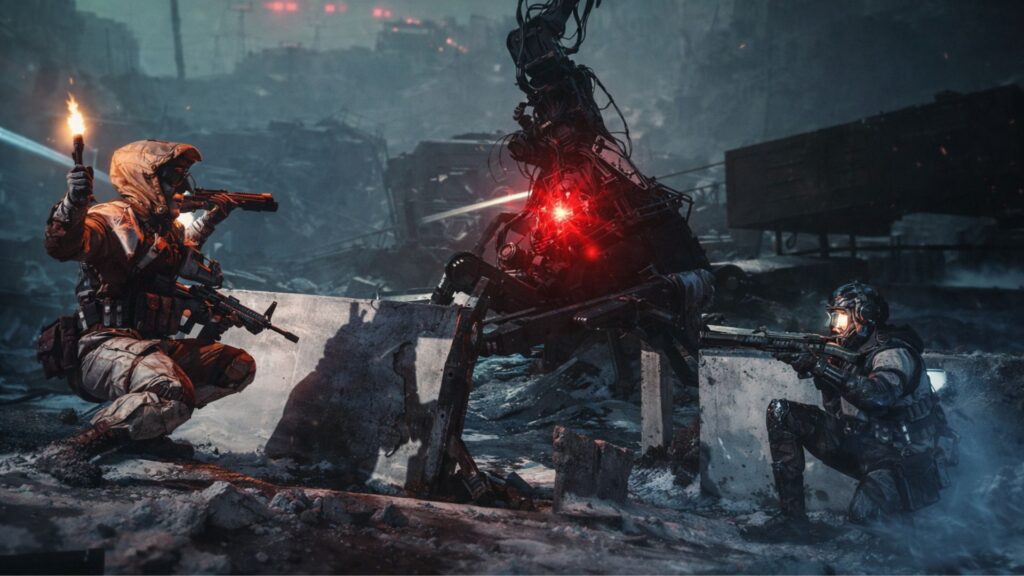
Then you switch to a hard mode server or push into polluted zones or take on a monolith boss fight and the game transforms. Monolith bosses are raid-scale encounters with distinct mechanics, multiple phases, and genuine punishment for poor positioning. The Foul Shadow Hunter summons adds, shoots rockets, and lays poison pools. The Triant combines dinosaur physicality with branching tentacle attacks and a laser beam. Arxium is a spider lady who floods the arena with webbing and mini-spider hordes.
These fights are good. They demand group coordination, build optimization, and spatial awareness. They feel like they belong in a dedicated looter shooter rather than a survival crafting game. And that tension between the casual survival loop and the serious endgame combat is one of Once Human’s defining characteristics.
The gunplay itself is solid without being exceptional. First-person aiming feels tight. Third-person shooting suffers from spread inconsistency. Melee is floaty and has never felt great, though it is rarely your primary damage source. Movement in general has a drifting quality that takes getting used to, almost certainly a byproduct of latency compensation in a shared online world. You learn to work with it rather than against it.
Building Without the Punishment
Base building in survival games is usually either the whole point or an afterthought. Once Human lands in a sweet spot where building is deep enough to be satisfying but forgiving enough to never feel like a chore.
Resources are abundant. A single tree drops two dozen logs. Ore nodes respawn in minutes. You can relocate your entire base with one click and a ten-minute cooldown. The building menu is well organized, structural pieces snap together intuitively most of the time, and the specialization system lets you go deep into weapon smithing, farming, cooking, or construction depending on what interests you.
The game is generous with how quickly you can stand up a functional base. Within a couple hours of starting a new scenario, you can have a multi-room structure with crafting stations, storage, a stove, a bed, defensive turrets, and a Stardust Resonator for the weekly base defense minigame. That speed matters in a game with seasonal resets. Nobody wants to spend three days building a base they will lose in three weeks.
The deviant housing system adds a layer of personality. Captured deviations live in glass cases inside your base, and each one has preferences for temperature, lighting, music, and nearby objects. Keeping them happy boosts their effectiveness, whether they are mining ore, chopping wood, sweeping floors, or fighting alongside you in combat. It is a management minigame that never demands too much attention but rewards players who engage with it.
The Seasonal Model Is the Secret Weapon
This is where Once Human separates itself from every other survival game on the market. The seasonal model borrows from action RPGs like Path of Exile and Diablo rather than from survival game conventions. Each scenario runs for a set duration, typically 22 to 40 days, and introduces unique modifiers that change how you play.
Way of Winter adds cold survival mechanics and Blood Moon events that slash your max health at night while boosting enemy aggression and loot rewards. Endless Dream spawns corrupted dream zones across the map that require purification. Deviation mode strips out combat entirely and replaces it with creature battling. Each scenario feels like a different game wearing the same skin.
When a scenario ends, your character level and Tech tree reset. But you keep your blueprints, your recipes, your story progression, and you can save your base as a template to redeploy on your next server. You can also inherit a limited number of items from previous scenarios, giving you a head start without trivializing the fresh experience.
This solves the biggest problem in survival gaming: the endgame void. In most survival games, once you have built your dream base and killed the final boss, there is nothing left to do. Once Human gives you a reason to start over by changing the rules each time. It is not perfect. Players who want permanent long-term progression in a single save will find the resets frustrating. But for everyone else, the seasonal model injects a level of replayability that the genre has never really had before.
The Free-to-Play Model Is Shockingly Fair
Once Human is free-to-play and published by NetEase, which is a combination that normally sets off every alarm bell in the industry. And yet the monetization is genuinely restrained.
There is no pay-to-win. The cash shop sells cosmetics: character outfits, weapon skins, base decoration packs, and deviation appearances. The battle pass has a free tier with progression currencies and a paid tier that is entirely cosmetic. Star Chrom, the primary endgame currency used for blueprint acquisition through the Wish Machine, cannot be purchased with real money. Controllers, the consumable keys used for bonus dungeon and boss rewards, also cannot be bought.
This is remarkable for a 2026 free-to-play game. The restraint is worth acknowledging because it directly impacts how the game feels to play. You never hit a wall where spending money would solve your problem. Progression is gated by time and effort, not by wallet size. Hats off to Starry Studio for launching this way and maintaining it through multiple seasons.
The obvious caveat is that this could change. Star Chrom and Controllers are one executive decision away from appearing in the cash shop, and the Wish Machine’s gacha-adjacent structure is already built to accommodate paid currency if Starry Studio ever decides to flip that switch. For now, though, the model is clean.
Where It Still Hurts
The Wish Machine is the game’s most frustrating system even without real-money involvement. It functions like a gacha pull. You spend Star Chrom, press a button, and get a random blueprint. Higher rarity blueprints are rarer. Duplicate blueprints feed into a star rating system that increases item power. The randomness is the randomness, no different in principle from a boss loot table, but the presentation as a slot machine feels worse psychologically than killing a boss and seeing what drops.
Star Chrom is also weekly-capped, meaning you can only earn a fixed amount per week regardless of how much you play. Time-gating layered on top of RNG is a combination that tests patience even in the best of moods.
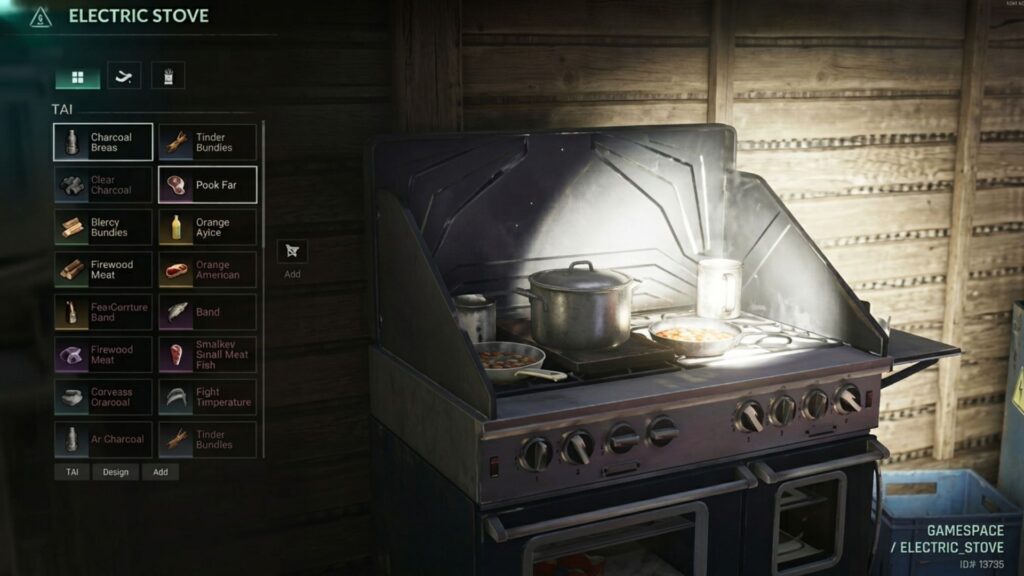
The UI is a disaster. Once Human tracks progression across at least eight separate menu systems, each with its own sub-menus, currencies, and manual claim buttons. Journey. Season Goals. Mayfly’s Fantastic Journey. Events. Community Events. Discord Rewards. Battle Pass. Regular event tabs. Playing the game earns you rewards. Claiming those rewards requires navigating a labyrinth of menus that feels like filing taxes in a video game. This is the single easiest quality-of-life improvement Starry Studio could make, and the fact that it has persisted for 18 months is baffling.
PvP is still not in a good place. Community feedback consistently points to bugs, exploits, and balance issues across PvP scenarios. If competitive player-versus-player combat is your primary reason for playing a survival game, Once Human is not going to satisfy that itch in its current state. The PvE experience carries the game.
And difficulty, while improved with the polluted zone overhaul and hard mode servers, still skews too easy for most of the open world. Monolith bosses are the exception. Everything else rarely threatens a geared player. The game could use a universal hard mode toggle or scaling difficulty that tracks with player power, because the gap between regular combat and boss encounters is jarring.
The Verdict
Once Human is a game that blends survival crafting, looter-shooter itemization, creature collecting, and seasonal live-service design into a package that should collapse under its own weight. Instead it holds together, and in some areas it genuinely excels. The world is one of the most creative in the genre. The build system has real depth. The seasonal model solves problems that survival games have struggled with for years. And the free-to-play model is the fairest you will find in 2026.
It is not for everyone. The seasonal resets, the gacha-style Wish Machine, the overwhelming menus, and the inconsistent difficulty will turn some players away. That is fair. But for a game that costs nothing to try, the amount of content and creativity on offer here is hard to argue with.
If you are considering jumping in, start by choosing the right scenario for your playstyle. Our Once Human scenarios guide for 2026 compares every active mode side by side so you can find the best fit before committing your time.
With console crossplay on the horizon and the Year of the Monsters promising new maps, new systems, and new reasons to come back, Once Human is heading into its most important stretch yet. The real test is not whether the game is good today. It is whether Starry Studio can keep this momentum going without compromising the fairness and creativity that got them here. How long can a free-to-play survival MMO resist the temptation to monetize its power gates?