




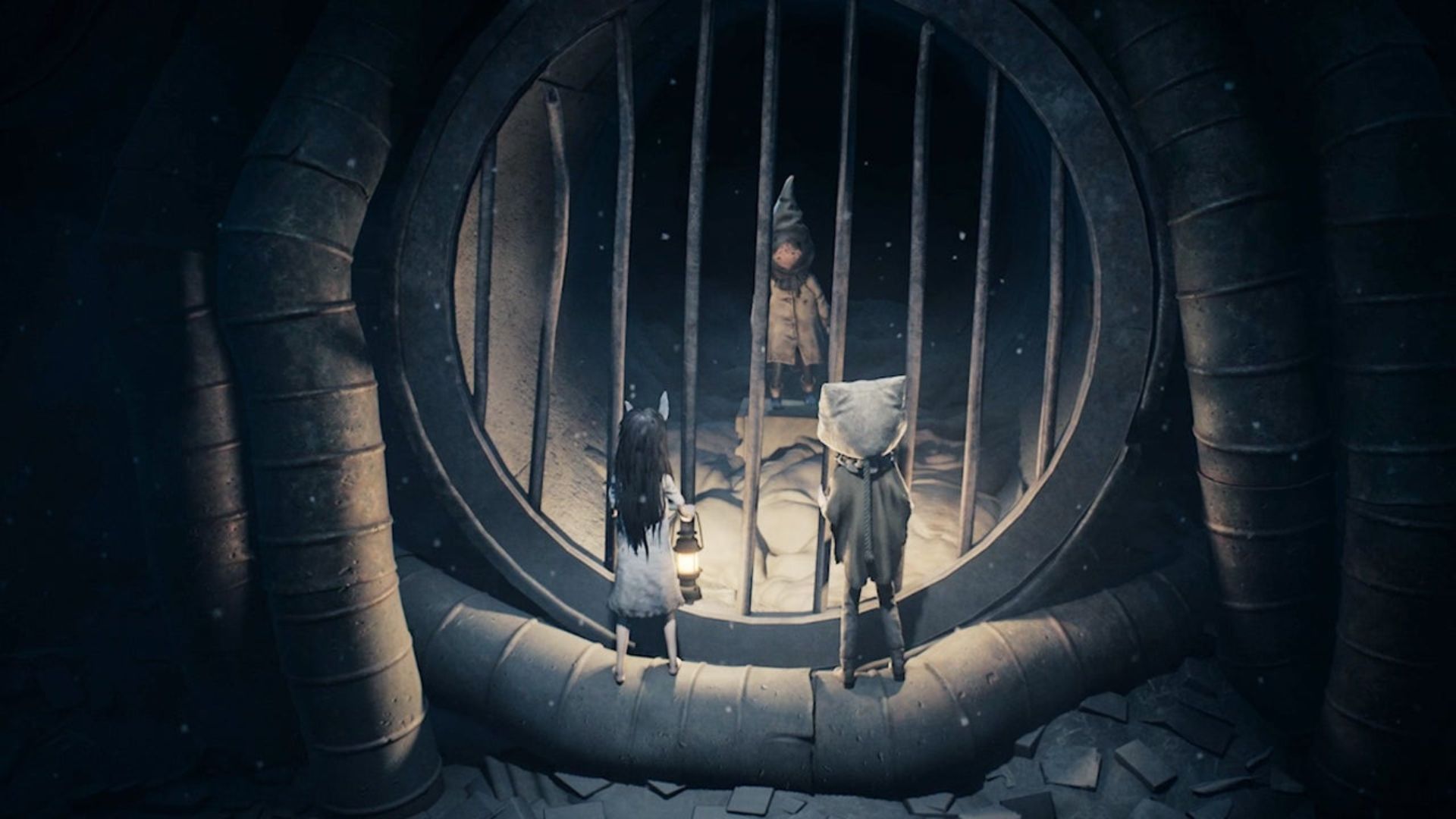
Five hours into Reanimal, my co-op partner and I were sprinting through a collapsing room carrying a wheel we desperately needed to attach to a car outside. Hollow, slimy things that used to be human were sliding across the floor behind us. The respawn point was ten seconds back. There was nothing mechanically at stake. And yet both of us were screaming.
That’s the trick Tarsier Studios has pulled off here. Reanimal doesn’t need punishment mechanics to terrify you. It just needs you to care about not being caught.
A Studio Returning to Its Sharpest Instincts
Tarsier Studios built its reputation on Little Nightmares, a game that turned childhood fear into interactive art. The 2021 sequel drew criticism for softening the edges, pulling back on the grotesque imagery that made the original so memorable. Reanimal feels like a direct response to that feedback.
The studio has gone darker. Not gratuitously, but with clear intent. Where Little Nightmares explored how children perceive a frightening world, Reanimal digs into something more specific and more uncomfortable: childhood trauma, and how revisiting it warps the memory into something worse than the original experience. It’s closer to psychological horror than surreal allegory. The shift is subtle in execution but significant in impact.
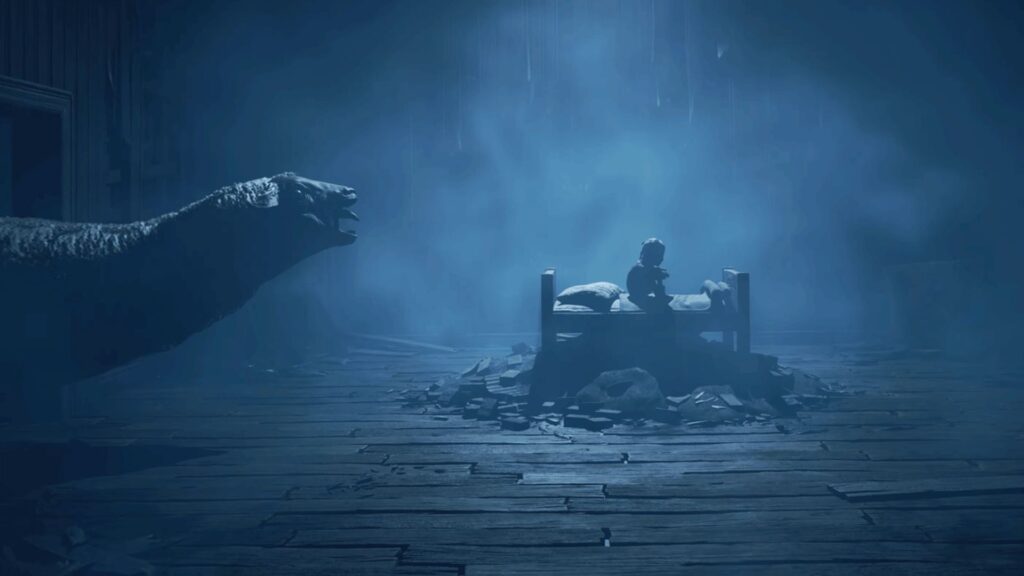
Giant mutated creatures populate every island. A vindictive ice cream vendor hunts you through corridors. A sniper fires from a clock tower while you cross an open field. Each encounter is grotesque, but the real dread comes from the spaces between them, the quiet moments where a dripping pipe in one ear and barely perceptible breathing in the other make you question whether anything is actually there.
No cheap jump scares. Just atmosphere that sits in your stomach and refuses to leave.
Co-op That Actually Means Something
Reanimal is built around two orphan siblings searching for three lost friends across a chain of hostile islands. The game locks both players to a single camera perspective, and straying too far apart means death. It’s a simple constraint that produces constant, organic tension.
The best friction isn’t between the players and the game. It’s between the players themselves. My partner and I spent more time arguing about whether to investigate a suspicious crack in a wall than we did solving any puzzle. The game is littered with secret passages, hidden collectibles, and wearable masks that reward exploration, and deciding how thorough to be when something is probably lurking around the next corner becomes its own negotiation.
A Friend’s Pass lets your co-op partner play without owning the game. Online co-op is available alongside local, though crossplay is absent at launch with no confirmation it’s coming. If you can’t find a partner, an AI companion fills the slot, but the game clearly wants two humans making bad decisions together.
Where It Stumbles
The puzzles are the weakest link. Across the entire playthrough, there were maybe two moments that required more than a few seconds of thought. Everything else clicked into place almost immediately. For a game this good at building tension, the lack of challenging puzzle gates feels like a missed opportunity. Those moments of friction, where you’re stuck and forced to slow down after a heart-pounding chase, would have given the pacing more texture.
The runtime sits at roughly five to seven hours. That’s appropriate for the experience Tarsier is delivering, but it does mean the asking price needs to feel justified. In our case, we planned to split the game across two sessions and ended up finishing it in one. The “just one more chapter” pull is relentless.
The Art of Saying Less
Reanimal’s narrative never explains itself. You’re never told how the friends went missing. The symbolism is layered but unresolved, and different players will walk away with different interpretations of what actually happened to these children. That ambiguity is the game’s greatest storytelling strength.
The visual language reinforces it. The world is rendered in muted grays with crimson red as the only consistent accent color, used both as a navigational guide and a warning system. The more red you see, the worse things are about to get. By the final boss encounter, the screen is drenched in it.
| Aspect | Assessment |
|---|---|
| Atmosphere and world-building | Exceptional. Surpasses Little Nightmares |
| Sound design | Outstanding. Builds dread without relying on jump scares |
| Co-op integration | Strong. Single-camera constraint creates real tension |
| Puzzle difficulty | Underwhelming. Too few moments of genuine challenge |
| Narrative depth | Rich and ambiguous. Rewards interpretation |
| Runtime | 5-7 hours. Tight but satisfying |
| Replayability | Moderate. Collectibles and secrets encourage a second pass |
More Than a Successor
Reanimal is not Little Nightmares 3 wearing a different name. It shares DNA, certainly. The doorways that echo the original’s artwork, the mask collectibles, the stealth-and-puzzle loop. But the thematic ambition is sharper, the horror more personal, and the co-op design more considered.
The addition of weapons, a knife and a crowbar that double as tools for opening pathways, gives players a sense of agency that Little Nightmares never offered. You’re not just running. You’re fighting back. It’s a small change that fundamentally alters how vulnerable you feel, and Tarsier uses that shifting power dynamic to keep you off balance.
DLC is confirmed but undated, and the ending leaves enough threads dangling to warrant genuine anticipation rather than the usual post-credits obligation.
Reanimal is unsettling, beautiful, and built on the idea that facing something terrible is survivable if you don’t have to do it alone. Tarsier Studios has made something that lingers.
If this is what the studio looks like when it stops playing it safe, what happens when they push even further?
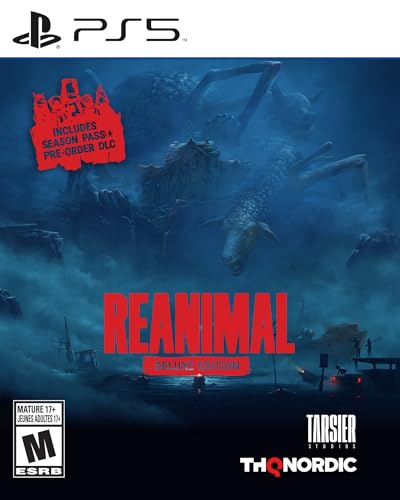
- The original creators of Little Nightmares & Little Nightmares II have returned to take you on a more terrifying journey…
- In this unsettling tale, the emphasis is on tension and thick atmosphere, as you join the two orphans on a desperate sea…
- Traverse an intriguing but terrifying world, where the main path is only one part of the fragmented story. Discover all …