




Every Mario Kart race you’ve ever won was probably rigged in your favor, and honestly? That’s a feature, not a bug.
Think about it. No matter how badly you’re bombing in Rainbow Road or how dominant your lead seems on Coconut Mall, the race always feels close. When you’re crushing it in first place, blue shells rain down like divine punishment. When you’re eating everyone’s dust in last place, suddenly you’re grabbing bullet bills and golden mushrooms like they’re going out of style. Coincidence? Not even close.
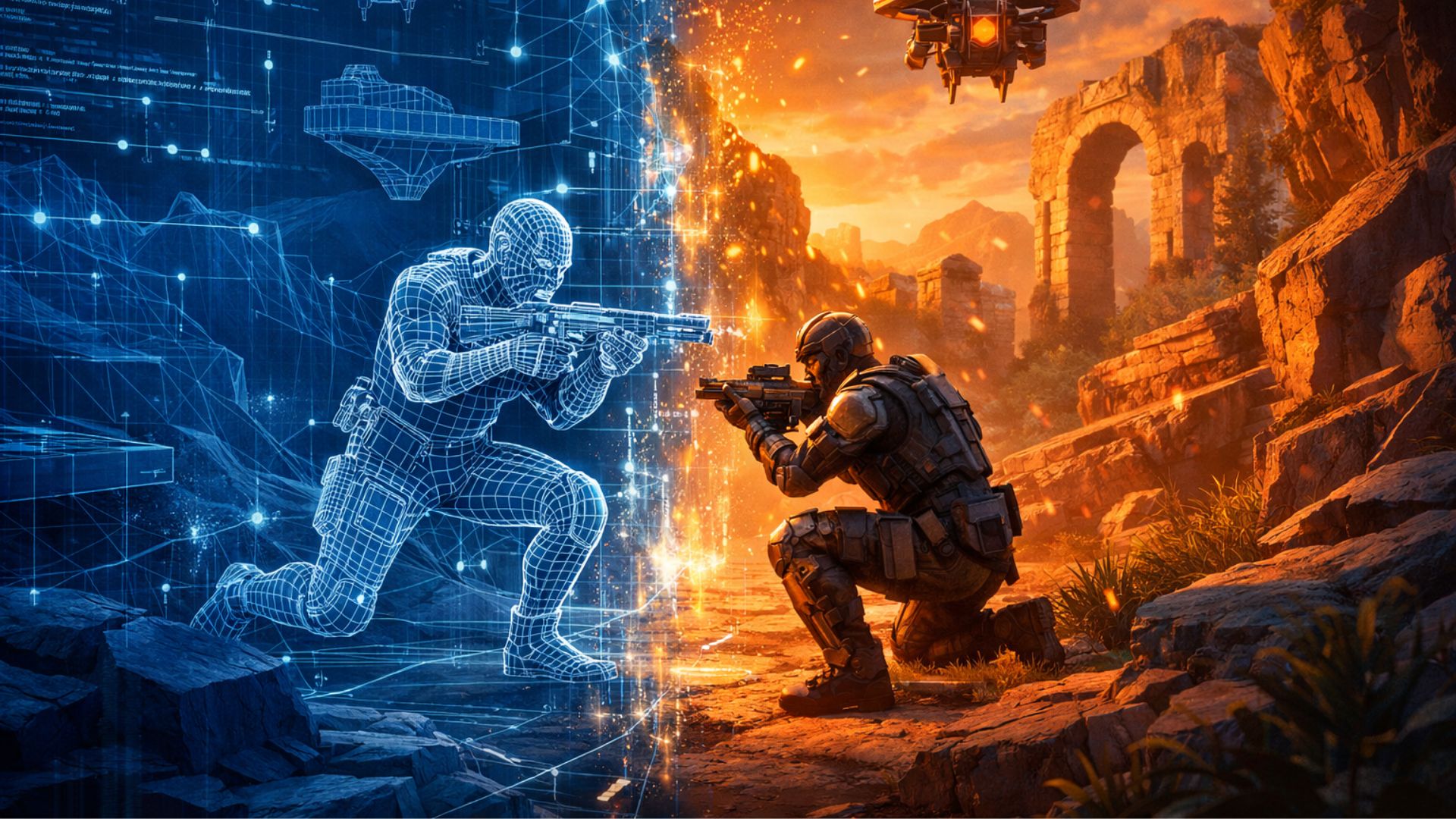
Welcome to the wonderful world of video game deception, where developers have spent decades perfecting the art of lying to you for your own good. These aren’t bugs or lazy design choices. They’re carefully crafted illusions that transform frustrating experiences into memorable ones. And once you peek behind the curtain, you’ll never look at your favorite games the same way again.
Rubber banding: the invisible hand keeping races exciting
That infuriating phenomenon where AI opponents seem to catch up no matter how perfectly you drive? It has a name: rubber banding. And it’s probably saved more controllers from being thrown through walls than any anger management technique ever developed.
Here’s how it works. The game constantly monitors your position relative to AI competitors. When you’re dominating, the computer racers get subtle speed boosts and better item drops. When you’re struggling, they throttle back just enough to keep hope alive. The result? Every race feels competitive regardless of your actual skill level.
Mario Kart perfected this system, but you’ll find variations everywhere from Need for Speed to Forza Horizon. Racing games live or die on tension, and nothing kills tension faster than either insurmountable leads or hopeless deficits. Rubber banding ensures neither happens for long.
How rubber banding affects gameplay:
| Player Position | AI Behavior | Player Experience |
|---|---|---|
| Leading by significant margin | AI speeds increase, better items | Constant pressure, exciting finishes |
| Closely competitive | Normal AI behavior | Authentic racing tension |
| Falling behind significantly | AI slows down, weaker items | Comeback opportunities |
Is it fair? Technically no. Is it fun? Absolutely. Sometimes the best gaming experiences come from developers understanding that pure simulation isn’t the same as pure entertainment.
The elevator conspiracy: hiding load times in plain sight
Remember the elevators in the original Mass Effect? Those painfully slow rides between ship decks where Garrus and Wrex would make awkward small talk? Everyone complained about them, assuming Bioware just couldn’t design faster transportation.
Plot twist: those elevators were brilliant.
Before the era of SSDs and instant loading, developers faced a serious problem. Moving between detailed environments required significant loading time, but nobody wanted to stare at progress bars. The solution? Design situations that naturally trap players in confined spaces while the game secretly loads the next area.
Elevators accomplish this perfectly. You step inside, the doors close, and you’re isolated from the game world in a believable way. Behind the scenes, the game frantically loads the next environment. By the time doors open, everything’s ready, and you never saw a single loading screen.
Mass Effect 2 even winked at this design choice by including meta-commentary about the elevators. Other games use similar tricks: long corridors in Dead Space, climbing sequences in Uncharted, and those narrow pathways in God of War where Kratos squeezes between rocks. Every time you’re forced through a constrained space, there’s a decent chance the game is loading something.
Modern SSDs have reduced the need for these tricks, but they haven’t eliminated them entirely. Even the PS5 and Xbox Series X sometimes need a moment, and developers have gotten creative about hiding those moments in plain sight.
Level of detail: the art of selective rendering
Here’s a fun experiment. Next time you’re playing GTA or Red Dead Redemption 2, find a distant building and walk toward it. Watch closely. That building will literally transform before your eyes, gaining detail and definition as you approach.
This isn’t your imagination. It’s Level of Detail (LOD) technology, and it’s been keeping games running smoothly since the polygon days.
The concept is straightforward: why waste processing power rendering individual bricks on a building you can barely see? Distant objects get simplified models and lower-resolution textures. Some distant scenery isn’t even 3D at all. It’s flat images cleverly positioned to create the illusion of depth.
As you approach, the game swaps these simplified versions for increasingly detailed ones. Done well, you’ll never notice the transitions. Done poorly, you get the infamous “pop-in” effect where objects visibly materialize.
LOD optimization Levels:
| Distance | Model Detail | Texture Quality | Resource Cost |
|---|---|---|---|
| Very far | 2D billboard image | Minimal | Extremely low |
| Far | Low-poly 3D | Compressed | Low |
| Medium | Medium-poly 3D | Standard | Moderate |
| Close | High-poly 3D | Full resolution | High |
Open-world games especially depend on this technique. Maintaining consistent detail across entire virtual cities would melt even high-end hardware. LOD lets developers create sprawling environments that feel detailed without actually rendering everything at maximum quality simultaneously.
Baked lighting: cooking up visual shortcuts
Real-time lighting calculations are expensive. Simulating how photons bounce off surfaces, cast shadows, and create ambient illumination requires massive computing resources. Ray tracing attempts this, but even modern GPUs struggle with it.
Enter light baking, where developers pre-calculate lighting effects and essentially paint them onto textures. Instead of the game computing how light interacts with a stone wall in real-time, that information is already encoded into the wall’s texture. The illusion remains intact while performance stays smooth.
The tradeoff? Baked lighting looks great until something moves. Dynamic objects can’t benefit from pre-calculated lighting, which is why games often have a noticeable visual difference between static environments and moving characters. Still, for most players, the performance benefits far outweigh the minor inconsistencies.
Emotional manipulation through sound and feedback
The music changes before you see the enemy. Your controller rumbles before the explosion renders on screen. These aren’t coincidences. They’re Pavlovian conditioning deployed for entertainment purposes.
Developers spend enormous effort training your subconscious to associate specific stimuli with upcoming events. Dark Souls uses musical cues to signal boss encounters. Horror games like Resident Evil Village manipulate silence and sudden sounds to maximize scares. Returnal on PS5 turned the DualSense controller into an emotional instrument, with every raindrop creating subtle vibrations that enhance immersion even though rain doesn’t actually make your hands tingle.
This audio and haptic manipulation serves practical purposes beyond atmosphere. By priming your emotions before events occur, developers create smoother transitions between gameplay states. The music starts before the battle begins, giving your brain time to shift gears. The rumble intensifies before the critical moment, focusing your attention.
These techniques are borrowed directly from film and music industries, refined over decades to manipulate audience emotions effectively. Games just added interactivity to the formula.
Adaptive difficulty: the invisible difficulty slider
Left 4 Dead introduced something revolutionary: an AI Director that watched how you played and adjusted the game in real-time. Shooting accurately? More zombies spawn. Taking heavy damage? Fewer enemies, more health packs. The system constantly tuned itself to maintain optimal challenge.
This approach has spread throughout the industry. Resident Evil 4’s Remake adjusts enemy aggression based on your performance. Racing games tweak opponent behavior mid-race. Even some narrative games alter puzzle difficulty based on how long you struggle.
The beauty of adaptive difficulty lies in its invisibility. Unlike selecting Easy, Normal, or Hard from a menu, these systems work behind the scenes without ego involvement. Players don’t feel like they’re receiving assistance because they never explicitly asked for it. The game simply feels appropriately challenging regardless of skill level.
The competitive exception
These techniques work wonderfully in single-player and cooperative experiences, but competitive multiplayer operates under different rules. Counter-Strike can’t secretly reduce enemy accuracy when you’re losing. Valorant can’t rubber band your opponents. Competitive integrity demands that skill determine outcomes.
This is why competitive and casual gaming often feel so different. Casual games are designed to feel good. Competitive games are designed to be fair. Both approaches have merit, but they create fundamentally different experiences.
Single-player games can even fudge health bars, making you feel closer to death than you actually are to increase tension. Try that in ranked play and you’d have riots.
The magic behind the curtain
Video games are elaborate magic tricks, and developers are the magicians constantly misdirecting your attention while performing sleight of hand. The rabbit was always in the hat. The card was always up the sleeve. And your gaming experience was always being subtly manipulated to maximize enjoyment.
Rather than feeling cheated by these revelations, consider how much effort goes into crafting these illusions. Teams of designers, programmers, and psychologists work together to identify friction points and smooth them over with clever deception. Every invisible load screen, every adaptive difficulty tweak, every emotional musical cue represents someone solving a problem you never knew existed.
The next time you clutch a last-second victory in Mario Kart, squeeze through a suspiciously narrow corridor, or feel your pulse quicken as boss music swells, take a moment to appreciate the invisible architecture making that moment possible.
Now that you know about these hidden mechanics, which one has changed how you see your favorite games, and do you think knowing about these tricks makes gaming more or less enjoyable?


)