




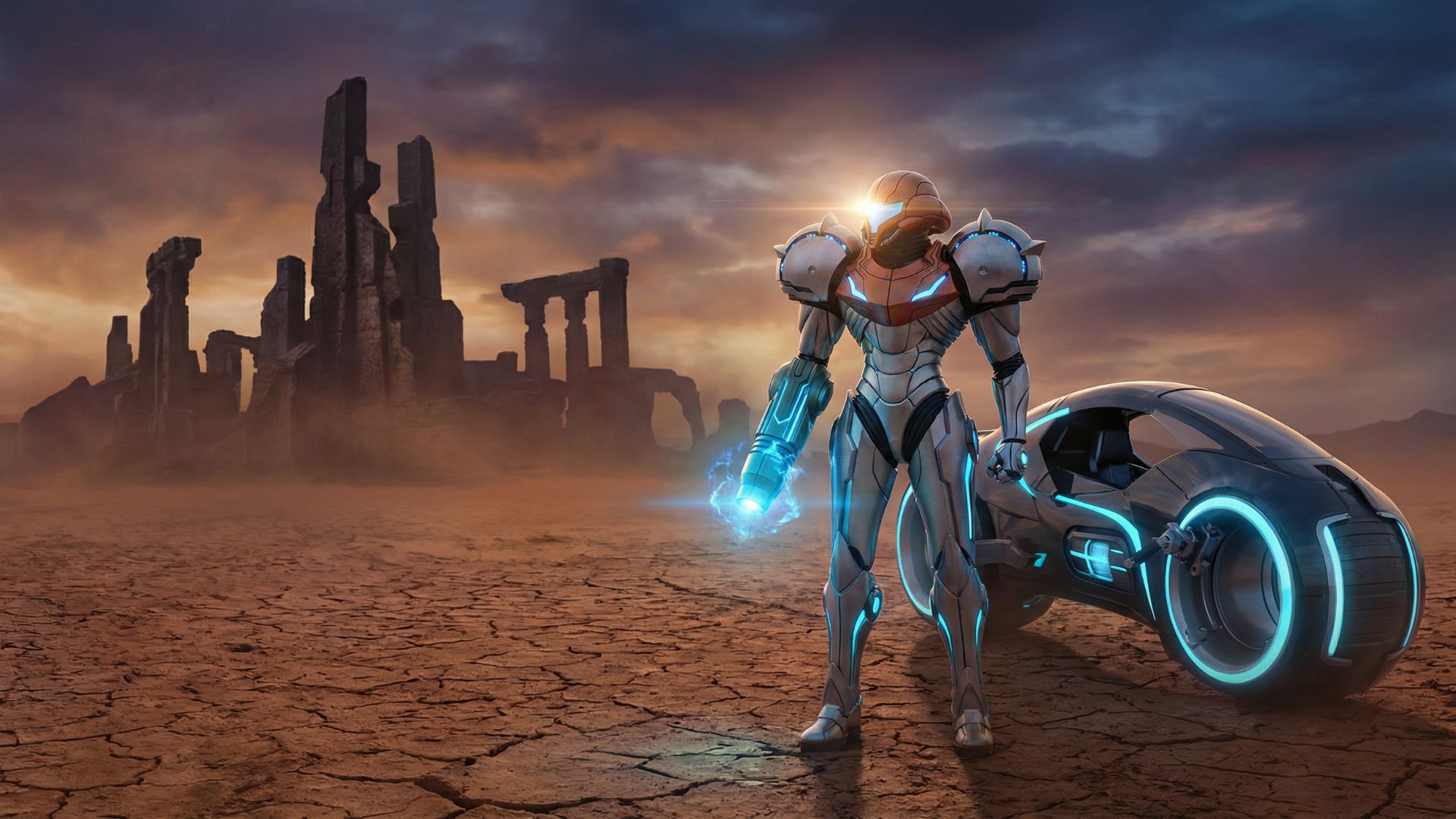
After what feels like an eternity of waiting, Samus Aran is finally back in action. Metroid Prime 4 Beyond has landed on Switch 2, and the burning question on every fan’s mind is simple: was it worth the wait? The short answer is yes, mostly. The long answer involves some caveats that longtime Prime devotees should know about before diving in.
A bold new opening that sets the tone
Right out of the gate, Prime 4 throws you into a massive battle sequence that feels ripped straight from a Halo campaign. Federation troops are under heavy fire, and Samus arrives to turn the tide against space pirates led by Sylux, a rival bounty hunter who has lurked in the shadows of the series for years. This action-heavy opening signals that Retro Studios (back at the helm after the project’s infamous restart) isn’t afraid to shake things up.
The spectacle works as a tutorial, teaching you the ropes while explosions light up the screen. But veterans might raise an eyebrow at just how different it feels from the isolated, atmospheric beginnings of previous Prime entries. Don’t worry though. The game knows what it is, and that classic Prime DNA surfaces soon enough.
Stranded on a dying world
When the opening mission goes sideways, an ancient artifact transports Samus to Tallon IV… just kidding. This time you end up on Veros, a planet whose indigenous civilization, the Luminoth-esque Lumen, vanished long ago. The planet is dying, and Samus finds herself stranded alongside scattered Federation personnel and, unfortunately, Sylux.
The narrative hook is genuinely touching. The Lumen knew their extinction was coming, so they prepared a memory fruit containing their history and culture for a “chosen one” to carry offworld. Samus stumbles into this role, and her mission becomes twofold: preserve the Lumen legacy and find a way off this rock using their ancient teleportation technology.
It hits different when you realize you cannot save these people. They are already gone. All you can do is honor their memory. That melancholic undertone permeates the entire adventure and gives your exploration real emotional weight.
New abilities with a psychic twist
The Lumen tech Samus acquires functions similarly to her classic upgrades but with some interesting variations. The Control Beam lets you steer charged shots around corners, adding a layer of precision to combat and puzzle-solving. The Psychic Bomb works like the traditional morph ball bomb but generates a movable orb of energy that powers ancient devices.
These additions are clever on paper, but execution can get fiddly. Using the Psychic Bomb requires switching to morph ball, holding a button to generate the orb, switching back to bipedal mode, activating the psychic visor, then grabbing the orb. It becomes second nature eventually, but the learning curve feels steeper than necessary.
The standout new toy is the Velo, a Tron-style light cycle that lets you zip across the open desert connecting the main areas. First impressions might leave you cold since the handling feels stiff compared to dedicated racing games. Give it time though. Once the controls click, pulling off sharp turns at high speed becomes genuinely satisfying.
Federation friends and chatty companions
Here is where Prime 4 will divide the fanbase. The presence of stranded Federation soldiers means Samus actually has people to interact with throughout the adventure. Your first companion, Miles McKenzie, guides you through early sections and later serves as an optional hint system via radio.
The supporting cast falls into familiar military archetypes: the gruff sergeant, the loner sniper, the enthusiastic rookie. Their performances are solid enough, and they grew on me over time. But Samus remains completely silent, which creates awkward moments where she answers complex questions with simple yes or no prompts.
The good news? These characters rarely overstay their welcome. When you descend into the main exploration zones, that signature Metroid isolation returns in full force. The Ice Belt area stands out as a masterclass in atmospheric storytelling. It is lonely, eerie, almost completely silent, yet dripping with environmental narrative about what happened to the Lumen. Classic Prime vibes all the way.
Open world growing pains
The desert overworld connecting the major areas is a double-edged sword. On one hand, its desolation reinforces the dying planet theme. Massive structures on the horizon serve as natural landmarks, and navigation becomes intuitive without relying on waypoints.
On the other hand, the space feels underbaked. Minutes spent crossing empty terrain can drag, especially when the game sends you back to base camp repeatedly. A fast travel system would have been a godsend. Instead, you manually ride back to entrances and launch through a cannon animation that masks lengthy loading times.
The memory fruit restoration meter adds another grind. Collecting green crystals scattered across the desert fills this gauge extremely slowly. By endgame, I still needed to spend extra time roaming around hunting crystals just to proceed. It felt like level grinding in an RPG, which is not exactly what anyone wants from Metroid.
Combat and boss battles that shine
When Prime 4 focuses on what the series does best, it absolutely delivers. Combat feels smooth and responsive, running at a buttery 60 frames per second in quality mode on Switch 2. The lock-on system strikes a perfect balance between accessibility and skill. Enemies dash and weave, forcing you to lead your shots even while locked on.
Boss battles deserve special praise. Each encounter feels distinct, challenging, and memorable. The designs incorporate Metroids as an invasive species that has literally grown onto native fauna like parasitic cysts. Watching where these creatures have developed Metroid growths like boils on their bodies is equal parts fascinating and gross.
The Switch 2 hardware showcase during these fights is impressive. Samus can swap between Joy-Con pointer controls and mouse-style aiming on the fly without pausing to access a menu. It sounds like a gimmick but actually enhances gameplay significantly.
Visual fidelity that impresses
Prime 4 is among the best-looking games on any Nintendo hardware to date. The frozen laboratories of the Ice Belt sparkle with eerie beauty. Lumen architecture showcases futuristic elegance that rewards careful observation. Samus herself looks incredible, especially in cutscene closeups where you can appreciate the layers of texture and material on her new suit.
Not everything hits that high bar. Some flora textures in the Fury Green zone look rough, and industrial grating in certain areas appears muddy up close. But overall, the visual package impresses even if it cannot match what you would see on PC or current PlayStation and Xbox hardware.
A frustrating save system gotcha
One serious complaint needs mentioning. When approaching the endgame, you receive the standard warning about a point of no return. Most players assume they can load an earlier save afterward to mop up collectibles. Not here.
The auto-save locks you into the final area with no escape. The manual save slot gets overwritten with a mission complete file that only offers new game options. If you want a late-game save for post-completion exploration, you need to manually create a backup before proceeding. The game never makes this clear, and discovering it after the fact stings.
The verdict
Metroid Prime 4 Beyond carries the weight of its notoriously troubled development. You can feel the years in certain design choices that echo gaming trends from the early 2010s, like sparse open worlds and squad-based shooter segments. These elements work well enough but lack the polish of the traditional Metroid Prime exploration and environmental storytelling.
When Prime 4 leans into what made this series legendary, it soars. The level design rewards curiosity at every turn. Secrets hide in every crevice. Boss battles challenge and thrill. The atmosphere in standout areas like the Ice Belt rivals anything in the franchise.
Is it perfect? No. Is it worth the decade-plus wait? For fans who stuck around through all those years of silence and that infamous development restart, the answer is a resounding yes. Samus is back, and even with some rough edges, her return reminds us why Metroid Prime remains one of gaming’s most beloved franchises.