




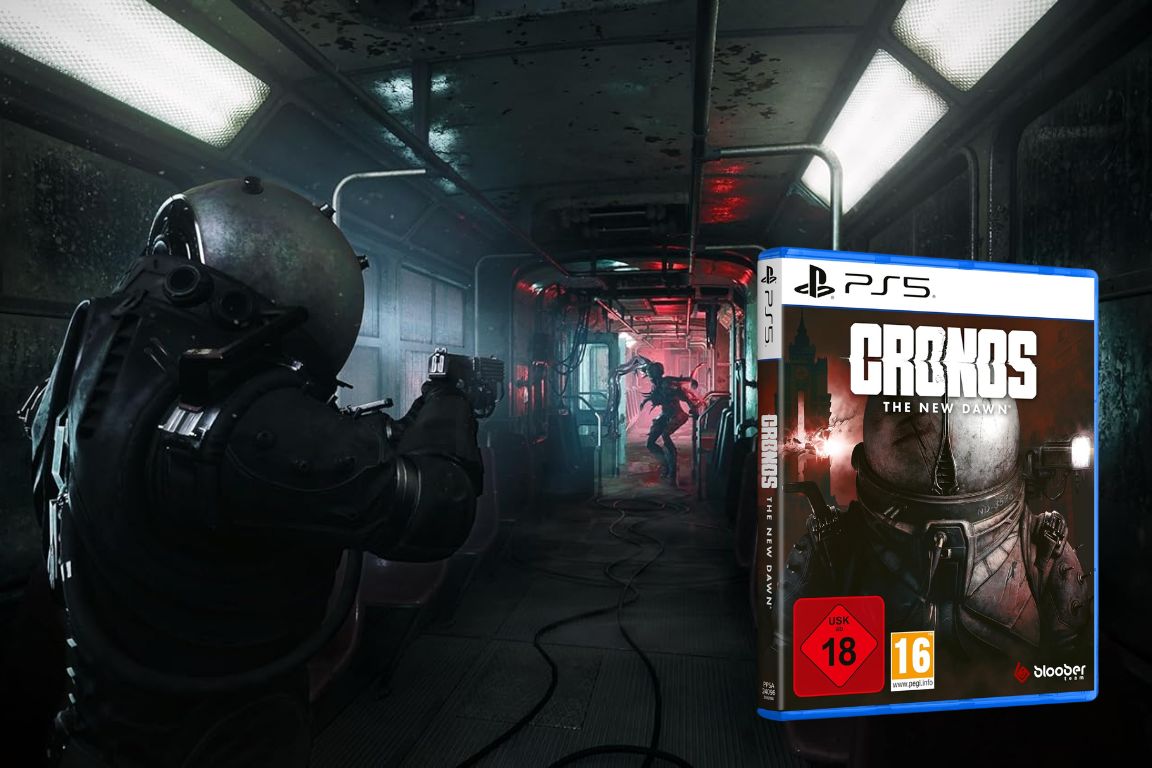
Bloober Team has built their reputation on atmospheric psychological horror, but Cronos: The New Dawn represents their most ambitious swing yet at survival horror territory. Set in the hauntingly real Nowa Huta district of Kraków, this time-bending zombie thriller might not deliver constant scares, but it compensates with some of the most innovative environmental puzzles and traversal mechanics the genre has seen in years. What it lacks in traditional horror intensity, it more than makes up for through thoughtful world design and genuinely engaging brain-teasers that transform ruins into playgrounds.
The choice to set this apocalypse in Nowa Huta proves inspired on multiple levels. This real-world district of Kraków carries its own fascinating history as a planned socialist realist city, and watching it transform into crumbling post-outbreak desolation creates visual contrasts that Western apocalypse settings simply cannot replicate. The Eastern European architecture provides fresh environmental storytelling opportunities that feel distinct from the endless procession of American suburbs and generic cityscapes that dominate zombie fiction.
Temporal mechanics that redefine environmental interaction
Where Cronos truly distinguishes itself is through its temporal disturbance system. Your weapons extend beyond simple zombie elimination tools, each equipped with attachments that interact with scattered time anomalies throughout the ruined district. Aiming and firing at these disturbances rewinds portions of the environment through previous states, fundamentally altering navigation possibilities.
This mechanic transcends gimmick status by integrating seamlessly into both combat scenarios and exploration challenges. Rebuilding collapsed bridges to cross previously impassable gaps, restoring destroyed rooftops to create new vertical pathways, or manipulating floating chunks of earth torn apart by temporal instability creates constantly shifting environmental puzzles that demand spatial reasoning and creative thinking.
The genius lies in how these temporal mechanics force you to perceive environments as malleable rather than static. Traditional survival horror trains players to view spaces as fixed obstacle courses where the challenge comes from navigating predetermined layouts while managing threats. Cronos asks you to actively reshape those spaces, transforming the ruins themselves into puzzle boxes waiting to be solved.
Gravity boots that make traversal genuinely fun
Roughly halfway through your journey, you acquire gravity boots that revolutionize movement in ways that feel genuinely exhilarating. These boots allow walking on designated paths up walls and across ceilings, with launch pads enabling massive jumps between separated platforms and across enormous craters.
The navigation feels intuitive despite the unusual physics involved. Within minutes, wall-walking becomes second nature, and the game confidently designs increasingly complex sequences that trust your mastery of these mechanics. Leaping between launch pads while oriented perpendicular to traditional gravity creates moments of genuine joy that survival horror rarely provides.
More importantly, these traversal sequences offer breathing room between tense encounters. The pacing shifts allow genuine appreciation of Nowa Huta’s landscape from perspectives that ground-level exploration cannot provide. Seeing the apocalyptic scenery from ceiling vantage points or while scaling vertical surfaces adds visual variety that keeps the environment feeling fresh throughout the campaign.
Environmental storytelling through devastated beauty
The apocalyptic vision of Nowa Huta stands as one of Cronos’ greatest achievements. The destroyed district marred by zombie infestation and temporal anomalies creates hauntingly beautiful vistas that capture post-outbreak desolation without descending into generic ruin porn. The attention to architectural detail in both present devastation and past glimpses demonstrates genuine research and care in representing this specific location.
Time travel sequences that transport you to moments surrounding the initial outbreak provide crucial context while showcasing the district in different states of collapse. These temporal jumps create visual variety beyond simple before-and-after comparisons, showing various stages of infrastructure breakdown and societal disintegration. The environmental storytelling embedded in these ruined spaces often communicates more effectively than explicit exposition.
The game encourages taking time to appreciate these carefully constructed environments. Puzzle-solving segments naturally create pauses in forward momentum where observation becomes rewarding rather than merely functional. Stepping back to absorb the landscape from new angles reveals thoughtful composition and world-building details that combat-focused pacing might otherwise obscure.
Resource management that demands strategic thinking
Cronos embraces survival horror’s resource scarcity philosophy wholeheartedly. Ammunition, healing items, and crafting materials spawn sparingly, forcing careful consideration about when to fight versus when to conserve supplies. This scarcity creates genuine tension around every encounter and elevates the stakes of each decision.
The crafting system allows converting gathered materials into ammunition and pyres (compact explosives), providing agency over resource allocation. Rather than passively accepting whatever supplies the game distributes, you actively choose how to invest limited materials based on anticipated challenges ahead. This transforms resource management from simple inventory Tetris into strategic planning.
Certain encounters demand significant resource investment, particularly against larger threats that function as environmental hazards as much as enemies. These moments force commitment to fights you cannot simply avoid, creating memorable setpiece battles where victory requires both tactical thinking and willingness to expend carefully hoarded supplies. The satisfaction of overcoming these challenges through preparation and execution validates the survival horror formula’s core appeal.
Combat that rewards restraint over aggression
The Orphans (Cronos’ zombie variant) telegraph their movements clearly, providing opportunities for skilled players to avoid unnecessary confrontations. Their shambling movement patterns and audible presence before visual confirmation allows strategic positioning that minimizes resource expenditure when combat proves unavoidable.
This predictability serves the game’s broader design philosophy. Rather than overwhelming players with unpredictable enemy behavior that demands constant ammunition expenditure, Cronos rewards observation and patience. Learning enemy patterns and exploiting environmental advantages creates pathways through encounters that preserve precious supplies for situations where combat becomes mandatory.
The inconsistent difficulty some encounters present actually reflects the survival horror genre’s fundamental tension between resource preservation and threat elimination. Some situations allow clever maneuvering that trivializes danger, while others demand significant investment. This variability prevents formulaic approaches and maintains uncertainty about optimal strategies.
Narrative ambition that tackles complex themes
The story takes its time establishing context and atmosphere, which works in favor of players willing to invest in gradual revelation rather than immediate payoff. The first act’s focus on lockdown restrictions and societal breakdown might feel familiar, but it establishes crucial emotional groundwork for later developments.
When temporal elements fully integrate into the narrative, they explore genuinely intriguing concepts about causality, consequence, and the price of attempting to change established timelines. The ending delivers thought-provoking ideas that justify the patient build-up, even if careful players might predict certain revelations through attentive observation of environmental clues and narrative foreshadowing.
The use of notes and journal entries provides traditional environmental storytelling that some may find overdone, but it contextualizes the world effectively for those who engage with optional narrative content. Skipping these materials remains viable for players focused primarily on moment-to-moment gameplay, while completionists gain deeper understanding of the outbreak’s impact on individual lives.
Technical execution that supports atmospheric immersion
Running on capable hardware, Cronos delivers visually impressive apocalyptic environments that balance artistic direction with technical fidelity. The destroyed infrastructure, temporal anomalies warping reality, and atmospheric lighting create consistently moody presentation that supports horror theming even when moment-to-moment scares prove infrequent.
The auto-save system provides frequent checkpointing that prevents excessive progress loss, though players should supplement with manual saves at safe rooms to maintain multiple restoration points. This dual approach balances convenience against the occasional need to retreat from particularly challenging situations by reloading earlier states with better resource availability.
Finding joy in unexpected places
Small touches enhance the experience beyond core mechanics and narrative. The ability to pet cats scattered throughout the devastated district provides brief moments of warmth amid apocalyptic grimness. These interactions serve no mechanical purpose but offer emotional respite that makes the journey feel more human despite its horror trappings.
Cronos succeeds most when embracing its strengths: innovative puzzle design, compelling traversal mechanics, and thoughtfully realized environments. Players approaching it as a puzzle-focused survival adventure rather than pure horror experience will find significantly more to appreciate. The game confidently pursues its vision even when that vision diverges from genre expectations around constant terror and overwhelming threat.
For those willing to engage with its deliberate pacing and puzzle emphasis, Cronos offers distinctive takes on familiar survival horror elements. The temporal mechanics and gravity boots alone provide enough innovation to justify experiencing Bloober Team’s vision of post-outbreak Kraków. It might not keep you awake with nightmares, but it will keep you thinking about how to manipulate the next temporal disturbance or navigate the upcoming gravity boot sequence.
The game works best when players embrace its contemplative moments, appreciate the environmental artistry, and approach resource challenges as strategic puzzles rather than frustrating barriers. Taking time to absorb the world Bloober Team constructed reveals care and attention that combat-focused playthroughs might miss entirely.
Cronos: The New Dawn won’t satisfy everyone seeking traditional survival horror thrills, but it carves out its own identity through mechanics and setting that feel genuinely fresh. The temporal puzzles and gravity traversal represent legitimate innovations that other developers should study, while the Nowa Huta setting provides cultural specificity that enriches the apocalyptic fiction landscape.
What aspects of time manipulation mechanics would you most like to see future survival horror games explore further?