




After skipping a year for the first time in two decades, Football Manager returns with the gaming equivalent of a complete squad overhaul. Some new signings shine immediately. Others need time to gel. A few might deserve a swift transfer back out. But make no mistake: this isn’t just another seasonal update with fresh kits and updated rosters. Sports Interactive has torn down their tactical board and rebuilt from scratch.
The result? A fascinating mess of brilliance and bewilderment that somehow still consumed 60 hours of my life before I realized I’d forgotten to eat actual meals.
Women’s football arrives with surprising depth
The headline addition lands with genuine substance rather than tokenistic checkbox-ticking. Over 40,000 female players populate 14 leagues, each meticulously researched and integrated into the core experience. This isn’t some segregated mode hidden three menus deep. Boot up the game, pick Liverpool Women, and you’re managing in the WSL with all the complexity that entails.
Budget constraints hit differently here. That work permit appeal that costs pocket change for Manchester United men? It just obliterated your January transfer window. Squad depth becomes critical when you can’t simply throw money at problems. Every contract negotiation matters when your wage budget wouldn’t cover a single week of Mohamed Salah’s paycheck.
The tactical considerations shift too. Physical attributes translate differently. Pace matters more. Technical skills shine brighter. Building a successful women’s team requires rethinking assumptions carried over from decades of managing men’s squads. It’s Football Manager’s hardest difficulty setting, disguised as an equality update.
Playing through multiple WSL seasons revealed surprising authenticity. International breaks actually impact squad availability differently due to varied competition schedules. Youth development follows distinct pathways. Even press conferences feature questions specific to women’s football challenges. The attention to detail suggests years of genuine effort rather than rushed implementation.
Match engine transformation changes everything
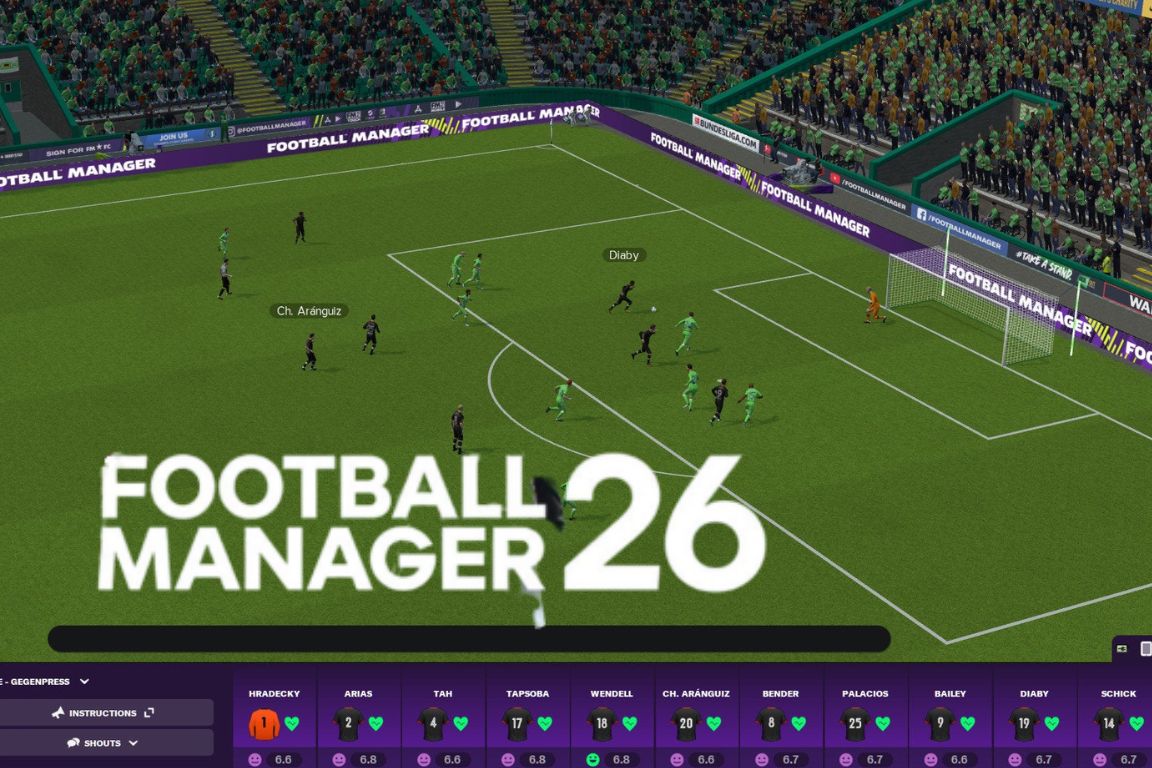
Forget everything you know about watching Football Manager matches. The new visual representation resurrects the classic dots-on-pitch display while maintaining modern 3D highlights. It sounds retrograde on paper. In practice, it’s revelatory.
You’re no longer twiddling thumbs between highlights. The dot view provides constant tactical feedback, showing positioning problems and space exploitation in real-time. Combined with new camera angles mimicking broadcast television, matches finally feel like watching actual football rather than a primitive FIFA simulation.
The dual tactical system represents the biggest philosophical change since the series began. Setting distinct formations for possession and defensive phases mirrors modern football’s positional play revolution. Your team can play 4-3-3 when attacking, morphing into 4-5-1 when defending. Wing-backs push forward in possession but drop into back five without the ball. It’s Pep Guardiola’s wet dream translated into spreadsheet form.
These changes transform the tactical minigame from abstract slider adjustment into genuine strategic planning. Building complementary in-possession and out-of-possession shapes becomes the new meta. Old tactical downloads from community forums won’t save you anymore. You need to actually understand football now.
Interface overhaul divides and conquers
Here’s where things get messy. The completely rebuilt user interface abandons twenty years of muscle memory for something allegedly more intuitive. Spoiler: it isn’t. Not yet, anyway.
Navigation feels like learning a new language after speaking fluently for decades. Simple tasks require extra clicks. Information hierarchies make questionable sense. The squad view somehow displays both too much and too little simultaneously. Finding specific screens becomes an adventure game nobody asked for.
Yet buried beneath the frustration lie genuine improvements. Multi-tasking flows better with proper tabbed browsing. Scouting reports present information more logically. The calendar integration actually makes sense once you decode its logic. Given six months of patches and community adjustment, this interface might eventually surpass its predecessor. Right now, it’s a construction site with occasional glimpses of architectural brilliance.
The mobile-influenced design language particularly grates on PC. Oversized buttons waste screen space. Touch-friendly spacing looks absurd on 27-inch monitors. The whole thing screams “designed for Steam Deck” while desktop players subsidize the compromise. It’s functional but philosophically misguided for a game people play for thousands of hours on proper computers.
Technical troubles tarnish the shine
Beta builds always have issues, but Football Manager 26’s problems run deeper than expected polish concerns. Players appearing in tracksuits during matches provides comedy but breaks immersion. Menus refusing to load destroys workflow. Statistics displaying incorrect values undermines the simulation’s credibility.
Performance stutters on hardware that should demolish this game’s requirements. Loading times between screens feel artificially extended. The match engine occasionally forgets basic football rules, leading to bizarre referee decisions and physically impossible player movements. These aren’t features; they’re fundamental failures requiring immediate attention.
The promised November 4 release date feels optimistic given current stability. This needs another three months in the oven, minimum. Shipping in this state would validate every early access horror story about releasing unfinished products. Sports Interactive’s reputation survived one skipped year. It won’t survive launching broken software.
The wonderkid hunt evolves
Scouting remains Football Manager’s digital drug, and the expanded player pool adds fresh addiction vectors. Women’s football introduces entirely new wonderkid ecosystems requiring different evaluation metrics. Traditional physical beast paradigms don’t translate directly. Technical players with lower athletic ceilings become viable long-term investments.
The database depth impresses even by Football Manager standards. Lower league Swedish teenagers have complete career histories. Brazilian youth prospects feature accurate personality traits. The research team clearly spent their skipped year productively, building foundations for decades of future iterations.
Youth development requires recalibration too. Training regimes that work for men’s teams produce different results for women. Loan strategies need adjustment based on league structures. Even recruitment philosophy shifts when competing against different financial realities. It’s essentially learning Football Manager again from scratch, which frustrated me initially but eventually felt refreshing.
Missing features sting surprisingly hard
International management’s absence feels bizarre given women’s football’s inclusion aimed partly at capitalizing on England’s European Championship success. How can you recreate the Lionesses’ triumph without actually managing the Lionesses? The promised free update later doesn’t excuse launching without this obvious feature.
The editor being the only paid DLC deserves praise in our microtransaction hellscape, but its functionality feels stripped compared to previous versions. Database size limitations restrict custom league creation. Competition structures prove harder to modify. The community’s incredible modification scene faces unnecessary obstacles that benefit nobody.
These omissions feel especially egregious given the year-long development delay. What exactly were they doing if not implementing features that existed in previous versions? The cynical answer involves focusing on women’s football for marketing purposes while neglecting core functionality. The charitable interpretation suggests technical debt required massive backend reconstruction. Reality probably sits somewhere between.
Addiction mechanics remain terrifyingly effective
Despite every complaint, every bug, every interface frustration, I kept playing. The “one more match” compulsion survived the generational transition intact. That’s either brilliant design or Stockholm syndrome. Possibly both.
Managing Liverpool Women through four seasons shouldn’t have been compelling given the technical issues. Yet watching Fūka Nagano develop from prospect to world-beater triggered the same dopamine hits as discovering Lionel Messi in Championship Manager 2003. The fundamental loop of squad building, tactical refinement, and narrative emergence transcends implementation problems.
The new match engine particularly enhances these addictive qualities. Seeing tactical adjustments play out through dot movements provides immediate feedback loops previous versions lacked. You understand why moves succeed or fail, encouraging experimentation rather than downloading proven tactics. It’s teaching football while entertaining, which sounds boring but proves captivating.
Verdict: potential awaiting patches
Football Manager 26 isn’t ready for release. That’s the harsh truth Sports Interactive needs to hear. But underneath the rough edges lies potentially the series’ best foundation in years. The question becomes whether they’ll polish it properly or rush it out hoping patches fix everything later.
Women’s football integration succeeds beyond reasonable expectations. The match engine improvements revolutionize the tactical game. Even the controversial interface shows promise beneath its current confusion. This could be brilliant. Should be brilliant. Will probably eventually be brilliant. Just not on November 4.
For series veterans, waiting for the January transfer window update makes sense. Let others beta test the full release. For newcomers, this might actually be the perfect entry point once stability improves. Starting fresh means no muscle memory to unlearn, no interface prejudices to overcome.
The franchise needed revolution after twenty years of evolution. They’ve delivered that, just wrapped in tissue paper instead of proper packaging. Whether Sports Interactive has six weeks or six months to fix these issues before player patience expires remains unclear. But if they nail the execution, Football Manager 26 could define the next decade of sports simulation.
Until then, I’ll keep playing while complaining, the true Football Manager tradition.