




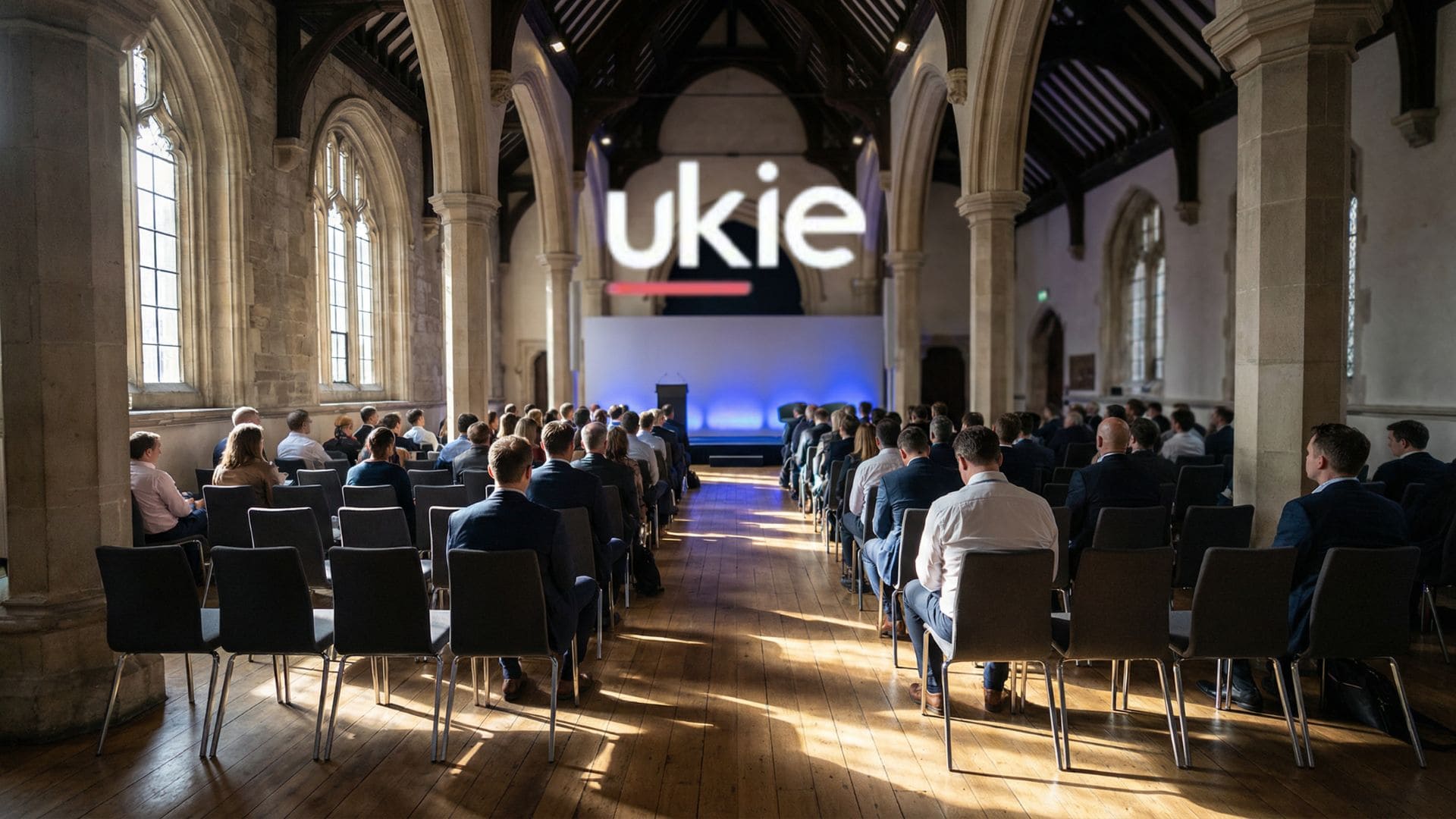
After two years of relentless layoffs, studio closures, and canceled projects that have reshaped the global games industry, the people who make games in the UK are gathering in one room on March 5. The Ukie Conference 2026 takes over Glaziers Hall in London for a full day of panels, keynotes, and political engagement. And while trade conferences can easily slide into hollow networking rituals, this one arrives at a moment where the UK sector genuinely needs answers.
The timing is not subtle. An estimated 45,000 jobs have been lost across the global games industry since 2022. UK studios have not been spared. Sumo Digital confirmed layoffs in early February, citing “ongoing instability.” Ustwo, the Monument Valley studio and the company whose CEO Maria Sayans currently serves as Ukie Chair, cut four staff the same week. These are not outliers. They are the texture of the industry right now.
Why the rebrand from Members Day matters
The Ukie Conference was previously called Members Day. The name change is not cosmetic. Members Day carried the energy of an internal community gathering, a chance for trade association members to connect and hear updates. Rebranding it as a Conference signals a different ambition: outward-facing, cross-sector, and strategically oriented. The event now explicitly targets studios, publishers, platforms, policymakers, educators, investors, and emerging talent in a single program.
That last group, policymakers, is the most interesting addition. The conference promises “Political Perspectives” sessions focused on regulation, funding, and digital strategy. This matters because the UK games sector exists in a peculiar policy limbo. The industry contributes billions to the national economy and supports roughly 73,000 jobs across Ukie’s 2,000-plus member companies. Yet it frequently gets treated as an afterthought in industrial strategy conversations dominated by finance, biotech, and traditional creative sectors like film and television.
The fact that Ukie is putting politicians on stage at the same event as studio heads and investors suggests the organization is trying to force a conversation that usually happens in separate rooms. Whether it succeeds depends on who actually shows up from Westminster.
What the agenda signals about 2026 priorities
Ukie has structured the day around several thematic tracks: keynotes and panel talks from industry leaders, innovation and emerging technology sessions, and networking opportunities with investors and collaborators. The specific topics flagged include skills, investment, technology, regulation, responsible play, global competitiveness, and creative breakthroughs.
Reading between the lines, the priorities break down into three areas that define where the UK industry stands right now.
Survival economics.
The funding landscape for UK studios has deteriorated significantly. Self-funding has become the primary way developers back their games, according to the 2025 Game Industry Survey, which is an uncomfortable reality for smaller teams without deep reserves. The conference’s investor networking component is not a luxury feature. For some attendees, it may be the most important meeting of the year.
Talent retention.
The layoff waves have created a paradox. Thousands of experienced developers are out of work, yet studios that are hiring report difficulty finding the right people because so many have left the industry entirely or relocated. The skills track at the conference speaks directly to this. The UK cannot maintain a world-class development ecosystem if the talent pipeline keeps hemorrhaging.
Regulatory positioning.
The UK’s relationship with AI in game development is still unsettled. Thirty percent of developers in the 2025 survey said generative AI is having a negative impact on the industry, a 12% increase from the prior year. Ukie putting regulation on the main stage acknowledges that this debate is not going away and that the trade body needs to shape the conversation before someone else does.
The Ukie-Tencent connection adds another layer
One detail worth noting: Ukie recently announced a second cohort of 30 UK studios for the Video Games Growth Programme, run in partnership with Tencent and the UK’s Department for Business and Trade. Additionally, Ukie Chair Maria Sayans recently joined Prime Minister Keir Starmer on a government-backed business delegation to China, a first for the UK games sector at that level.
This signals that Ukie is pursuing an internationalization strategy that leans heavily on Chinese capital and market access. For UK studios struggling to find domestic investment, this is pragmatic. But it also introduces complex questions about creative independence, data governance, and the political optics of Tencent partnerships in a post-TikTok regulatory environment. Don’t expect those questions to be asked from the stage, but they will absolutely be discussed in the hallways.
Practical details for anyone considering attendance
| Detail | Info |
|---|---|
| Date | March 5, 2026 |
| Venue | Glaziers Hall, 9 Montague Cl, London SE1 9DD |
| Time | 9:30 AM to 5:00 PM |
| Cost | Free for Ukie members / £299 + VAT for non-members |
| Format | Onsite only, B2B focused |
| Registration | ukie.org.uk/conference |
The same venue is also hosting the 2026 UK Video Game Awards on the same evening, which creates a natural full-day draw for anyone traveling to London for the event.
Why this one actually matters
Trade conferences can feel like echo chambers, especially in an industry that loves talking about itself. But the Ukie Conference 2026 arrives at a specific inflection point. The layoff cycle that began in 2022 is showing early signs of stabilizing but has not stopped. The studios that survived are leaner and more cautious. Investment is harder to find. The policy environment is shifting. And the UK sector, despite its talent depth and cultural influence, is at genuine risk of losing ground to regions like Canada, China, and Southeast Asia that are investing more aggressively in games infrastructure.
If the conference can produce concrete outcomes, actual investment commitments, real policy signals from attending politicians, actionable strategies for studios navigating the downturn, then it earns its new name. If it stays at the level of panel discussions and business card exchanges, the rebrand won’t matter.
The question the UK games industry needs to answer in 2026 is not whether it can survive the current contraction, but whether it can come out of it positioned to lead the next cycle. Can a single day at Glaziers Hall actually move the needle on that?