




The age-old debate has fueled countless forum threads, YouTube video essays, and heated Discord arguments. Fallout 3 or Fallout: New Vegas? Bethesda Game Studios or Obsidian Entertainment? Fans have drawn battle lines for over a decade, but the developers at the center of this friendly rivalry seem to be getting along just fine.
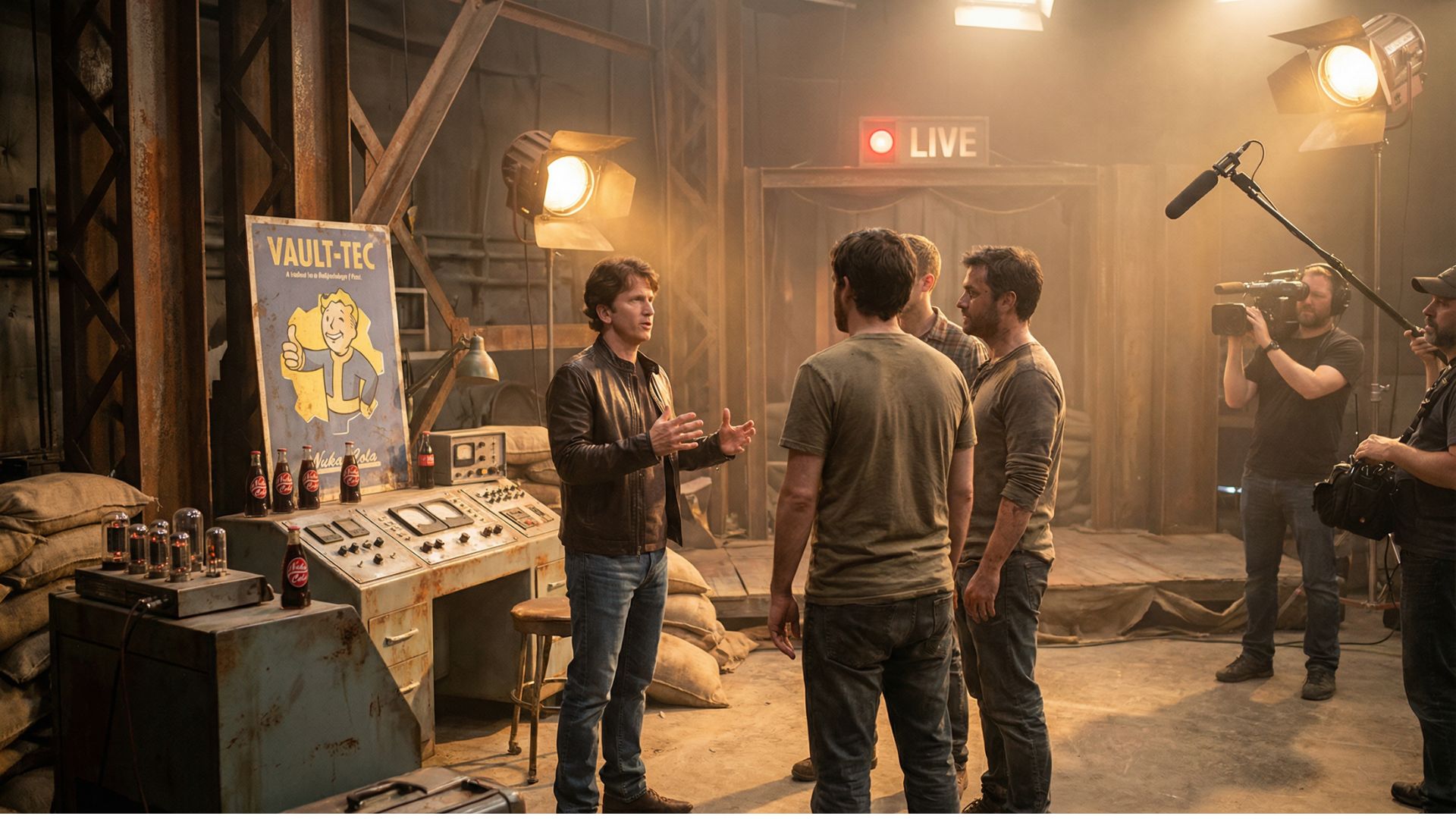
In a recent interview, Bethesda’s legendary director Todd Howard revealed that he personally invited members of the Obsidian Entertainment team to visit the set of Amazon’s Fallout season 2. The gesture speaks volumes about the mutual respect between two studios that have shaped one of gaming’s most beloved post-apocalyptic franchises.
Building bridges in the wasteland
Howard has never been shy about acknowledging Obsidian’s contributions to the Fallout universe. New Vegas, released in 2010, earned a cult following that rivals and sometimes surpasses the devotion fans have for Bethesda’s own entries. Rather than viewing this as a threat, Howard embraces the competition.
“I think it’s great that you can have a lot of factions and the fans say, ‘Oh, I like one or two or three or four, or Vegas or 76’ now, and so I think that’s really healthy for a franchise where people can say which one is their favourite,” Howard explained during the conversation.
The invitation to the Fallout season 2 set carries symbolic weight. Amazon’s streaming adaptation draws heavily from the aesthetic and tone established across multiple games, including the Mojave Wasteland setting that Obsidian brought to life. Having those original developers witness their creative vision translated to live action feels like a fitting tribute.
The origin story of a legendary partnership
Howard also pulled back the curtain on how the Obsidian collaboration came together in the first place. After shipping Fallout 3 in 2008, Bethesda already knew its next project would be The Elder Scrolls V: Skyrim. That meant the Fallout franchise would sit dormant for years unless someone else picked up the torch.
“We know the folks at Obsidian well, love their work, and so we reached out to them and said, ‘Hey, would you like to do this? We see something else coming off of Fallout 3,'” Howard recalled.
That phone call resulted in one of the most celebrated RPGs ever made. Obsidian took the foundation Bethesda built and layered in deeper faction systems, morally complex storytelling, and a wild west atmosphere that resonated with millions of players. The game shipped in just 18 months, a timeline that still boggles the mind given its scope and quality.
Obsidian’s banner year gets recognition
Howard did not limit his praise to past accomplishments. He made a point of highlighting Obsidian’s remarkable 2024 and 2025 output, calling attention to the studio’s trio of releases: Avowed, Grounded 2, and The Outer Worlds 2.
“They’ve had just an incredible year, if you look at the year they’ve had,” Howard noted.
Shipping three quality titles in such close proximity is a rare feat in modern game development. Most studios struggle to release a single polished product within a two-year window, let alone three. The accomplishment reflects Obsidian’s growth since its acquisition by Microsoft and its ability to run multiple development teams simultaneously.
Fan wars never change, and that is okay
The Fallout 3 versus New Vegas debate will likely continue for another decade. Purists on both sides have valid arguments. Bethesda’s entry revitalized the franchise and introduced it to a new generation through its first-person open world design. Obsidian’s take refined the RPG mechanics and delivered writing that many consider the gold standard for branching narratives.
Howard’s perspective offers a refreshing take on franchise stewardship. Instead of viewing passionate fan arguments as divisive, he sees them as signs of a healthy intellectual property. People care enough to debate, which means the games left lasting impressions.
The gesture of inviting Obsidian to the Fallout season 2 set reinforces this philosophy. These studios are not rivals locked in competition. They are collaborators who contributed different chapters to the same beloved story. The wasteland is big enough for everyone.
As the Fallout franchise continues expanding across games, television, and potentially other media, this spirit of mutual respect bodes well for its future. Fans may never stop arguing about which entry reigns supreme, but the developers themselves seem content sharing the spotlight.
War never changes, but apparently, industry relationships can.