




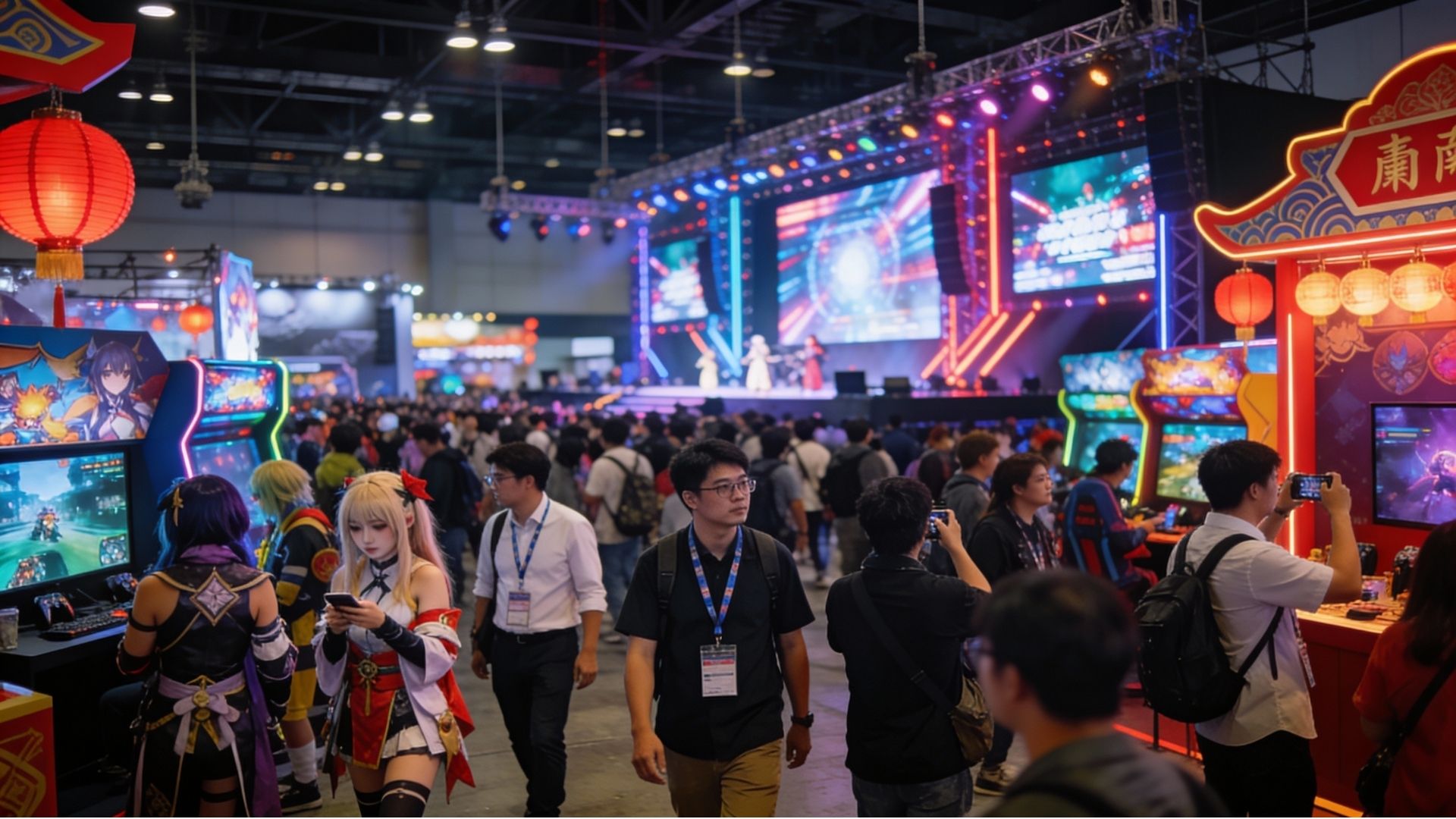
Most gaming conventions force you to choose between industry networking and fan celebration. Taipei Game Show refuses to pick a lane.
Running January 29 through February 1, 2026, at the Taipei Nangang Exhibition Center, this annual event has carved out a distinctive identity since 2003 by combining B2B deal-making with the kind of consumer spectacle that draws crowds from across Asia. While Western conventions increasingly separate their trade and public components into different events or days, Taipei keeps them under one roof, creating an atmosphere that feels more like a festival than a sterile exhibition hall.
Where business meets carnival energy
The dual-zone structure defines what makes Taipei Game Show unusual in the global convention landscape. The B2B section operates as you’d expect from any trade show, with publishers meeting developers, distribution deals getting negotiated, and industry professionals exchanging cards over coffee.
But walk into the B2C zone and the energy shifts completely. Stage events run continuously. Playable builds of upcoming releases occupy every corner. The show floor covers online games, mobile titles, console releases, VR experiences, and esports peripherals in equal measure, reflecting the diverse gaming ecosystem that characterizes the Asian market.
The “carnival style” description isn’t marketing exaggeration. Attendees treat the event as an annual pilgrimage, with dedicated fans planning trips specifically around the show dates. The atmosphere resembles what Tokyo Game Show achieved before its pandemic-era transformations, but with a scrappier, more accessible vibe that smaller developers and niche communities can actually penetrate.
Indie house and board game wonderland steal attention
Two areas consistently generate the most genuine enthusiasm at Taipei Game Show, and neither involves AAA publishers.
Indie House has become a launching pad for Asian independent developers seeking visibility beyond their home markets. The section operates almost as a curated festival within the larger event, highlighting games that might otherwise disappear into Steam’s algorithmic void. For Western publishers scouting Asian indie talent, this zone offers concentrated access that no digital showcase can replicate.
Board Game Wonderland addresses a segment that most gaming conventions ignore entirely. The tabletop resurgence has been slower to reach mainstream attention in Asia compared to Western markets, making this dedicated space both educational and commercially significant. Publishers testing new releases get immediate feedback from enthusiastic crowds rather than waiting months for retail data.
Taipei Game Show 2026 quick facts:
| Detail | Information |
|---|---|
| Dates | January 29 to February 1, 2026 |
| Location | Taipei Nangang Exhibition Center |
| Format | Combined B2B and B2C zones |
| Focus Areas | Online, mobile, console, VR, esports, indie, board games |
| Registration | tgs.tca.org.tw |
Why the timing matters for 2026
January positioning gives Taipei Game Show a strategic window that few major conventions occupy. CES has just concluded. GDC sits weeks away. The post-holiday release calendar remains relatively quiet. For publishers with Q1 or Q2 releases, Taipei offers a platform to build Asian market awareness before Western-focused shows dominate attention.
The early-year timing also benefits attendees traveling from outside Taiwan. January weather in Taipei runs mild compared to much of the Northern Hemisphere, and accommodation prices haven’t yet spiked for Lunar New Year celebrations that typically fall in late January or February.
For industry professionals weighing whether to add another convention to their schedules, Taipei’s unique hybrid format provides efficiency that sequential B2B and B2C events cannot match. Developers can pitch to publishers in morning meetings and gauge consumer reaction to their builds by afternoon. That feedback loop, compressed into a single venue over four days, accelerates decision-making in ways that separated events struggle to replicate.
The broader context for asian gaming events
Taipei Game Show operates in a regional convention ecosystem that has evolved significantly over the past decade. Tokyo Game Show remains the prestige destination but has grown increasingly corporate and difficult for smaller participants to access meaningfully. ChinaJoy serves the massive mainland market but carries regulatory and logistical complications for international attendees. G-Star in South Korea focuses heavily on the mobile and online segments that dominate Korean gaming culture.
Taipei fills gaps that these larger events leave open. The island’s gaming industry punches above its weight in development talent, particularly in indie and mobile spaces. The regulatory environment welcomes international participation without the friction that mainland events involve. English accessibility runs higher than at many Asian conventions, reducing barriers for Western attendees.
The Taipei Computer Association’s stewardship since 2003 has provided institutional continuity that newer conventions lack. Two decades of relationship-building with publishers, developers, and media outlets creates infrastructure that pop-up events cannot replicate overnight.
What to expect on the show floor
The B2C zone promises the usual suspects: playable demos from major publishers, merchandise opportunities, cosplay gatherings, and competitive gaming exhibitions. But the show’s real value often emerges from the unexpected encounters that the hybrid format enables.
Developers showing games in consumer areas frequently receive business inquiries from industry attendees who wandered over from the B2B section. Publishers scouting the Indie House make discoveries they’d never have encountered through formal pitch meetings. The permeable boundary between professional and fan spaces generates serendipity that structured networking events systematically eliminate.
Four days provides enough time to experience both dimensions without rushing. First-time attendees often spend initial days in consumer areas, absorbing the atmosphere and identifying standout games, before shifting focus to business meetings as the show progresses.
Taipei Game Show 2026 represents something increasingly rare in the convention circuit: an event that hasn’t forgotten why people love games in the first place while still serving the industry’s commercial needs.
Have you attended Taipei Game Show in previous years, and how does its hybrid format compare to conventions that separate their business and consumer programming?