



The scale was staggering. As of mid-December, IEEPA tariffs had collected roughly $130 billion in revenue from importers. The Tax Foundation estimated they would have generated $1.4 trillion over the next decade if left in place. That money came from somewhere. It came from the companies importing components and finished products, and those companies passed the costs downstream to consumers. Every GPU, every motherboard, every pre-built system sold in the US carried a tariff surcharge baked into its price whether the buyer knew it or not.
Now that surcharge is legally dead. But the relief may be shorter-lived than the headlines suggest.
Trump Is Already Working Around the Ruling
Within hours of the decision, President Trump signed a proclamation imposing a new 10% global tariff under Section 122 of the Trade Act of 1974. By the following day he announced on Truth Social that the rate would increase to 15%, which is the maximum allowed under that statute. Treasury Secretary Scott Bessent told an audience in Dallas that the administration expects “virtually unchanged tariff revenue in 2026” through alternative legal authorities.
Section 301 investigations into unfair trade practices are also being launched, which could result in targeted tariffs on specific product categories. The administration has made clear that the Supreme Court ruling is a setback, not a surrender. Trade policy will continue through different legal channels.
For hardware buyers, this means the IEEPA-specific price bumps should begin to unwind, but replacement tariffs could offset some of those savings depending on how the new rates are structured and which products they target. The net improvement is real but uncertain.
| Tariff Authority | Status After Ruling | Impact on Hardware |
|---|---|---|
| IEEPA tariffs (Liberation Day, fentanyl) | Struck down | Price relief expected |
| Section 232 (steel, aluminum) | Unchanged | Continues to affect cases, components |
| Section 122 (new 15% global) | Active as of Feb 24 | Partially replaces IEEPA impact |
| Section 301 (under investigation) | Pending | Could target tech imports specifically |
The Bigger Problem Is Not Tariffs
Here is the uncomfortable truth that the tariff ruling cannot fix: the global memory supply crisis is a far larger threat to PC affordability than any import duty.
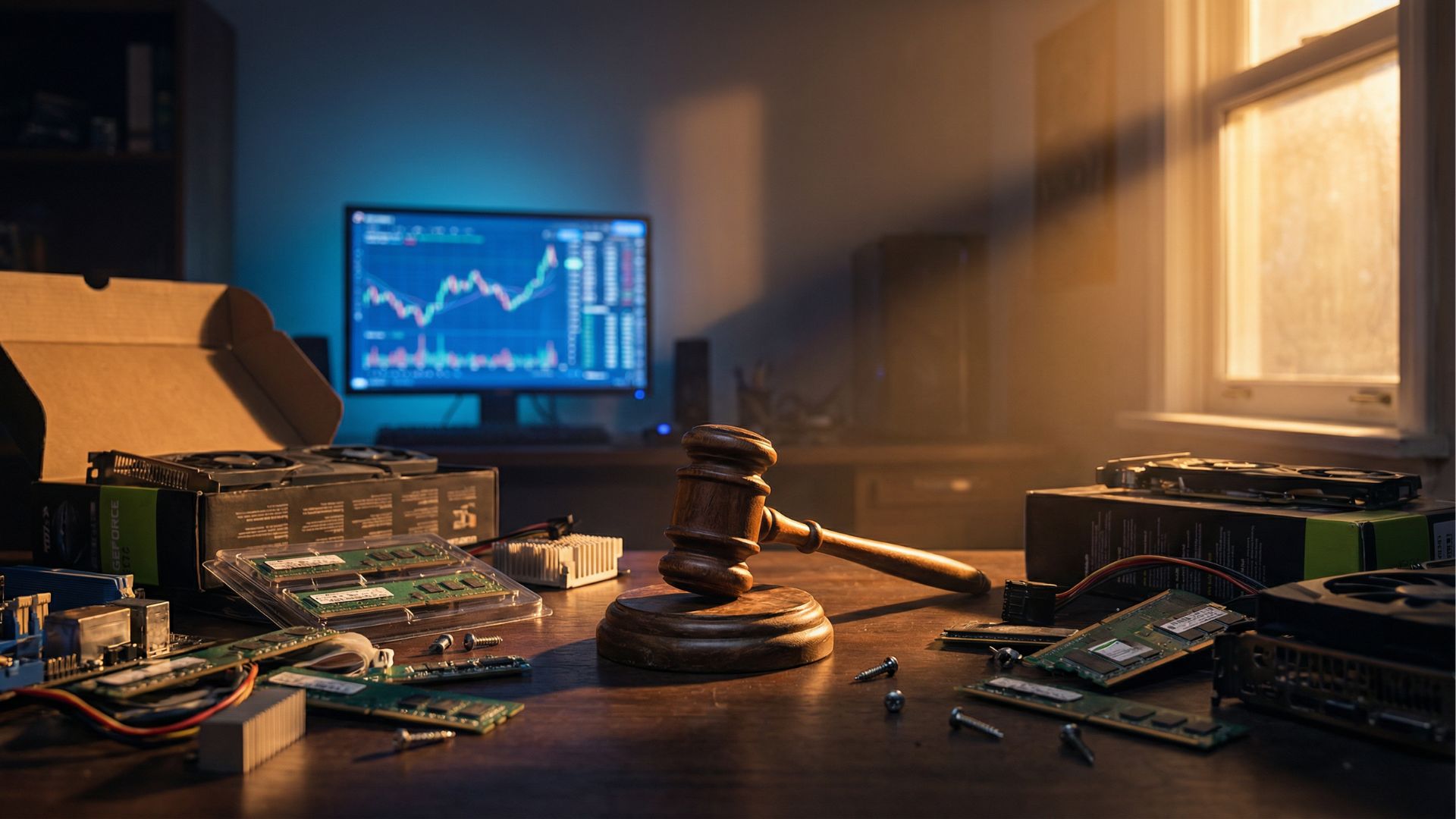
Data centers built to power large language models from OpenAI, Google, Meta, Anthropic, and their competitors are consuming memory at a pace that the industry cannot sustain alongside normal consumer production. OpenAI’s Stargate project alone has reportedly absorbed 40% of global RAM production per month. Samsung, SK Hynix, and Micron, which together control more than 95% of DRAM output, have pivoted their limited cleanroom capacity toward high-bandwidth memory for enterprise GPU accelerators. Every wafer allocated to an HBM stack for an Nvidia data center chip is a wafer denied to the DDR5 module in your next PC.
The numbers are grim. IDC projects the PC market could contract by up to 9% in 2026. Average system prices may rise 6% to 8%. Dell and Lenovo have warned of 15% to 20% price hikes on certain product lines. Nvidia is reportedly cutting GeForce RTX 50 series production by 30% to 40% in the first half of 2026, not because demand is low but because VRAM allocation is being prioritized for its more profitable professional GPU lines. Micron has exited the consumer memory market entirely.
DDR5 RAM that cost $99 for a 32GB kit in March of last year now sells for $297 from the same vendor. That is a 200% increase in eight months, driven entirely by supply reallocation rather than manufacturing cost changes. No tariff elimination can offset that kind of structural shift.
What This Actually Means for PC Buyers
The tariff ruling removes one headache. That matters. If you were waiting to buy a laptop or order components from a US retailer, IEEPA-related surcharges should begin disappearing from pricing as inventory turns over and importers adjust. Some of that $130 billion in collected tariffs may eventually flow back to importers through refunds, though the Supreme Court notably did not address the refund process and Justice Kavanaugh warned it would be a “mess.”
But the memory crisis is structural and shows no sign of easing. Analysts expect tight supply conditions to persist through all of 2026 and potentially into late 2027. Building a new fab takes at least three years. The companies that control global memory production have no financial incentive to shift capacity back to consumer products when enterprise margins on HBM are significantly higher.
The practical advice has not changed. If you need to upgrade RAM, storage, or a full system, buying sooner rather than later remains the smart move. Prices are not coming down. The tariff ruling improves the floor, but the ceiling is being set by forces that no court decision can reach.
One Problem Down. The Hard One Remains.
The Supreme Court did the right thing on Friday. IEEPA was never meant to be a blank check for unilateral trade policy, and six justices said so clearly. For PC hardware buyers, the ruling removes a layer of artificial cost that never should have existed. That is worth celebrating.
But celebrating too loudly risks missing the bigger picture. The tariffs were a policy headache. The memory crisis is a structural transformation of the global semiconductor supply chain, driven by the largest capital allocation shift the tech industry has ever seen. One of those problems just got solved by the judiciary. The other one is going to take years, billions of dollars in new manufacturing capacity, and possibly an entire correction in how the industry values consumer hardware relative to enterprise infrastructure.
If data centers are now consuming 70% of all memory chips produced globally, and that share is growing, at what point does the PC as we know it become a luxury product rather than a consumer commodity?
Done With Pay‑to‑Win?
Build a Squad That Actually Matters.
Arknights: Endfield is a real‑time action RPG in the Arknights universe. Explore Talos II, build your base, and lead a four‑operator squad across PC, PS5 and mobile with full cross‑progression.