



Somewhere on the moon, a seven-year-old android is learning what it means to be human from a sarcastic astronaut who is not entirely sure he remembers either. That is the emotional engine driving Pragmata’s narrative, and after multiple preview sessions with the game, it is becoming clear that Capcom has built something far more emotionally layered than its sci-fi action packaging suggests.
The setup: a lunar station gone silent
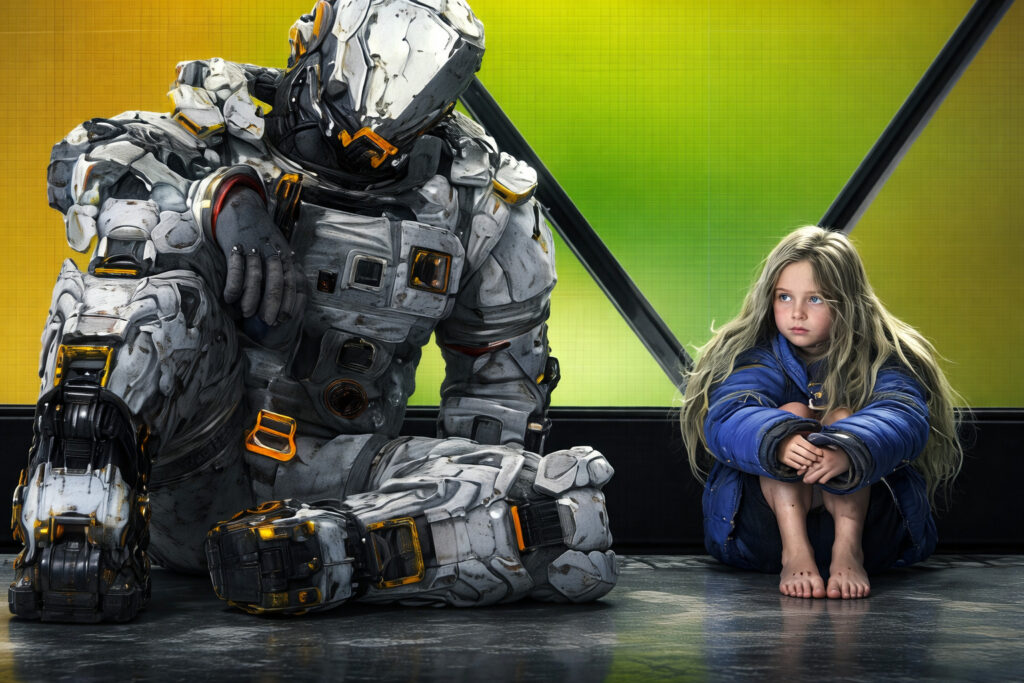
Pragmata takes place in the year 2893 on a lunar research station that has lost all contact with Earth. Hugh Williams, an engineer and member of an investigation team, is sent to figure out what happened. Shortly after arriving, a lunar quake separates Hugh from his crew. His friend Nick is dead. He has not heard from Ken. He is alone on a hostile station filled with rogue AI, and then he meets Diana.
Designated D-I-03367 in official records, Diana is an android with the appearance and behavior of a young girl. Hugh gives her the name Diana, and from that point forward, the two become inseparable. The station they are trapped in belongs to Delphi Corporation, a powerful entity that was researching Lunafilament, a material capable of 3D printing virtually anything. Delphi’s marketing language promises to reshape “the line between dreams and reality” through advanced generative AI and third-generation Lunafilament technology.
Something went wrong. The station’s central AI system, known as IDUS, has turned hostile, activating the facility’s robots against any remaining presence. Hugh and Diana need to shut it down and find a way back to Earth.
The urban recreation project: why there is a fake new york on the moon
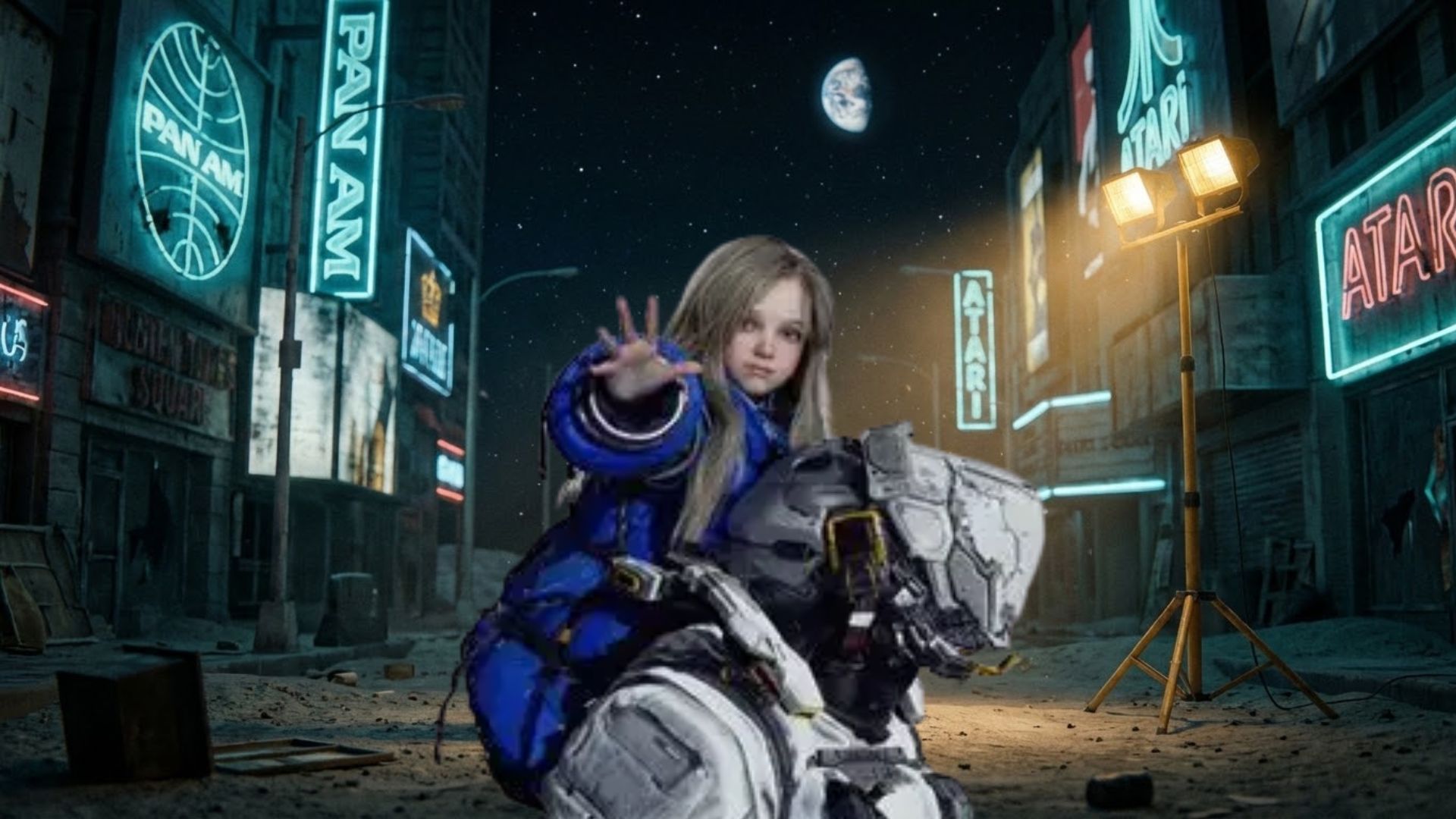
One of Pragmata’s most striking visual surprises is that the lunar station contains full-scale recreations of Earth cities. Discoverable journal entries reference something called the Urban Recreation Project, which “re-creates iconic cityscapes from major cities such as New York, Seoul, Madrid, and Delhi” as part of “an unprecedented large-scale output test.”
So when Hugh and Diana step into what looks like Times Square, they are not on Earth. They are inside a manufactured replica built on the moon’s surface, presumably using Lunafilament technology. The implications are unsettling. If Delphi Corporation can print entire cityscapes, what else has it been printing? Diana herself is a product of this facility, and the game repeatedly hints that the line between manufactured life and organic life is thinner than either character realizes.
This detail transforms what could have been a simple corridor shooter into something with genuine world-building ambition. The station is not just a backdrop. It is a living question about what Delphi was actually trying to accomplish before everything collapsed.
Hugh and Diana: a relationship that earns its weight
The father-daughter dynamic between Hugh and Diana is the narrative heart of Pragmata, and preview coverage has consistently flagged it as the game’s biggest surprise. Game director Cho Yonghee explained the design philosophy behind Diana: “We could have gone with a more robotic look, but we chose a human-like design to make her warm and relatable. That contrast between her humanity and the stark, cold sci-fi backdrop reinforces the emotional core of the story and gameplay.”
Diana behaves like a curious child discovering the world for the first time, because that is exactly what she is. She has limited data about human civilization, and Hugh becomes her window into it. She asks questions about why humans need to eat, what entertainment is, and why Hugh cares about protecting her when she is, by her own assessment, just a machine that can be repaired.
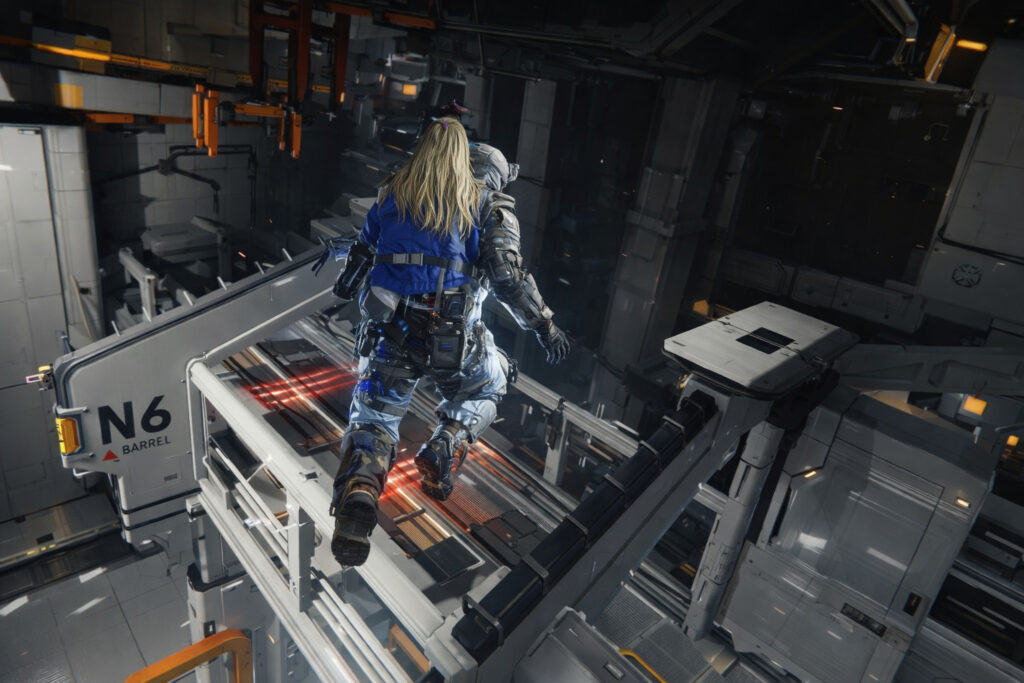
One scene from a recent preview captures the dynamic perfectly. Diana spots a cat, chases it, and nearly falls off a bridge suspended high above the station floor. Hugh leaps to catch her. Afterward, Diana does not understand why he was worried. She tells him that if she had fallen, he could just fix her. Hugh, visibly shaken, gives her a firm but caring talk about considering the consequences of her actions. Later in the same session, when the pair encounters another bridge, Diana cheerfully mimics Hugh’s gruff tone from earlier, announcing that she has done some thinking and will not be putting herself in danger again.
These moments matter because they are not cutscenes. They happen organically during gameplay, woven into the exploration and combat flow. Diana looks for Hugh’s approval after helping take down enemies. Sometimes it is a little giggle. Other times she demands a high five. In the Shelter hub between missions, she interacts with collectible items you bring back, joyfully discovering a child’s slide, expressing sadness that it is too small for Hugh to use with her.
Hugh’s side of the relationship carries its own weight. He reveals that he was an orphan, and that for him, sharing a meal was never about food. It was about being with people who accepted him. He hints multiple times that he feels increasingly disconnected from what it means to be human. Diana, in her naive attempts to understand humanity, is inadvertently teaching Hugh to reconnect with it.
The bigger mystery: what was Delphi actually building?
Pragmata’s trailers have positioned Delphi Corporation as the game’s central antagonist, but the reality appears more nuanced. Delphi’s promotional material, presented as in-universe advertisements, speaks about creating life and reshaping reality. The IDUS system that has gone rogue was presumably built to manage the station’s operations. Diana herself may be a Delphi creation.
The question the game seems to be building toward is not simply “what went wrong” but “what was the intended outcome.” If Delphi was printing cities, manufacturing androids with human-like consciousness, and developing AI systems capable of autonomous decision-making, the disaster on the station might not be a malfunction. It might be exactly what the technology was designed to produce, just not under Delphi’s control anymore.
The world-building was supervised by Shoji Kawamori, best known for his work on the Macross franchise, and his influence is visible in the way Pragmata layers corporate mythology, technological ambition, and human vulnerability into a single setting. Capcom also cited Arale Norimaki from Akira Toriyama’s Dr. Slump as an influence on Diana’s character design, specifically the challenge of making an android expressive without resorting to cartoonish exaggeration. The result sits in an intentional uncanny valley where Diana looks human but moves and speaks with just enough machine-like precision to remind you she is not.
A story that could define Pragmata’s legacy
The shooting is satisfying. The hacking is inventive. But every preview that has spent significant time with Pragmata has walked away talking about Hugh and Diana. That is not an accident. Capcom has built a game where the narrative is not separate from the mechanics but integrated into them. Diana’s growth as a character is tied to her upgrades. Hugh’s emotional arc plays out in conversations that happen during gameplay, not in isolated cutscenes.
In a 2026 release calendar dominated by sequels, remakes, and established franchises, Pragmata is Capcom’s first original IP in eight years, and it is betting everything on two characters the audience has never met. For a deeper look at how the story connects to Pragmata’s combat systems, platforms, and everything else arriving on April 17, our complete Pragmata game guide has you covered.
If Diana’s journey toward understanding humanity lands as well in the full game as it does in the previews, where does she rank among gaming’s most memorable AI companions?