



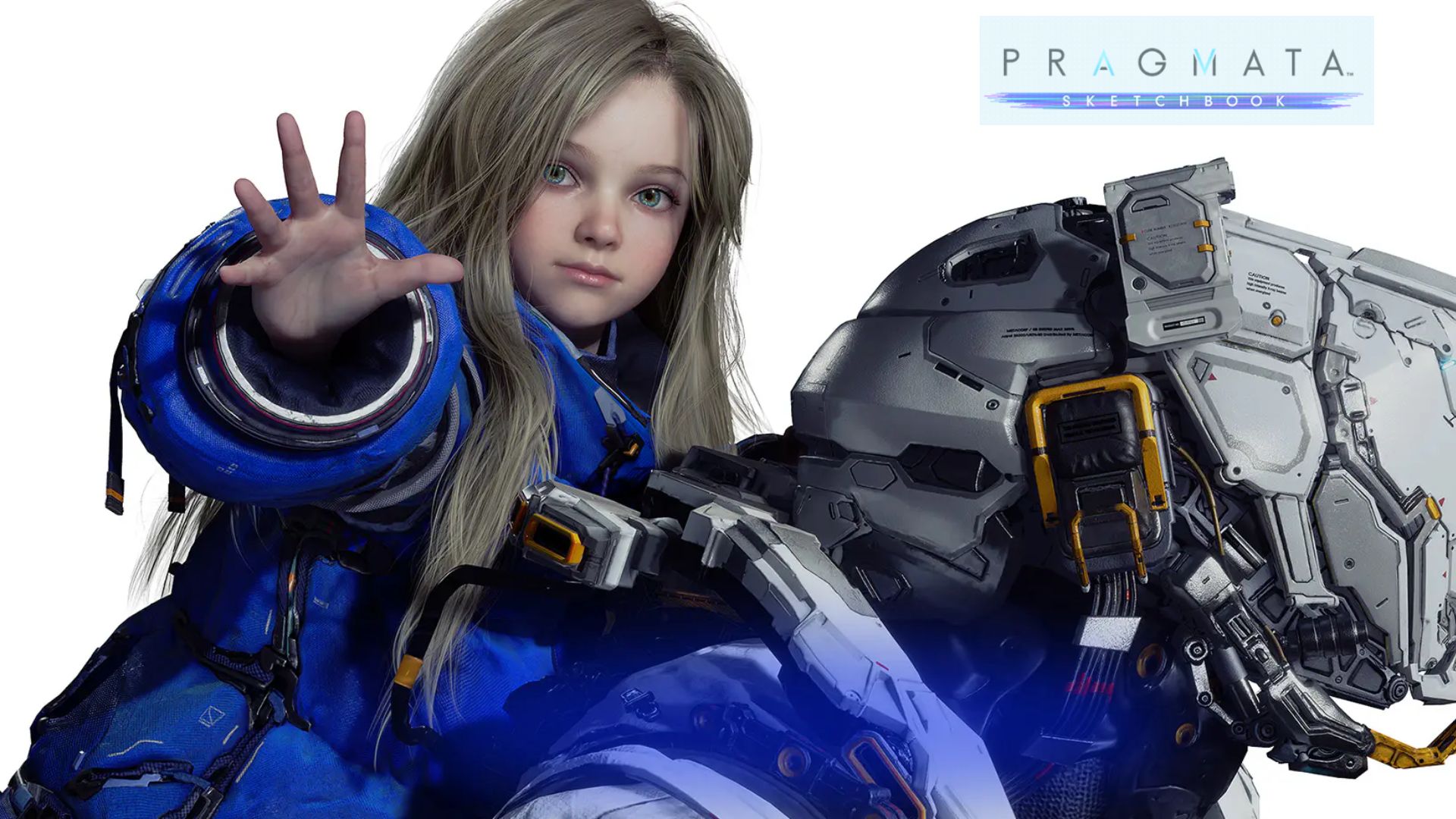
Most third-person shooters hand you a gun and point you at enemies. Pragmata hands you a gun, puts an android child on your back, and asks you to solve a digital maze while bullets are flying at your face. It is the kind of design that sounds chaotic on paper but plays with a clarity and rhythm that multiple hands-on previews have consistently praised. With the game launching April 17, 2026, the gameplay loop is no longer a mystery, and what Capcom has built here deserves a proper breakdown.
Two Characters, One Controller, Zero Downtime
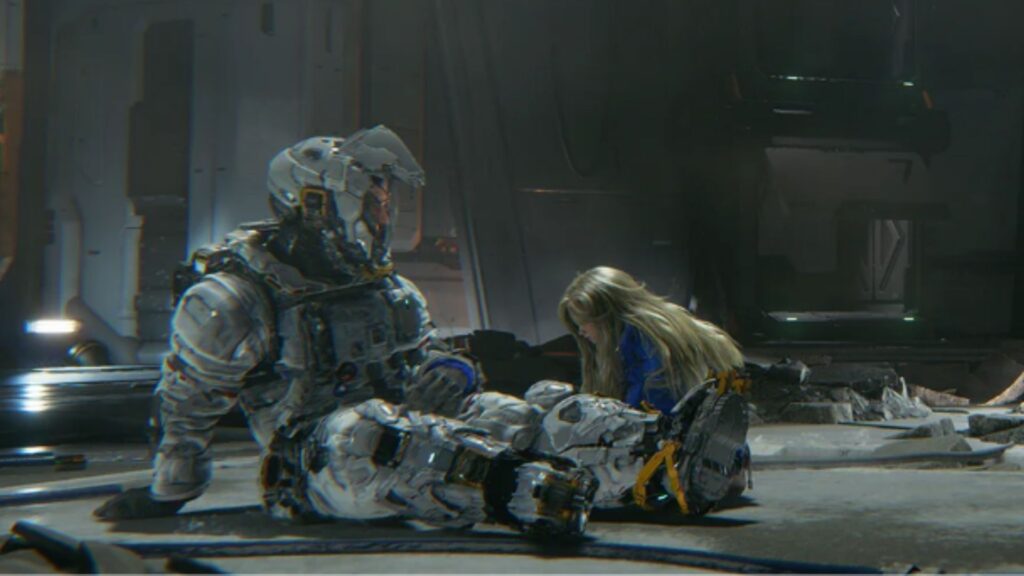
At the core of Pragmata is a dual-character system that runs simultaneously. You control Hugh Williams, a stranded astronaut navigating an abandoned lunar research station, and Diana, his childlike android companion who literally rides on his back during combat. Hugh handles all physical actions: movement, aiming, shooting, dodging, and traversal using thrusters that propel him across platforms in the station’s low gravity. Diana handles hacking, which is mapped to its own separate input.
This is not a tag-team system where you switch between characters. Both operate at the same time, on the same controller, during the same encounters. Your left stick and triggers manage Hugh. Your right stick and face buttons manage Diana’s hacking interface. Every enemy encounter becomes a multitasking challenge that engages both sides of your brain at once.
Game director Cho Yonghee described the philosophy directly: “This two-in-one approach, where Hacking is key to your success, is our own unique take on combat that you’ll only find here, in Pragmata.”
How the Hacking System Actually Works
Diana’s hacking ability is not a simple button press or a quick-time event. It presents as a grid-based maze on screen, and you navigate a cursor through it using the controller’s face buttons. The objective is to route through nodes to reach a green power-on block, which disengages an enemy robot’s armor plating. Once the armor drops, Hugh can target exposed weak points for actual damage.
Here is where it gets tactical. The maze contains optional blue nodes scattered along the path. Passing through more of these blue nodes before completing the hack increases damage output and extends the time an enemy’s armor stays disarmed. So every hack presents a micro-decision: do you rush the shortest path to strip armor quickly, or do you route through extra nodes for a bigger damage window while enemies are still shooting at you?
The system scales with enemy variety. Standard robots go down with basic hacks. Larger enemies introduce signal jammers that block hacking from certain angles, forcing you to reposition Hugh physically before Diana can even begin her work. Some enemies launch missiles that can be hacked mid-flight and redirected back at them. Boss encounters layer multiple hack targets across the arena, requiring players to prioritize which systems to crack first.
Weapons, Scarcity, and the Risk-Reward Loop
Hugh’s arsenal extends beyond the standard shooter loadout, though it includes the expected pistol, shotgun, and grenade launcher. More interesting are the specialized tools: a precision charge rifle that rewards patience with high-damage shots, a decoy ray that pulls enemy aggro to a false target, and a stasis net that freezes robots in place.
What makes the weapon system distinctive is scarcity. Most weapons have finite ammo, and once a gun is empty, Hugh discards it. The only way to use that weapon again is to find another one in the environment. This forces genuine resource management across every encounter. Burning through explosive rounds on a group of small robots means you will not have them for the larger threat around the next corner.
That tension between spending and saving creates a natural risk-reward rhythm. During one preview session, a journalist described holding onto an explosive launcher specifically for a boss encounter, choosing instead to carefully thin crowds with the more available pistol. Pragmata rewards that kind of planning.
The Shelter Hub and Upgrade System
Between missions, Hugh and Diana return to the Shelter, a home base managed by a support robot named Cabin. Here, players spend currencies earned during runs to upgrade Hugh’s abilities, improve Diana’s hacking capabilities, customize weapon loadouts, and apply passive mods.
The upgrade tree offers meaningful choices. You can unlock a last-second dodge ability that slows time, increase Hugh’s healing efficiency, expand mod slots, or beef up his Overdrive, a special attack that immobilizes all nearby enemies. A finisher system also unlocks through upgrades, letting you execute weakened enemies with a dedicated takedown move.
Diana has her own progression within the Shelter. She can gain abilities that let her expose multiple enemies simultaneously or break through specific materials blocking exploration paths. That last detail matters because Pragmata borrows from the Metroidvania playbook. Certain areas are gated by purple crystals that only Diana’s upgraded abilities can shatter, opening new routes for both progression and backtracking through previously explored zones.
The Shelter also serves a narrative function. Diana interacts with items you collect during missions, a globe she spins with curiosity, a child’s slide she gleefully discovers, a TV she dismisses as “a crappy computer.” These moments build the emotional core of the Hugh and Diana relationship between the action sequences.
Why This Gameplay Loop Stands Out in 2026
Pragmata’s combat is not just shooting with extra steps. It is a genuine puzzle system layered on top of a competent third-person shooter, and the two halves feed each other in a way that no other game on the 2026 calendar is attempting. The closest comparison anyone has landed on is Binary Domain, Sega’s underrated 2012 robot shooter, but even that did not ask you to solve mazes while managing crowd control.
In an industry that spent the last two years consolidating around sequels and safe bets, Pragmata represents exactly the kind of creative risk that new IP demands. It is Capcom’s first original franchise in eight years, built by a new development team, and the gameplay is the clearest signal that they are not interested in copying what already exists.
For a complete look at how these mechanics fit into Pragmata’s story, platforms, editions, and release timeline, our complete guide to the Pragmata game covers everything you need to know before the April 17 launch.
What part of Pragmata’s dual-character combat are you most curious to try for yourself, the hacking puzzles or the weapon scarcity system?