





Once Human does not market itself as a looter shooter. The Steam page says multiplayer open-world survival game. The trailers show base building and tree chopping and cute little deviations sitting in glass cases. So when you finally dig into the gear system and discover that this game has build-defining set bonuses, elemental damage synergies, seasonal backpack perks that function like Destiny’s artifact, and mod combinations that can turn a basic shotgun into a burn-stacking area denial monster, it hits different. The depth is genuinely surprising. And in 2026, with the calibration system removed and the mod interface reworked, the path to a powerful build is cleaner than it has ever been.
This guide breaks down the weapons worth investing in, the builds that perform across scenarios, and the crafting decisions that separate a geared player from a dominant one.
Early Game: The Crossbow Dominates
Every new scenario starts the same way. You have nothing. Resources are scarce. Ammo is a luxury. And the enemies around your starting zone are ten levels above you. In this environment, the crossbow is king.
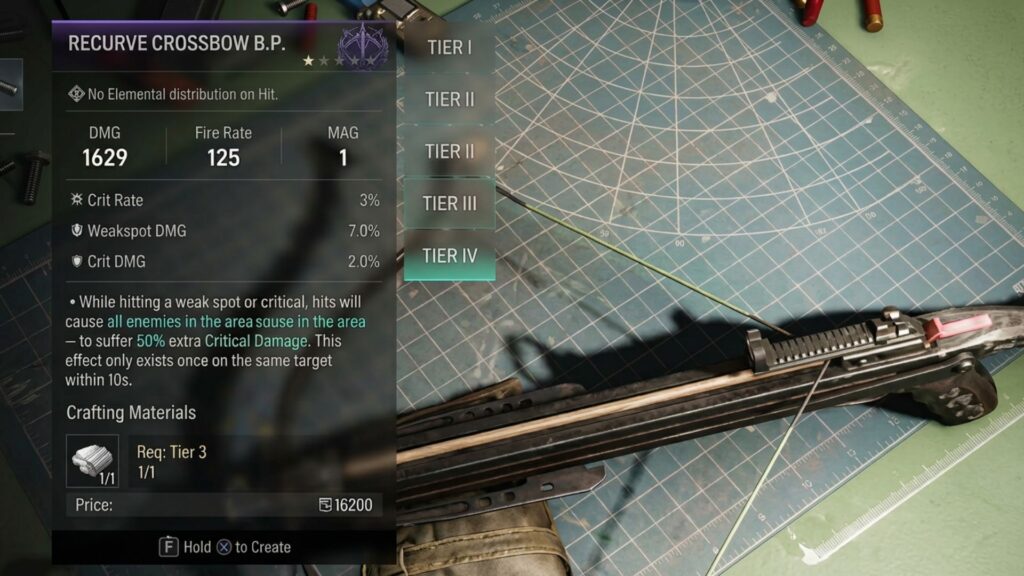
The crossbow deals high burst damage per shot. That alone makes it competitive. But the real advantage is economic. Arrows can be retrieved from enemy corpses. You fire, you kill, you walk over and pick your ammo back up. In a game where crafting bullets eats into your resource supply chain, free ammunition is a compounding efficiency edge that lasts well into mid-game.
Slot a Power Surge mod onto the crossbow as soon as you unlock mod access. The damage jump is immediate and noticeable. With Power Surge active, you can comfortably engage enemies ten levels above you with headshots and smart positioning. Pair the crossbow with the Tactical Combo cradle override, which gives you 15% weapon damage for four seconds after reloading. Since the crossbow reloads after every single shot, this buff is essentially permanent. That is a 15% damage increase with zero downtime just for using the weapon as intended.
The crossbow falls off in late game when fire rate and status application matter more than single-shot burst, but for the first half of any scenario it is the most resource-efficient and damage-efficient option available.
Mid Game: Transition to Status Builds
Once you have cleared most of the early strongholds and started encountering elite enemies and silo dungeons, raw damage becomes less important than damage type synergy. This is where Once Human’s build system opens up and starts rewarding players who think about how their gear pieces interact.
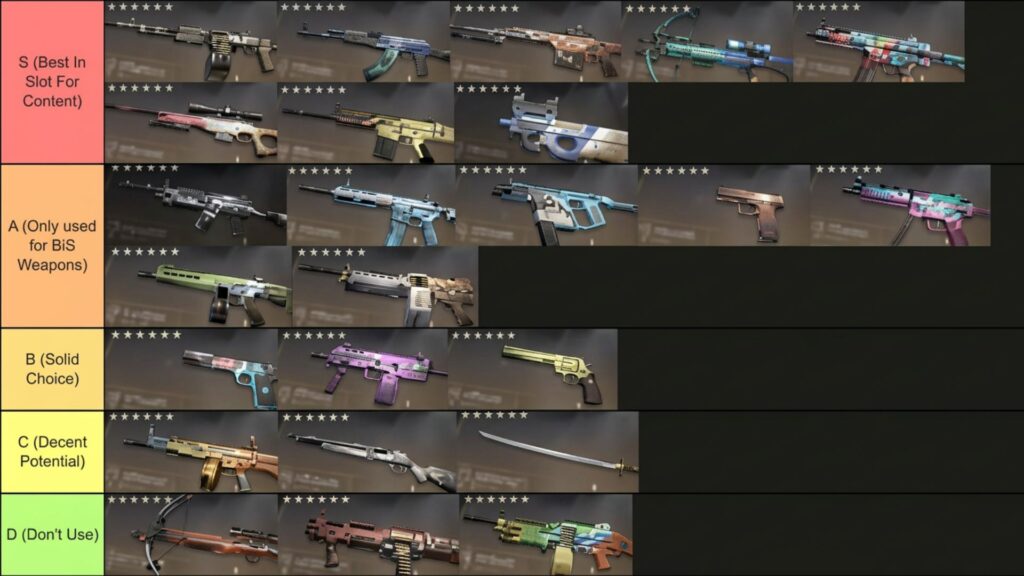
The three primary build archetypes in 2026 are burn, crit, and elemental. Each has a different feel and different gear requirements.
Burn builds are the most popular for good reason. They scale off multiple overlapping multipliers. A shotgun with innate burn chance generates orbs on proc. Picking up those orbs replaces your rounds with burning rounds that deal additional fire damage per orb collected. Pair this with gloves that increase burn tick speed based on the number of burn stacks on the target. Add a gear set bonus that boosts burn damage when your character’s body temperature exceeds a certain threshold, manageable through food consumables. Then equip a seasonal backpack perk that further amplifies burn damage based on how many surrounding enemies are currently burning.
That is five separate multipliers all feeding into the same damage type. When they all align, enemies melt. Burn builds excel in crowd-dense content like base defense waves, polluted zone encounters, and public group events where you are constantly surrounded.
Crit builds are more straightforward. Stack critical hit chance and critical damage across gear, mods, and cradle overrides. The advantage is consistency. Crit builds do not require enemy density or status stacking to perform. They just hit hard, every time. For solo players pushing silos or farming strongholds, crit offers the most reliable damage output without needing external conditions to activate.
Elemental builds are the wildcard. The 2026 mod rework introduced cleaner elemental damage categories with wider scaling ranges. You can build around cold, shock, or corrosion damage depending on the scenario. Way of Winter naturally favors cold builds because certain crafting materials from that biome boost elemental damage under low temperature conditions. Shock builds pair well with automatic weapons for frequent proc rates. Corrosion is niche but effective against high-armor enemies in late-game silos.
| Build Type | Best For | Key Synergy | Weapon Pairing |
| Burn | Crowds, base defense, group events | Stacking multipliers from gear + food + perks | Shotgun, SMG |
| Crit | Solo content, silos, consistent DPS | Critical chance + critical damage scaling | Assault rifle, sniper |
| Elemental | Scenario-specific, armor-heavy enemies | Material bonuses + mod rework scaling | Auto weapons, crossbow |
The Calibration Removal Changes Everything
Before 2026, optimizing a weapon meant running it through the calibration system repeatedly, burning resources to fine-tune stats that would reset with the next seasonal wipe. It was tedious. It was confusing. And Starry Studio themselves admitted it was “low fun with high complexity.”
Now calibration is gone entirely. In its place, crafting uses calibrated blueprints that activate attribute effects directly. When you craft a weapon or armor piece, the blueprint’s stats are baked in. Two random offensive substats have been merged into a single bonus attribute with a higher ceiling. You lose some granular control but gain a system that is faster to engage with and produces comparable or better results.
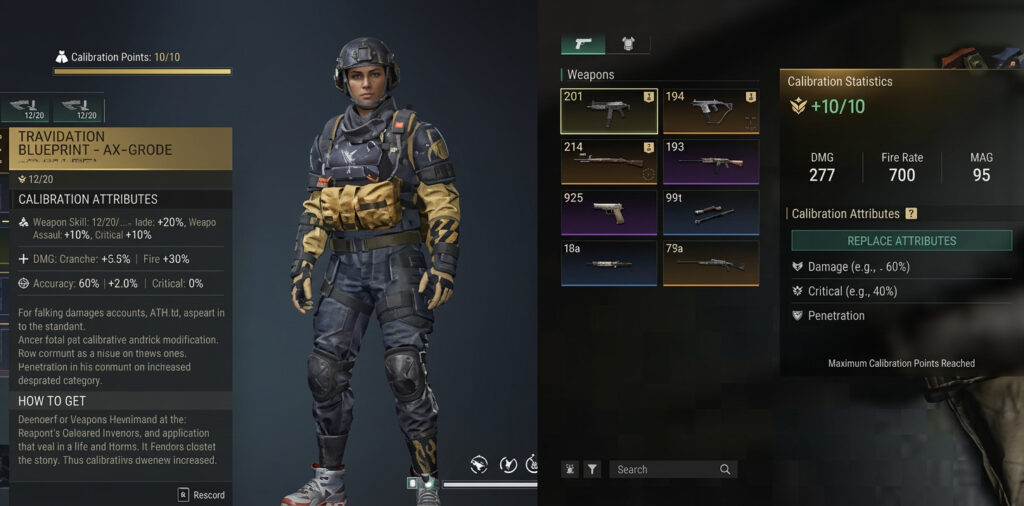
The practical impact is significant. You no longer need to budget time and resources for post-craft calibration passes. What you craft is what you get, and what you get is generally strong. This is especially welcome in a seasonal game where gear resets every few weeks. Nobody misses spending hours calibrating a weapon they will lose in 22 days.
For build optimization, the change means your crafting material choices matter more than ever. The blueprint determines your base stats. The materials you feed into the craft determine your secondary bonuses. And the mods you slot determine your build identity. Three layers, all under your control, none requiring a gambling-style calibration pass.
Crafting Materials Are Your Hidden Multiplier
Most players auto-accept the default materials when crafting gear. That is a mistake. The 2026 system ties stat bonuses directly to the resources you use, and the difference between common and legendary materials is not subtle.
For armor, animal hides are the key variable. Standard cow hides from bison give you plus 20 maximum carry capacity. Functional, but not exciting. Legendary cow hides from the same animals can roll plus 74 HP, plus 5 sanity, plus 15 cold and frost resistance, and hypothermia immunity below 30% HP. That is a single material swap turning a decent chest piece into a survival-defining one.
For weapons, the ore type matters. In Way of Winter, hot rock ore adds elemental damage bonuses under high temperature conditions. Cold crystal ore boosts stats in cold environments. Matching your crafting materials to your scenario’s environmental conditions is free power that costs nothing extra to unlock. You just need to know it exists and hunt for the right resources.
Always check the crafting interface before confirming a build. Scroll sideways through the material options. Look for legendary drops. The five minutes you spend farming a specific animal or mining a specific node can translate into stats that last your entire scenario run.
Mods: The 2026 Rework Explained
The mod system received a significant interface overhaul in 2026. The classic mod list is still available for players who prefer the old layout, but the new interface organizes mods by category and presents stat information more clearly.
The core mechanic has not changed. You slot mods into corresponding gear pieces, and each mod provides specific bonuses. What has changed is readability. You can now see at a glance how a mod affects your overall build rather than doing mental math across six separate equipment slots.
For burn builds, Deviation Expert is a strong mod choice. It increases fire rate and status damage, both of which accelerate burn stack application. Elemental Overload pairs well on gloves, boosting reload efficiency and elemental damage output.
For crit builds, look for mods that increase critical hit chance and critical damage in separate slots. Stacking both in the same slot is less efficient than spreading them across gear pieces because of how the scaling formulas work. One mod for chance, one for damage, applied to different items, will outperform a single combined mod.
For general use, Power Surge remains the most universally effective weapon mod in the game. The damage increase applies regardless of build type or weapon choice. If you are unsure what to slot, Power Surge is never wrong.
Deviations as Build Extensions
Deviations are not just cute pets and resource gatherers. Several of them directly alter your combat capabilities in ways that function as build components.
Some deviations grant special melee attacks, including one that lets you teleport to enemies on melee swing. Others provide healing fields when deployed. The Festering Gel acts as throwable cover that regenerates your HP when you stand near it. Certain combat-focused deviations apply their own status effects to enemies, which can synergize with your gear’s elemental build.
Treat your deviation choice as your seventh gear slot. If you are running a burn build, a deviation that applies additional fire-related effects compounds your existing synergies. If you are running crit, a deviation that increases attack speed or provides damage windows through crowd control gives you more opportunities to land critical hits.
For a deeper look at which deviations pair best with specific builds, check out our Once Human deviations guide for 2026 with full rankings for combat, resource gathering, and base utility.
Putting It All Together
The difference between a player who equips whatever drops and a player who builds intentionally is enormous in Once Human. It is the difference between struggling through a monolith boss and melting one. Between dreading base defense waves and looking forward to them. Between hitting a progression wall at the end of a scenario and cruising through it.
The 2026 changes made building easier to understand without making it shallower. Calibration removal cleared out busywork. The mod rework improved readability. Material-based crafting bonuses added meaningful choices where auto-craft used to suffice. And the Wish Machine, for all its gacha frustrations, does eventually deliver the set pieces you need if you are patient with the weekly Star Chrom income.
Build smart. Match your materials to your scenario. Slot mods with intention rather than convenience. And remember that Once Human’s build system is its best kept secret, hiding inside a game that most people think is just about chopping trees and building houses.
Is there a build archetype or weapon type you think deserves more attention from the community, or has the burn meta gotten so dominant that everything else feels like a downgrade?