




Somewhere around hour fifteen of Once Human, you will throw a blob of sentient gel onto the floor of a burning stronghold, watch it reshape into a wall that heals you while bullets fly overhead, and realize that this weird little pet system is not a gimmick. Deviations are one of the most underestimated systems in the entire game. Most new players treat them as collectibles. Cute things to stick in glass cases back at base. But experienced players know that the right deviation in the right situation changes how you play. They mine while you sleep. They chop trees while you explore. They teleport you across battlefields. They sweep your floors and occasionally find legendary loot under your bed.
In 2026, with new deviations added through the Year of the Monsters updates and the satisfaction system still rewarding attentive base management, knowing which deviations to prioritize and how to keep them productive is a real competitive edge.
How the Deviation System Works
Deviations are creatures you capture and collect throughout Once Human. You find them in the open world floating around points of interest, as rewards from side quests and campaign missions, inside silo dungeons, during public events, and even through fishing. Some are common. Some are rare enough that dedicated farming is the only reliable way to get them.
Once captured, a deviation gets placed in a glass case inside your base. From there, you inspect it to learn its function, its preferences, and its unique effects. Every deviation has a specific role. Combat deviations fight alongside you or alter your attacks. Territory deviations manage resources and base upkeep. Gadget deviations provide utility tools and passive benefits.
The satisfaction system is what separates a deviation that works from one that works well. Each deviation has preferences for temperature, lighting, music, decor, and nearby objects. Meeting all of their preferences raises their satisfaction rating, which directly increases their productivity and the potency of their effects. A deviation at full satisfaction might gather twice the resources or proc its combat ability more frequently than one sitting in an empty room with the wrong lighting.
It is a light management layer that rewards a few minutes of attention. Check what your deviation wants. Adjust the surroundings. Move on. The payoff compounds over the entire duration of a scenario.
Best Combat Deviations
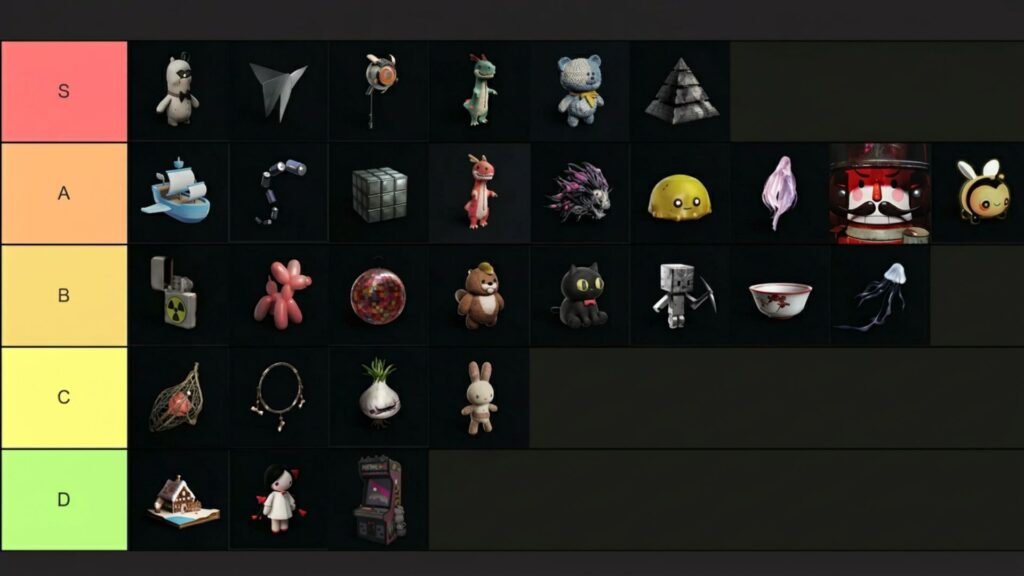
Combat deviations deploy alongside you in the field. You carry one in your backpack and activate it during encounters. The best ones do not just deal damage. They change how you engage with fights.
Festering Gel is the single most valuable deviation in the game regardless of build or scenario. When thrown, it reshapes into a piece of cover that regenerates your HP while you stand near it. In a game where healing options are limited during combat, having a deployable heal-on-demand is transformative. It turns dangerous encounters into manageable ones. It lets you face-tank damage you would otherwise need to kite. And in base defense waves, placing the gel near your resonator gives you a healing anchor point that keeps you alive through sustained pressure. Prioritize high activity rating when selecting a Festering Gel, as this determines how frequently you can redeploy it.
The Samurai deviation is the best offensive combat companion available. It fights alongside you as a melee attacker, dealing its own damage and drawing enemy attention. More importantly, it alters your melee attacks by adding a teleportation effect. When you swing, you blink to the target. This is not just a mobility trick. It fundamentally changes how melee works in a game where melee is otherwise floaty and unreliable. With the samurai active, melee becomes a viable gap-closing tool that pairs especially well with shotgun builds. Close the distance with a teleport swing, then unload point blank.
Pyro Dino is a strong pick for burn build players. It applies fire-related effects to enemies, which synergizes with the burn stacking multipliers that define the most popular endgame builds. If your gear is already built around burn chance, burn damage, and burn tick speed, adding a deviation that independently applies burn to targets you have not even hit yet accelerates the entire damage loop.
| Deviation | Role | Why It Matters |
| Festering Gel | Deployable heal + cover | Best survival tool in the game |
| Samurai | Melee companion + teleport | Transforms melee into a viable combat option |
| Pyro Dino | Fire damage companion | Synergizes with burn builds |
| Butterfly’s Emissary | Support + crowd control | Slows enemies, creates breathing room |
Best Resource Gathering Deviations
Territory deviations handle the grind while you do something more interesting. Assign them to your base and they will passively collect resources over time. The efficiency gap between having resource deviations and not having them is substantial, especially in the later phases of a scenario when material demands increase sharply.
Digby Boy is the essential mining deviation. Place it in your base near an ore-related station and it will collect ore deposits automatically. In a game where smelting ingots is the bottleneck for almost every crafting recipe, having a deviation that feeds raw ore into your supply chain without requiring you to leave base is a massive time saver. Keep its satisfaction high and the collection rate increases noticeably.
Woodchuck does for lumber what Digby Boy does for ore. It chops trees and collects wood passively. Wood is less of a bottleneck than ore in most scenarios, but in Way of Winter where you need fuel for fires and building materials for insulated structures, a productive Woodchuck keeps your supply steady without manual harvesting runs.
Minecraft Guy is the community nickname for the ore harvesting deviation that functions similarly to Digby Boy but focuses on specific high-tier materials. If you are deep into a scenario and need tungsten or silver consistently, this deviation reduces the farming pressure on your daily play sessions.
Paper Doll is a base utility deviation that sweeps your home and occasionally finds hidden treasure under furniture. The treasure drops are random but can include rare materials, consumables, and even blueprints. It is not a primary resource deviation, but the passive value it generates over a full scenario adds up. Think of it as a low-maintenance lottery that pays out in useful items instead of currency.
Satisfaction Management Without the Headache
The satisfaction system sounds more complicated than it is. Each deviation lists its preferences clearly when you inspect it. Temperature, lighting, sound, and nearby objects. Most preferences can be met with a handful of base items that you probably already have.
Temperature adjustments usually mean placing a heater or cooler near the display case. Lighting preferences are solved with specific lamp types. Sound preferences often ask for a jukebox or specific music player. Object preferences might require a bookshelf, a plant, or a toy placed within range.
The trick is efficiency. Group deviations with similar preferences together in the same room. If three deviations all prefer warm temperatures and ambient music, one heater and one jukebox covers all of them. You do not need to build a custom room for each deviation unless you want to.
Check satisfaction levels after major base changes or relocations. Moving your base resets object placement, which can drop satisfaction ratings if you forget to re-arrange the surroundings. A quick walkthrough after relocating saves you from a week of underperforming deviations.
Capturing Rare Deviations
Not all deviations are created equal. Common ones appear frequently in the open world and through basic quests. Rare deviations require specific conditions.
Some rare deviations only appear in certain scenarios. Way of Winter has exclusive cold-themed deviations that do not spawn in Manabus or other environments. Polluted zones can spawn unique deviations tied to the pollution level of that specific area. Public events, especially heroic and legendary difficulty variants, have deviation drops in their reward pools that cannot be obtained elsewhere.
Fishing is an underrated capture method. Certain deviations can only be caught through the fishing system, which most players ignore entirely. If you are trying to complete a full deviation collection, spending an hour at a fishing spot in each new scenario is worth the investment.
Deviations can also roll with slightly different appearances and random perks. This creates a light chase mechanic similar to shiny hunting in Pokemon. Two Festering Gels might have different activity ratings or secondary bonuses. If you already have a functional one, hunting for a better roll is optional but rewarding for players who enjoy optimization.
Deviation Skins and Cosmetic Options
The 2026 updates introduced deviation skins that can be applied to any owned deviation. Skins are purely cosmetic and do not affect stats or performance. Some are available through the cash shop, others through seasonal events and battle pass rewards.

Once you own a skin, you can apply it to any number of deviations for free. This is a nice touch that avoids the frustration of buying a skin and then having it locked to a single creature. The Eternal Heartkeeper skin, for example, was available through a Spring Festival social event and could be applied across your entire collection.
Skins do not matter for gameplay. But if you care about your base looking cohesive and your combat companion matching your character’s aesthetic, the system is flexible enough to accommodate that without requiring extra spending.
Building Your Deviation Roster
The optimal deviation roster depends on your playstyle, but a balanced setup for most players in 2026 looks something like this.
One combat deviation in your backpack at all times. Festering Gel for survivability or Samurai for offensive melee play. Swap based on the content you are running. Boss fights favor the gel. Open world farming favors the samurai.
Two to three resource deviations assigned to your base. Digby Boy and Woodchuck as your foundation. Add a Paper Doll for passive treasure hunting. If you have a third slot available, fill it based on your scenario’s primary resource bottleneck.
Satisfaction managed across all of them. Even a few minutes of base arrangement translates into days of improved output. The compound benefit over a 22-day scenario is significant.
For players who want to push their deviation choices further by matching them with specific weapon builds, our Once Human best weapons and builds guide for 2026 covers how combat deviations synergize with burn, crit, and elemental loadouts.
Deviations are easy to overlook in a game with this many systems competing for your attention. But the players who invest in them early and manage them consistently end up with a resource pipeline and combat toolkit that the rest of the server cannot match. They are the quiet advantage that keeps giving long after the initial capture.
With Starry Studio promising new deviations as part of the Year of the Monsters roadmap, how much further do you think the system should go? Should deviations eventually have their own skill trees, or would that push the game too far into creature-collector territory?

- AMD Ryzen 9 7900X, NVIDIA GeForce RTX 5070Ti 16GB, 32GB DDR5 RGB 5200MHz 16×2 2TB NVMe SSD, WIFI Ready, Windows 11 Home
- Connectivity: 6 x USB 3.1 | 1x RJ-45 Network Ethernet 10/100/1000 | Audio: On board audio
- Special Add-Ons: Tempered Glass RGB Gaming Case | 802.11AC Wi-Fi Included | 16 Color RGB Lighting Case | Free iBuyPower …