



Here’s the timeline. Capcom releases Resident Evil Requiem on February 26. Within minutes it shatters the franchise’s all-time concurrent player record on Steam. It becomes the platform’s top-selling game and its third most-played title behind Dota 2 and Counter-Strike 2. This is a massive, generation-defining horror launch. It is also an Nvidia-sponsored title, complete with DLSS 4 Multi Frame Generation, Ray Reconstruction, and full path tracing support.
And the Game Ready driver Nvidia released specifically for it? It can stop your GPU fans from spinning.
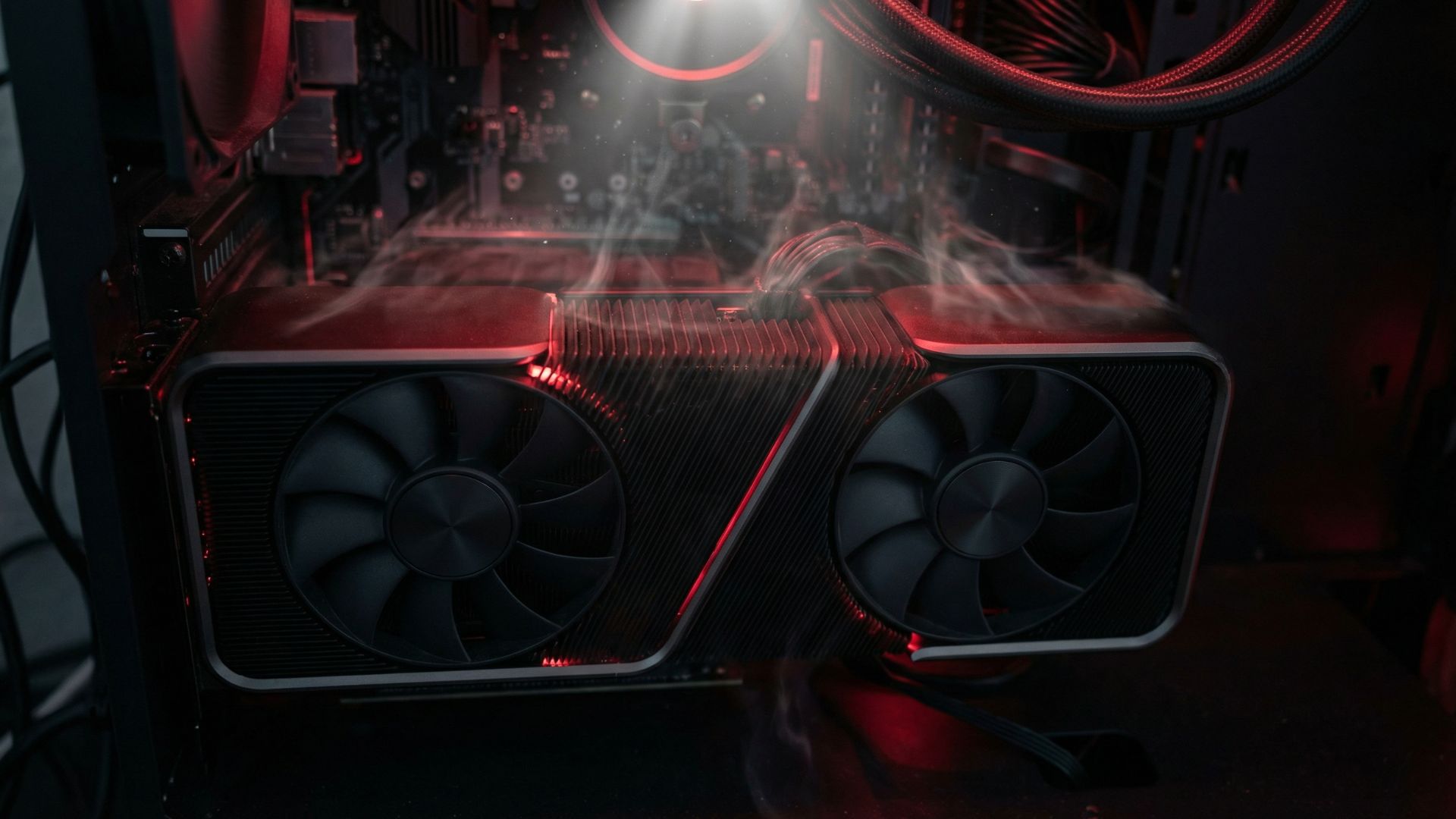
Nvidia has pulled the GeForce Game Ready 595.59 WHQL driver after users flooded forums with reports of fan control failure, broken clock speeds, black screens, blue screens, and performance collapse across RTX 30, 40, and 50-series cards. The download has been removed from Nvidia’s website. The company is telling anyone who already installed it to roll back to the previous 591.86 driver immediately.
This is not a minor inconvenience. A GPU running under load with fans that don’t spin is a GPU that can overheat and sustain damage. On launch day of one of the biggest games of the year. Using the driver Nvidia specifically told people to install.
What went wrong with the 595.59 driver
The bug appears to center on fan detection. Multiple users reported that after installing the driver, their GPUs would only register a single fan instead of the full array. Custom fan curves set through tools like MSI Afterburner were being completely ignored. Some users saw fans vanish entirely from hardware monitoring software. Others reported that boost clocks would fail to engage under load, that HDR would break, and that displays would not properly wake from sleep.
The RTX 50-series seems to be the most affected generation, but the problems are not limited to new hardware. RTX 40 and RTX 30-series owners have reported the same issues. The driver also included optimizations for Bungie’s Marathon Server Slam test, which is running concurrently, meaning the fallout extends beyond just Resident Evil players.
Nvidia’s official guidance is to use the Nvidia App to reinstall the previous driver, or to manually download 591.86 from their website. Multiple outlets and community members also recommend running Display Driver Uninstaller first to ensure a clean rollback.
This is not the first time, and that matters
If this were a one-off, it would be embarrassing but forgivable. It is not a one-off. This is the latest entry in a pattern of driver quality problems that has been building since the RTX 50-series launched in January 2025.
The 572.xx driver branch that accompanied the RTX 5090 launch triggered widespread reports of black screens, game crashes, detection failures, and system lockups across multiple GPU generations. Game developers started publicly recommending that players roll back to 2024-era drivers. InZOI’s studio told users to install driver version 566.36, which was from December 2024, instead of anything Nvidia released in 2025. Gamers Nexus reproduced the issues across multiple titles and configurations and called the situation “absolutely abhorrent and completely embarrassing,” describing it as the worst Nvidia launch in over 15 years of hardware coverage.
Nvidia did eventually release a major fix driver in April 2025 with an unusually long changelog. Things stabilized for a while. But the 595.59 recall shows that the underlying quality assurance problem has not been fully solved. At a time when Sony is reportedly pulling its biggest single-player games away from PC, the last thing PC gaming needs is its dominant GPU maker shipping drivers that can physically endanger hardware.
Why driver quality is a competitive issue now
This matters more in 2026 than it would have five years ago because the competitive landscape has shifted. AMD’s Radeon drivers, once notorious for instability, have become relatively stable. AMD released its own Resident Evil Requiem driver this week with no major issues reported. Intel has also been steadily improving Arc driver support and recently rolled out XeSS 3 multi-frame generation across its entire GPU lineup.
For years, Nvidia’s driver reliability was one of its core selling points. You paid the Nvidia premium partly because the software experience was polished and predictable. That guarantee has been eroding. When Gamers Nexus compared current Nvidia to “Vega-era AMD,” that was not a compliment. It was a warning.
Meanwhile, Nvidia is reportedly planning to cut GeForce RTX gaming GPU production by up to 40% in the first half of 2026 because VRAM supply is being redirected to AI data center hardware. If you are going to make fewer gaming GPUs and charge more for them, the software that runs those GPUs needs to be flawless. Asking customers to pay $500-plus for a graphics card and then telling them to roll back the driver on a major game’s launch night is the opposite of flawless.
How to roll back to the safe driver
If you installed the 595.59 driver and are experiencing issues, here is what to do. Open the Nvidia App, go to the Drivers tab, click the three dots, and select the option to reinstall your previous driver. This should revert you to 591.86. If you don’t have the Nvidia App, open Windows Device Manager, expand Display Adapters, double-click your GPU, go to the Driver tab, and select Roll Back Driver. For the cleanest result, use Display Driver Uninstaller in Safe Mode before reinstalling 591.86 manually from Nvidia’s site.
Playing Resident Evil Requiem on the older driver means you will miss the specific path tracing and DLSS 4 optimizations that the 595.59 driver was supposed to deliver. But you will also have functioning fans, which seems like the better trade.
At what point does a pattern of driver failures stop being individual bugs and start being a systemic quality control problem that changes how we evaluate Nvidia hardware?