




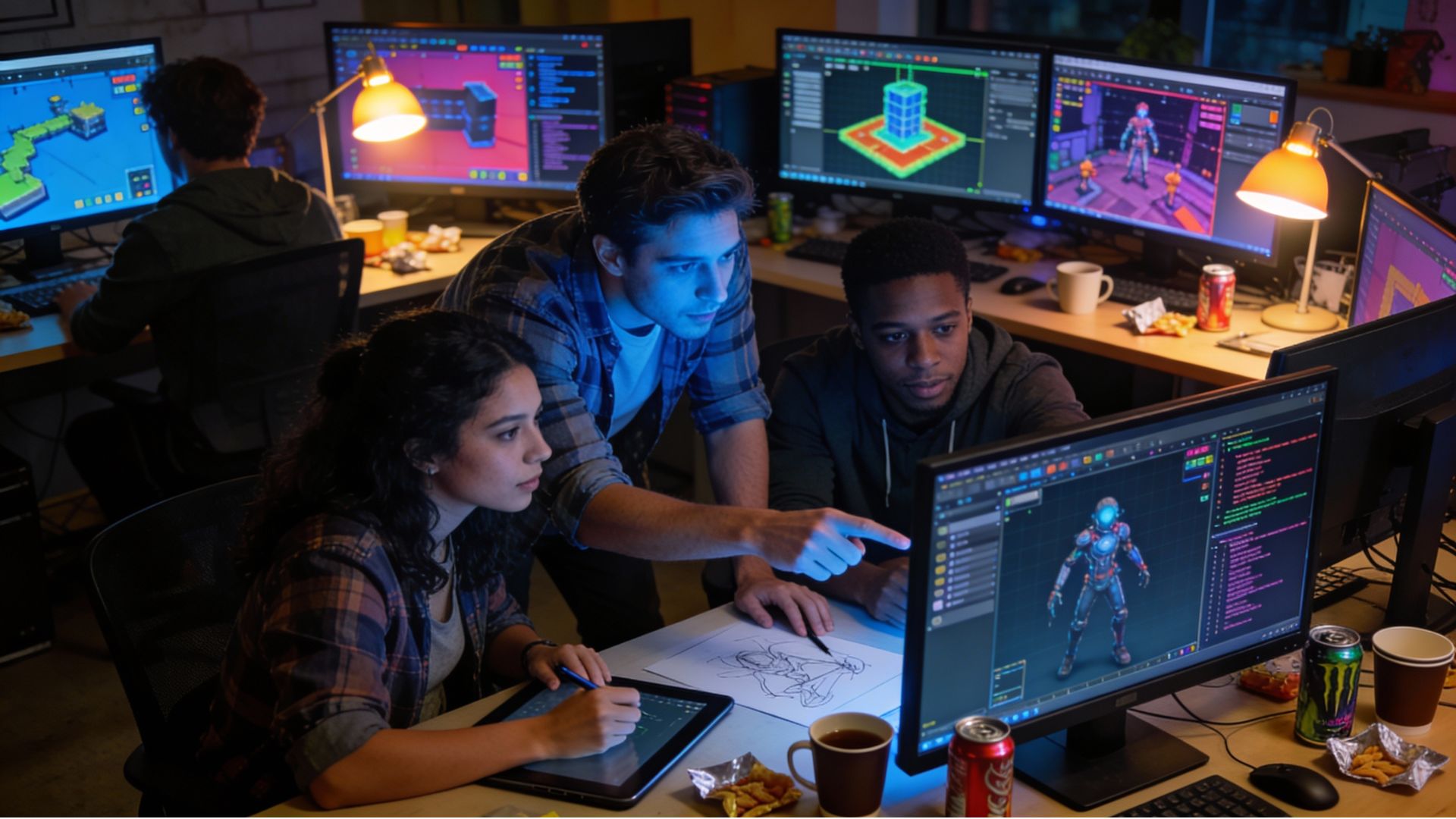
Somewhere between Friday night pizza and Sunday morning exhaustion, thousands of people around the world will create video games from nothing but caffeine, creativity, and collaboration.
The Global Game Jam returns January 26 through February 1, 2026, bringing together developers, artists, musicians, writers, and curious newcomers in a 48-hour sprint to build playable games from scratch. This isn’t a competition. It’s a celebration of creative chaos that has become the largest game development event on the planet, and for the first time in your life, building a video game is completely within reach.
What exactly happens during a game jam
Picture a hackathon, but instead of apps or websites, participants create video games. Teams form around shared ideas, skills get distributed based on who can do what, and the countdown begins. Forty-eight hours later, playable games exist that didn’t before.
The format strips away everything that normally makes game development intimidating. There’s no time for perfectionism. No opportunity for scope creep. No months of planning or years of iteration. Just pure creative energy compressed into a single weekend.
A theme gets revealed at the start, and every game must somehow incorporate it. Past themes have ranged from single words to abstract concepts, forcing participants to interpret and innovate rather than execute pre-planned ideas. Nobody knows the theme beforehand, which levels the playing field between veterans and newcomers.
Global Game Jam by the numbers:
| Aspect | Scope |
|---|---|
| Duration | 48 hours of development |
| Participation | Thousands worldwide |
| Cost | Completely free |
| Locations | Physical sites + online |
| Output | Hundreds of playable games |
The results vary wildly. Some teams produce polished experiences that later evolve into commercial releases. Others create experimental curiosities that exist solely as weekend projects. Many produce barely-functional prototypes that nevertheless represent genuine accomplishments for their creators. All of it counts. All of it matters.
Why this event matters for the gaming ecosystem
Game development has historically seemed inaccessible to anyone outside professional studios or dedicated hobbyist communities. The Global Game Jam actively works to dismantle that perception.
The event welcomes participants regardless of background or experience. Programmers obviously fit naturally, but the jam equally needs artists, musicians, writers, voice actors, project managers, and people who simply have interesting ideas. Someone who has never touched a game engine can contribute meaningfully to a team by handling non-technical aspects while learning from more experienced collaborators.
This accessibility philosophy has produced real results. Friendships formed during jam weekends have evolved into studio partnerships. Career pivots have started with a single 48-hour experiment. Confidence that someone “could never make a game” has shattered against the reality of actually having done it.
The educational component runs deep. Participants explore new tools, try unfamiliar roles, and push themselves into uncomfortable territory. A programmer might attempt pixel art for the first time. An artist might write dialogue. A writer might learn basic scripting. The condensed timeline removes the fear of investment that normally accompanies trying new things.
The 2026 edition goes hybrid
This year’s jam runs as a hybrid event, accommodating both physical jam sites and remote online participation. Local venues around the world will host in-person gatherings with the energy and spontaneity that comes from sharing physical space. Simultaneously, online participants can join from anywhere, forming teams across time zones and geographic boundaries.
The hybrid format emerged from necessity during pandemic years but proved valuable enough to continue. Physical sites offer irreplaceable benefits: the buzz of a room full of creators, impromptu collaboration with strangers, and the accountability of visibly working alongside others. Online participation removes barriers for people without local jam sites, those with accessibility needs, or anyone who simply prefers remote collaboration.
Registration opens through the official Global Game Jam website at globalgamejam.org. Physical site availability varies by location, so participants should check early for venues in their area. Online participation remains available regardless of geography.
Participation options:
| Format | Benefits | Considerations |
|---|---|---|
| Physical Site | In-person energy, spontaneous networking, shared resources | Location dependent, travel required |
| Online Remote | Accessible anywhere, flexible environment, global team options | Requires self-motivation, potential timezone challenges |
Both paths lead to the same destination: a finished game (or at least an earnest attempt at one) and an experience that changes how participants think about creative collaboration.
What you’ll actually learn
The compressed timeline forces decisions that longer development cycles avoid. There’s no time to debate endlessly about design choices. Commit, execute, iterate. If something isn’t working, cut it and move on. If an idea exceeds the team’s capabilities, scope down immediately.
These constraints produce surprisingly effective learning about real game development practices. Professional studios face similar pressures, just stretched over longer timelines. Learning to make hard decisions quickly, to prioritize ruthlessly, to ship something imperfect rather than nothing perfect, these skills translate directly into any creative endeavor.
The jam also reveals what aspects of game development genuinely appeal to participants. Someone who thought they wanted to program might discover a passion for sound design. Someone who joined to make art might find themselves drawn to level design. The weekend serves as a low-stakes exploration of an entire creative field.
Technical skills obviously develop throughout the experience. Most participants leave knowing more about game engines, asset creation, or development workflows than they arrived with. But the soft skills matter equally: communication under pressure, creative problem-solving, managing expectations, working with strangers toward a shared goal.
Success stories from past jams
The Global Game Jam has launched more than weekend projects. Several commercially successful games trace their origins to jam prototypes that proved compelling enough to develop further.
Beyond commercial outcomes, the jam has fostered community connections that shaped careers. Studios have formed from jam team reunions. Hiring decisions have resulted from impressive jam portfolios. Industry relationships have started with late-night debugging sessions during jam weekends.
The event’s non-competitive nature contributes to these outcomes. Without prizes or rankings, participants collaborate freely across teams. Someone struggling with audio implementation might receive help from a sound designer on a different team. Shared knowledge flows through jam sites without the hoarding that competition encourages.
Preparing for your first jam
First-time participants often over-prepare in ways that don’t help and under-prepare in ways that matter.
What helps: ensuring your development environment works before the jam starts. Download game engines, test that they run, complete a basic tutorial. The 48 hours shouldn’t include troubleshooting installation issues.
What doesn’t help: planning your game in advance. The theme changes everything. Teams that arrive with preconceived ideas often struggle more than those who approach with open minds and flexible thinking.
Physical preparation matters regardless of participation format. Sleep beforehand because you won’t get much during. Stock up on snacks and caffeine if that’s your thing. Clear your schedule completely since half-attention produces half-results.
Most importantly, arrive with appropriate expectations. Your game probably won’t be good by commercial standards. It might barely function. That’s fine. Success means finishing something, learning something, and connecting with others who share your interests. Everything beyond that is bonus.
The creative challenge awaits
The Global Game Jam represents something increasingly rare in gaming culture: a purely collaborative creative space with no stakes beyond personal growth and community connection. No one’s job depends on the outcome. No investors await returns. No audience demands perfection.
This freedom produces experimentation that commercial development rarely allows. Weird ideas get attempted. Unconventional approaches get tested. Failures happen without consequences beyond learning opportunities. The jam creates a sandbox for creative play that the industry’s economic pressures normally prevent.
January 26 marks the beginning of this year’s 48-hour sprint. Registration is free. Participation is open to everyone regardless of experience. The only requirement is willingness to try.
Thousands of games will exist by February 1 that don’t exist today. Some of them could be yours.
Have you ever participated in a game jam, and what surprised you most about the experience of creating a game under extreme time pressure?