



Behaviour Interactive just pulled back the curtain on The Grimoire, Dead by Daylight’s first community-made chapter, and the most revealing detail isn’t what’s working. It’s what isn’t.
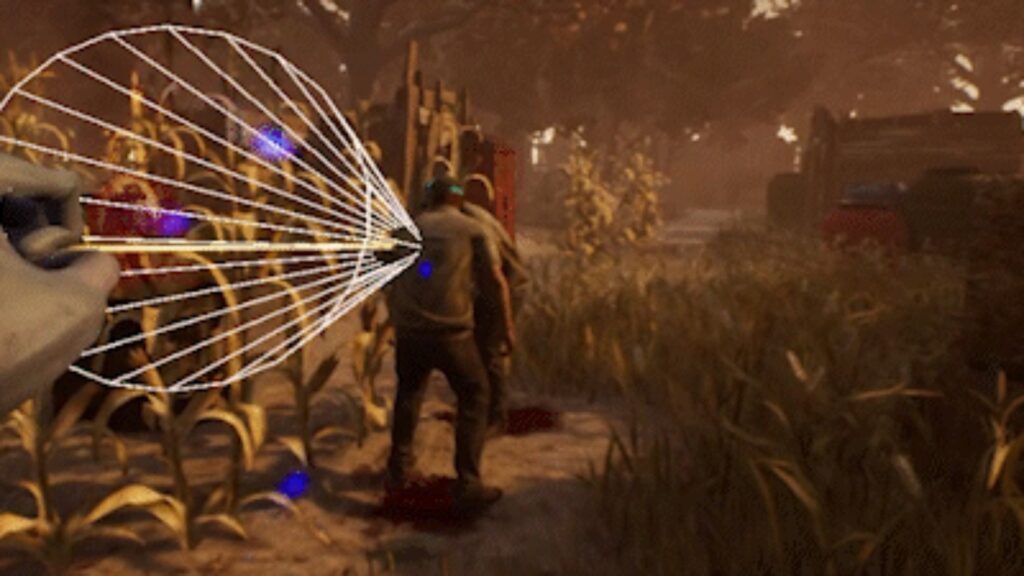
The team’s initial playtest of the new Killer power showed that Exile, one of the core mechanics, was too easy and unrewarding, while Ray of Retribution, the active power, was too difficult and repetitive. Both are back on the drawing board. And honestly, that’s the most encouraging thing they could have shared.
What “The Grimoire” Actually Is
For anyone who missed the setup: Behaviour launched a multi-phase community vote to let players shape an entirely new Dead by Daylight chapter. The community chose the Killer power direction in the first phase, and the second phase is currently underway. The development team is now prototyping the mechanics, art, and animation based on those votes.
The Grimoire centers on a divine-themed Killer with a power set built around two key elements. Exile sends Survivors to a limbo space called the Hopeless Exile. Ray of Retribution serves as the active offensive ability. Survivors interact with a Killer object called the Shrine of Repentance, where they can pray to rescue exiled teammates.
It reads like Behaviour is building something mechanically ambitious. Exile as a removal mechanic, a dedicated rescue interaction, and a punishing beam attack create a triangle of pressure, rescue, and retaliation that could reshape chase dynamics if it lands right.
Why the Playtest Failure Matters More Than a Success Would
The fact that Behaviour openly shared the prototype’s shortcomings is worth noting. Live service developers rarely broadcast their stumbles during active development. The standard playbook is to show polished vertical slices and save the “we iterated a lot” stories for post-launch retrospectives.
Behaviour is doing the opposite. They’re showing the mess in real time, and that’s a deliberate choice tied to the community-driven nature of this chapter. If players voted for the direction, they need to see that their choices are being taken seriously, even when the first pass doesn’t work.
The specific failures are instructive, too. Exile being “too easy and not very rewarding” suggests the initial version didn’t create enough counterplay or consequence. If removing a Survivor from the trial is trivial, it collapses the tension that makes Dead by Daylight’s 4v1 asymmetry function. Ray of Retribution being “too difficult and repetitive” points to a skill-floor problem, a power that’s punishing to use but doesn’t offer enough variation to master.
Both issues are fixable. But they reveal the fundamental challenge of designing a Killer power by committee. Community votes can choose a direction. They can’t solve the balance problems that emerge once that direction hits a prototype.
Where Everything Else Stands
Beyond gameplay, the update offers a snapshot of parallel development tracks:
| Department | Current Status |
|---|---|
| Design and Programming | Reworking Exile and Ray of Retribution for more depth |
| VFX | Defining art direction for Pillars of Light (Exile visual) |
| Animation | Prototyping Survivor interaction with Shrine of Repentance |
| World Art | Early concept phase for the Hopeless Exile environment |
| Character Art | Building final visual proposals for Survivor and Killer vote |
| Perks | Brainstorming stage, syncing with creative director |
The character art note is particularly interesting. The team is combining previous winning vote results into “a couple exciting and original Survivor and Killer visual proposals” for the next community vote. That means the character designs players will choose from aren’t pure community concepts. They’re Behaviour’s interpretation of community preferences, filtered through professional art direction.
That’s the right call. Crowdsourced game design works best when it informs professional decisions rather than replacing them. The community sets the compass heading. The studio navigates the terrain.
The Bigger Experiment
Dead by Daylight has been running for nearly a decade now, and the content pipeline has followed the same pattern for most of that lifespan: Behaviour designs a chapter internally, announces it, ships it, and moves on. Licensed chapters bring in external IP. Original chapters come from the studio’s creative team. The community reacts but doesn’t participate in the creation.
The Grimoire breaks that pattern entirely. And the stakes are real. If this chapter ships and the community feels genuine ownership over it, Behaviour has a repeatable model for sustained engagement that goes beyond seasonal content drops. If it ships and feels compromised by the design-by-vote process, it becomes a cautionary tale about the limits of participatory development.
Right now, every department is in early or mid-stage work. Nothing is locked. The Killer power is being redesigned. The Hopeless Exile is still in concept. Perks are in brainstorming. This chapter is months away from anything resembling a final form.
But that’s exactly what makes this update valuable. It’s not a marketing beat. It’s a progress report from a studio that bet on transparency and is now accountable to it.
The real test comes later: when the community sees the finished product, will they recognize their fingerprints on it, or will they feel like they filled out a survey?
Done With Pay-to-Win?
This One’s Different.
Open-world tactical RPG. No gacha traps. Cross-save across PS5, PC and Mobile. Your squad, your rules.