




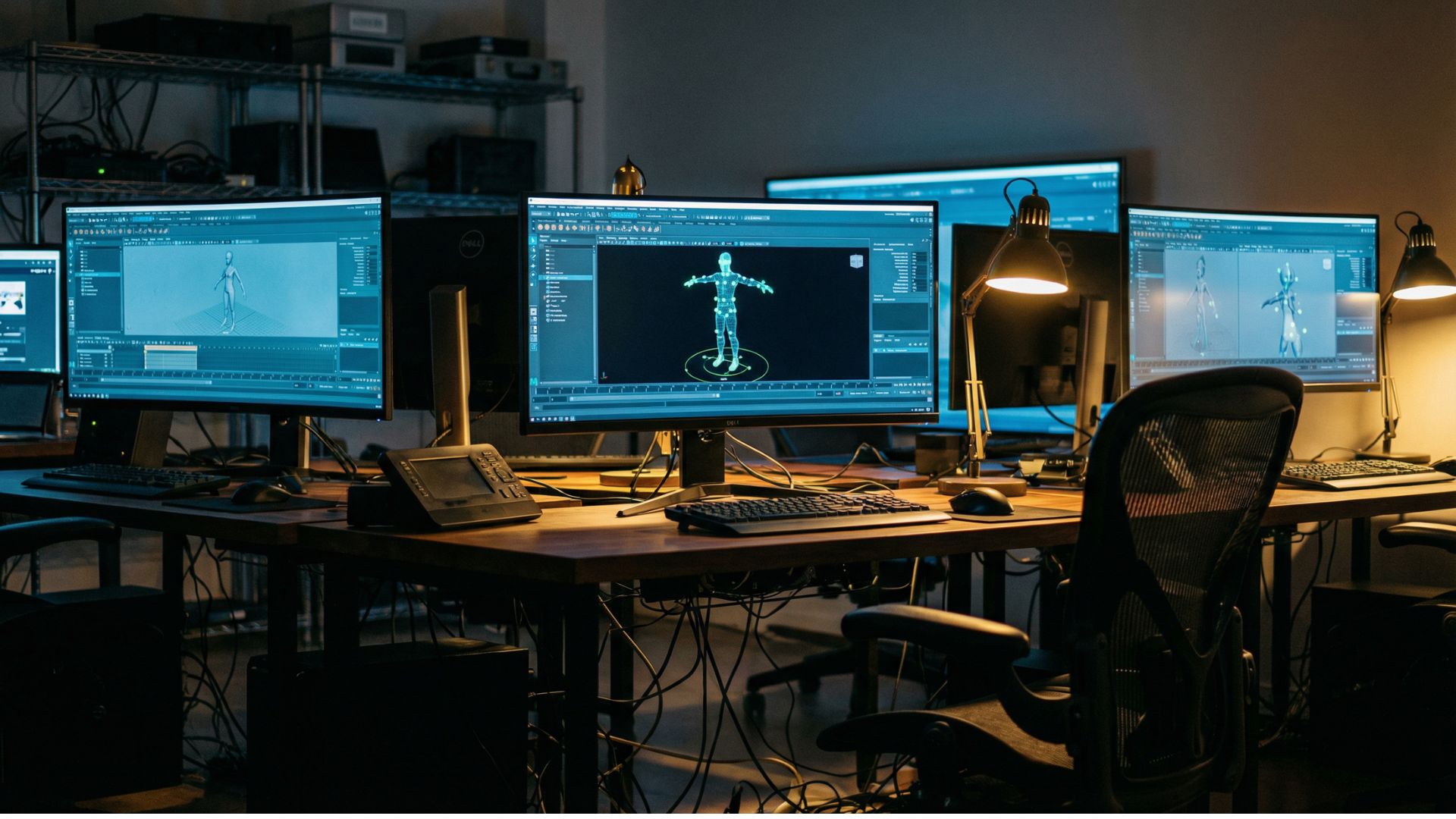
While the rest of the industry argues about whether AI will gut creative jobs, Autodesk is quietly running a different playbook. The company’s Game Developer Series, a free two-day virtual event running March 4 through 5, is built around a specific thesis: AI tools accelerate existing creative workflows without replacing the people who drive them. And the guest list, which includes teams from EA and SOKRISPYMEDIA, suggests this isn’t a theoretical pitch. It’s a production one.
The timing matters. In 2026, the conversation around AI in game development has shifted from “will studios use it?” to “how are studios using it without losing what makes their work distinct?” Autodesk’s event appears designed to answer exactly that.
What the Event Is Actually Offering
The Game Developer Series is a B2B-focused conference, free to attend, built around live talks and project breakdowns rather than product marketing. The agenda covers four primary areas:
Maya’s MotionMaker tool gets a dedicated session showing how it integrates into existing game animation pipelines, along with a first look at the tool’s upcoming roadmap. For studios already using Maya, which is most of the AAA and mid-tier space, this is practical information with immediate production value.
Flow Studio, Autodesk’s cloud-based 3D collaboration platform, gets an exclusive feature demo framed specifically around game development use cases. Flow has been positioned as Autodesk’s answer to the increasingly distributed nature of modern game studios, where teams in five time zones need to work on the same assets without version control nightmares.
Project breakdowns from recent game titles, presented by the teams who shipped them, form the backbone of the event. EA’s involvement is notable. The publisher has been among the most aggressive in integrating AI tools into its development pipeline, and any behind-the-scenes look at how those tools performed in production is worth paying attention to.
Finally, there’s a session on Flow Capture and creative IP protection, which addresses one of the most pressing anxieties in the AI-adjacent workflow space: how do you move faster without exposing proprietary assets and techniques to platforms you don’t fully control?
| Session Focus | Why It Matters |
|---|---|
| Maya MotionMaker pipeline | Directly applicable to studios already on Maya |
| Flow Studio demo | Cloud collaboration for distributed teams |
| EA and SOKRISPYMEDIA project breakdowns | Real production data, not theoretical use cases |
| Flow Capture for IP protection | Addresses the #1 fear around AI adoption in studios |
The IP Protection Angle Is the Real Story
Every other AI workflow event in the game dev space talks about speed. How to generate assets faster. How to iterate on animations quicker. How to prototype at scale. Autodesk is talking about all of that too, but the inclusion of a dedicated IP protection session signals that they understand where the real resistance lives.
Studios aren’t hesitant about AI because they doubt its capabilities. They’re hesitant because sending proprietary character models, unreleased environment designs, and mocap data through cloud-based AI pipelines creates exposure risk. Every asset that touches a third-party server is an asset that could theoretically be accessed, scraped, or used in ways the studio didn’t authorize.
Flow Capture’s positioning as a “secure review and collaboration” tool is Autodesk’s direct response to this. Whether it fully addresses the concern depends on implementation details that a conference talk may or may not reveal. But the fact that Autodesk is centering IP security in a game dev AI event, rather than burying it in a legal FAQ, shows they’ve been listening to the studios that are actually evaluating these tools for production.
Where This Fits in the 2026 Landscape
The game development tools market has gotten crowded. Unity and Unreal continue to expand their native AI toolsets. Startups like Meshy and Luma are pushing generative 3D into increasingly usable territory. Adobe has integrated AI across its creative suite. And open-source pipelines built on Blender keep getting more capable.
Autodesk’s advantage has always been entrenchment. Maya is the industry standard for 3D animation in games and film. Studios have decades of institutional knowledge, custom scripts, and pipeline infrastructure built around it. Switching costs are enormous. That gives Autodesk a captive audience, but it also means they have to prove that their AI integration is worth adopting within existing workflows rather than bolting on yet another tool that creates friction.
The Game Developer Series is essentially Autodesk’s case study pitch: here’s how studios you respect are already using these tools, here’s what’s coming next, and here’s how we’re solving the problems you’re worried about. It’s targeted, practical, and free.
For independent developers and smaller studios, the value proposition is different. They’re less likely to be locked into Maya and more likely to evaluate tools purely on capability and cost. But the project breakdowns from EA and other studios still offer useful insight into where production workflows are heading, regardless of which tools you’re using to get there.
Who Should Actually Attend
If you’re a technical artist, animation lead, or pipeline engineer at a studio already using Maya, this is a no-brainer. The MotionMaker session alone could save weeks of pipeline experimentation.
If you’re a studio lead or producer evaluating AI integration, the IP protection session and EA project breakdown are worth the two days of your calendar.
If you’re an indie developer or student, the event is free and virtual. Even if the tools discussed aren’t in your immediate stack, understanding how AAA production is evolving helps you make better decisions about where to invest your learning time.
Registration is open through Autodesk’s event page. Two days. Free. No travel required.
The question worth sitting with: if the biggest tool companies are now building their AI pitch around security and trust rather than speed and novelty, does that mean the industry has moved past the hype phase and into the adoption phase, or are we just watching the sales strategy mature?