




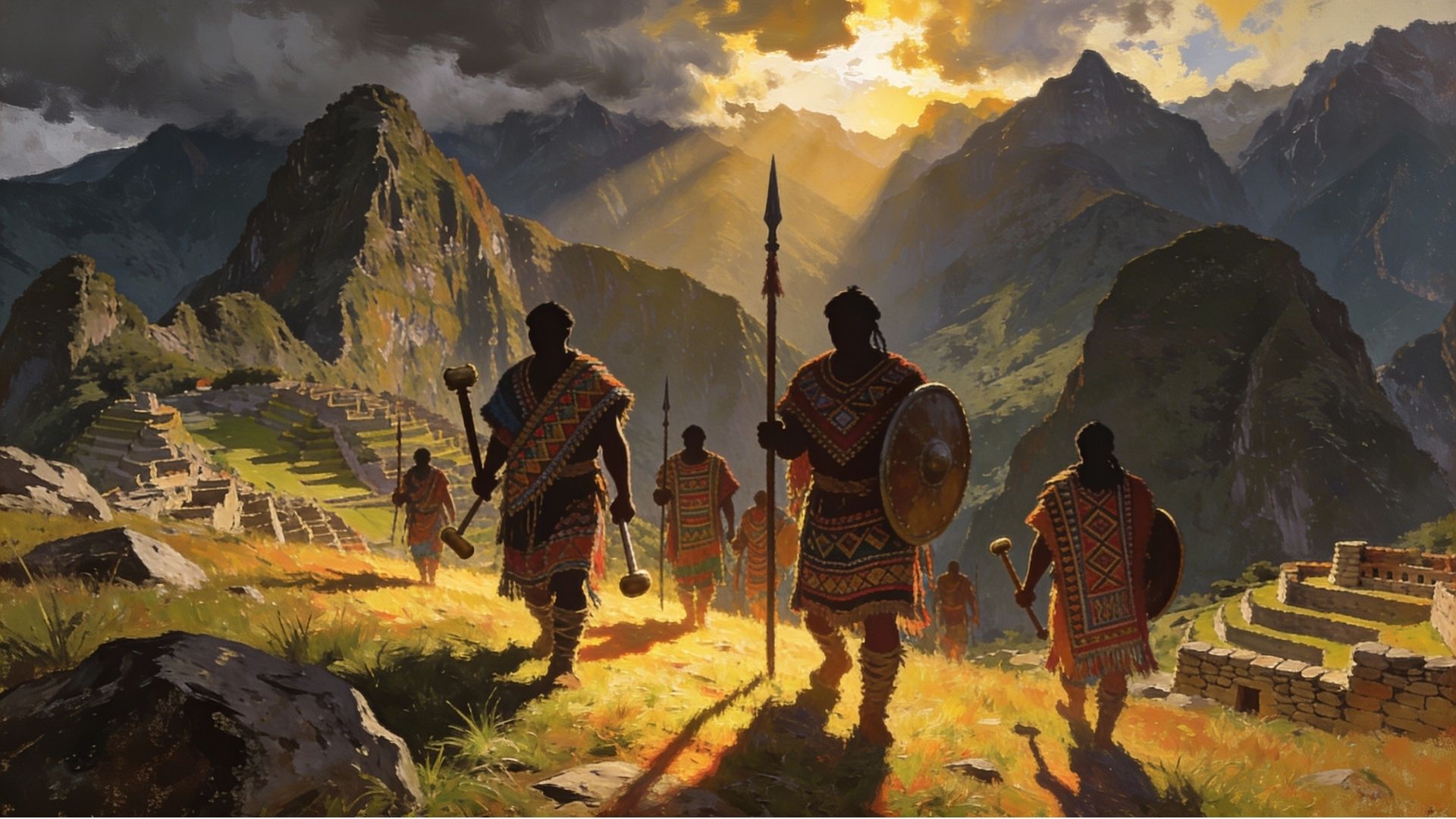
Twenty-six years after its original release, Age of Empires 2 is still getting meaningful expansions, and that fact alone deserves a moment of appreciation.
The Last Chieftains arrives February 17, 2026, introducing three South American civilizations to a game that has somehow outlived multiple console generations, countless RTS competitors, and the very genre’s supposed decline. The Mapuche, Muisca, and Tupi join a roster that keeps growing because players keep showing up. In an industry obsessed with the next thing, Age of Empires 2: Definitive Edition stubbornly proves that the best thing sometimes already exists.
Three civilizations that tell overlooked stories
The expansion focuses on indigenous peoples who resisted European colonization, a perspective that historical strategy games have rarely centered. The Mapuche of Chile, the Muisca of Colombia, and the Tupi of Brazil each bring distinct playstyles built around their historical strengths and circumstances.
The Mapuche lean into unconventional cavalry tactics. Their unique units, the Kona and Bolas Rider, emphasize mobility and finishing power. The Kona deals bonus damage to injured targets, rewarding players who coordinate strikes. The Bolas Rider slows enemies with ranged attacks, enabling the kind of hit-and-run harassment that historically frustrated Spanish forces for centuries.
The Muisca play an economic game reinforced by religious infrastructure and deadly ranged units. Their Guecha Warrior creates fascinating tactical decisions since fallen warriors heal nearby allies, making massed engagements potentially advantageous even in losing fights. The Temple Guard rewards sustained combat with increasing attack speed, punishing opponents who don’t commit fully to engagements.
The Tupi control jungles and coastlines through infantry and archery. Their Blackwood Archer trains in pairs at reduced cost, enabling swarm tactics. The Ibirapema Warrior deals area damage, clearing clustered formations. Both units reflect the historical reality of fighting in dense terrain where mobility and numbers mattered more than heavy armor.
New civilization overview:
| Civilization | Region | Strategic Identity | Key Strength |
|---|---|---|---|
| Mapuche | Chile | Cavalry harassment | Counter-unit tactics |
| Muisca | Colombia | Economic/Religious | Sustained combat bonuses |
| Tupi | Brazil | Infantry/Ranged swarms | Area control |
All three civilizations share access to Champi Warriors, a hybrid scout-infantry unit that can construct Outposts. They also get Slingers for ranged support and Settlements, a new building type functioning as both population housing and universal resource dropoff points. These shared elements create mechanical cohesion while the unique units differentiate playstyles.
Campaigns that center indigenous perspectives
The three included campaigns tell stories that most strategy games would relegate to footnotes or opposing forces. Here, the colonizers become the antagonists.
The Mapuche campaign follows Lautaro, a young warrior seeking revenge against Pedro de Valdivia after watching his village burn. Historically, Lautaro led the resistance that killed Valdivia at the Battle of Tucapel in 1553. The campaign promises to cover that famous clash along with the broader struggle for Chilean independence from Spanish rule.
The Muisca campaign takes an interesting structural approach, offering two different paths depending on whether players side with the noble Nemequene or the opportunistic Quemuenchatocha. Playing as Commander Pacanchique, your choice shapes the narrative and presumably the missions themselves. This branching design adds replay value while exploring the internal politics that affected indigenous resistance efforts.
The Tupi campaign follows chieftain Arariboia as he seeks Portuguese alliance against a rival tribe. This more morally complex setup acknowledges that colonial conflicts weren’t simple binaries. Indigenous nations made strategic calculations, sometimes allying with Europeans against traditional enemies. The Battle of Rio de Janeiro serves as a centerpiece for this narrative.
Why this expansion matters for the franchise?
Age of Empires 2: Definitive Edition has now received more post-launch content than most modern games receive at launch. The continued investment reflects both commercial success and genuine community engagement. The competitive scene remains active. The modding community thrives. New players discover the game regularly through Xbox Game Pass inclusion.
The choice to explore South American civilizations fills a gap that the base game and earlier expansions left largely untouched. Previous DLC added African, Central Asian, and Southeast Asian civilizations. The Americas received some attention through earlier content, but the indigenous peoples of South America remained conspicuously absent from a game that spans human history.
From a design perspective, the shared Champi Warriors and Settlements suggest the development team is finding ways to add mechanical innovation without overwhelming the established formula. New building types and unit categories keep longtime players engaged while creating fresh strategic possibilities.
The release details
The Last Chieftains launches February 17, 2026 across PC, Xbox Series X/S, and PlayStation 5. Pre-orders are available now with a 15% discount, a standard approach for Age of Empires expansions that typically rewards early commitment.
The cross-platform availability reflects Microsoft’s broader strategy of keeping Age of Empires accessible wherever players prefer to engage. Console versions have brought the franchise to audiences who might never have experienced it otherwise, while PC remains the competitive heartland.
A franchise that refuses to fade
The real story here isn’t just another expansion for a beloved game. It’s the ongoing demonstration that quality endures. Age of Empires 2 launched in 1999. The Definitive Edition arrived in 2019. Five years later, it continues receiving substantial content because players continue caring about it.
The Last Chieftains represents more than three new civilizations and their campaigns. It represents a development philosophy that treats legacy games as living products worthy of continued investment. In an industry that often abandons titles months after launch, Age of Empires 2 stands as a counter-example of what sustained support can achieve.
The Mapuche, Muisca, and Tupi deserve their place in this historical sandbox. Their stories of resistance, alliance, and survival add perspectives that enrich the game’s already impressive scope. February 17 brings them to the battlefield.
Which of the three new civilizations appeals most to your playstyle, and do you think Age of Empires 2 can sustain this expansion pace indefinitely?