




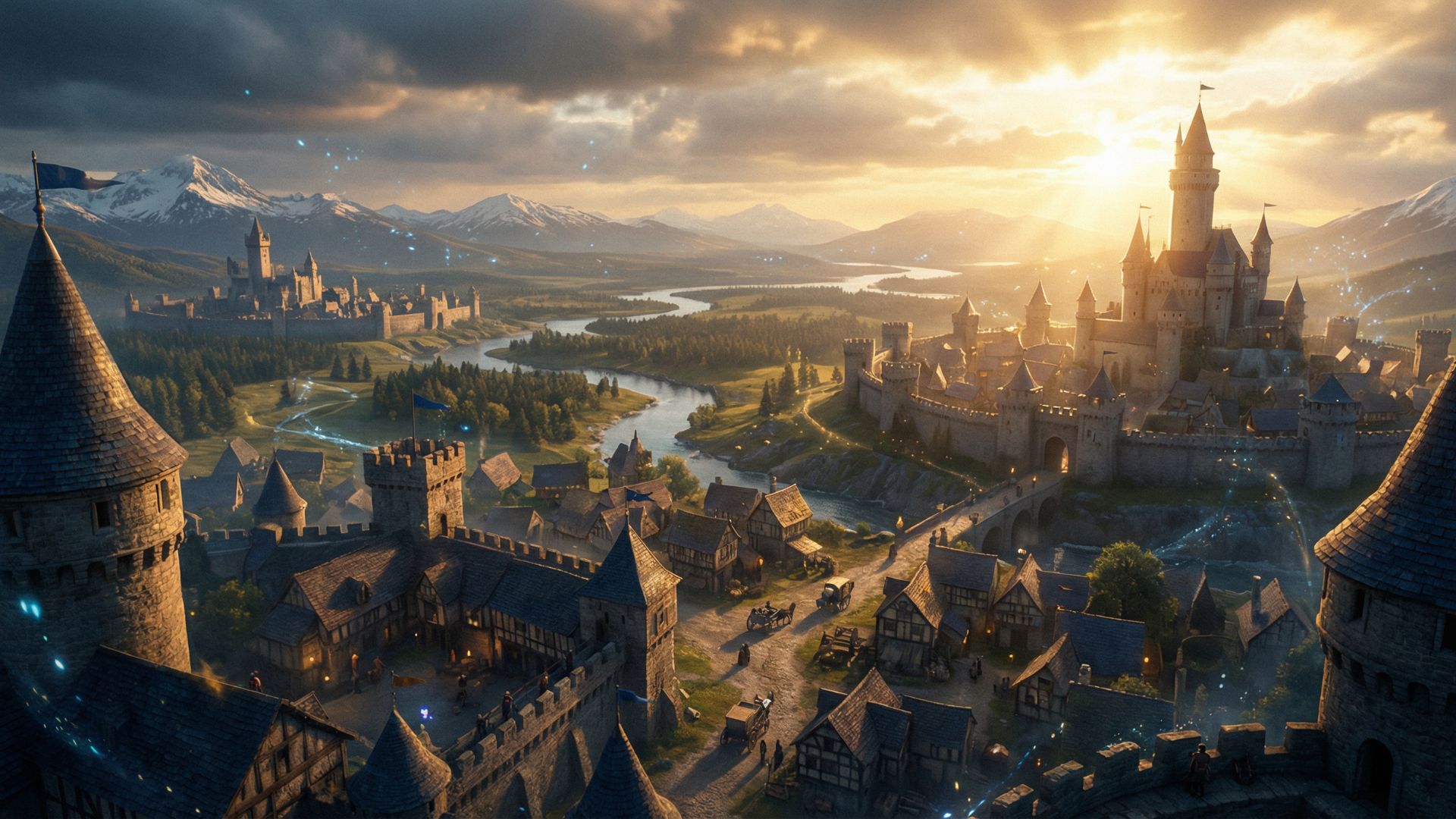
Free-to-play open-world RPGs have a credibility problem. Most of them launch big, look pretty, and then reveal themselves as thinly veiled gacha machines within the first five hours. So when another anime-licensed open-world RPG shows up on Steam promising a rich narrative experience at zero cost, the instinct is skepticism. But The Seven Deadly Sins: Origin might have enough going for it to break that pattern, if it delivers on what the early playtests have shown.
The game is set to launch in March 2026 on Steam and PS5. It’s free-to-play. And it’s arriving into a market that just watched Arknights: Endfield prove there’s massive appetite for this exact type of game.
What Origin Is Building On
For context, The Seven Deadly Sins is a manga and anime franchise that’s been running for roughly eight years across multiple media formats. The source material isn’t obscure. It has a built-in global audience, established lore, and a visual identity that translates naturally to an action RPG.
Origin doesn’t retread the original story, though. Instead, it kicks off a new narrative set in the same world of Britannia, placing players in the role of Prince Tristan of Liones as he navigates a world destabilized by the collision of time and space. It’s a smart choice. Starting fresh means the game doesn’t have to serve as a recap for existing fans while also being accessible to newcomers. It can just be its own thing.
The character-centric RPG structure, with party building and narrative-driven progression, positions it closer to a traditional JRPG than the typical open-world free-to-play formula. That distinction matters. Games like Genshin Impact proved the model could work commercially, but the actual storytelling in most of these titles remains secondary to the pull mechanics. Origin is at least framing narrative as a priority, not an afterthought.
The Delay Was a Good Sign
Origin was originally scheduled for January 28 but was pushed back to March. The stated reasons were stability improvements, combat system refinement, and exploration polish, all informed by feedback from a November playtest.
In a market where rushing to launch often defines free-to-play titles, a delay motivated by playtest feedback is genuinely encouraging. It suggests the studio is treating this as a product that needs to be good at launch, not just live long enough to patch later.
The timing shift also had a strategic benefit. A January launch would have put Origin directly in the shadow of Arknights: Endfield, which arrived to significant attention from the same audience. Moving to March gives it breathing room. The players who binged Endfield’s launch content will be looking for their next open-world RPG fix right around the time Origin drops. Whether intentional or not, the spacing works.
The Real Test Is the Open World
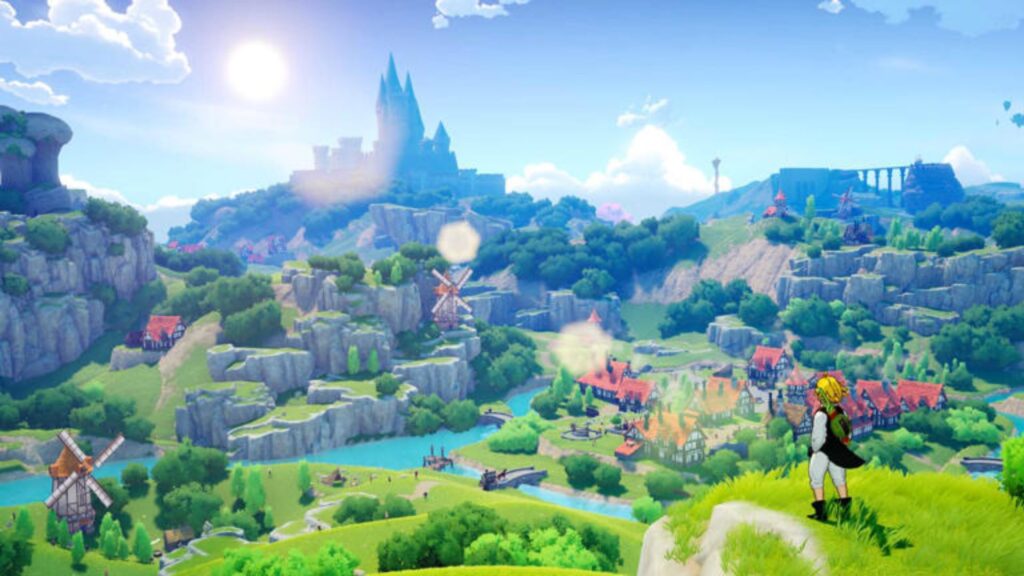
The screenshots and early footage look strong. The world of Britannia is visually rich, and the anime-to-game translation appears clean. But visual quality has never been the bottleneck for free-to-play RPGs. Genshin looks gorgeous. Wuthering Waves looks gorgeous. Tower of Fantasy looked gorgeous. The question is always whether the open world has substance or whether it’s a pretty container for repetitive fetch quests and resource nodes.
Early playtest impressions suggest Origin is leaning toward a more focused, narrative-driven exploration model rather than the “map full of icons” approach. If that holds, it could differentiate itself meaningfully from competitors.
| Game | Launch Window | Model | Platform |
|---|---|---|---|
| Genshin Impact | Sept 2020 | Free-to-play (gacha) | Multi-platform |
| Wuthering Waves | May 2024 | Free-to-play (gacha) | Multi-platform |
| Arknights: Endfield | Jan 2026 | Free-to-play | Multi-platform |
| Seven Deadly Sins: Origin | March 2026 | Free-to-play | Steam, PS5 |
The competitive landscape is crowded but not insurmountable. Each of these games has carved a slightly different niche. Origin’s advantage is its established IP and the promise of a story-first design philosophy. Its risk is that “story-first free-to-play RPG” is a promise many games have made and almost none have kept.
Where the Skepticism Stays
The free-to-play model inevitably raises questions about monetization. Origin hasn’t been fully transparent about how it plans to make money. If it’s cosmetic-only, the reception will be warm. If it’s gacha-driven with power-gated characters, the goodwill from a strong narrative will erode quickly.
There’s also the execution gap. Anime adaptations in gaming have a mixed track record. For every Dragon Ball FighterZ that nails the translation, there are a dozen forgettable arena fighters and mobile cash grabs that treat the license as a crutch rather than a foundation.
Origin looks like it’s aiming higher than that. The delay, the playtest-driven refinement, and the original storyline all suggest a team that wants to build something worth playing on its own merits. But until the servers go live and the monetization model becomes clear, cautious optimism is the most honest position.
The free-to-play open-world RPG space has never been more competitive. If Seven Deadly Sins: Origin can deliver a focused, narrative-rich experience without burying it under aggressive monetization, it could quietly become one of the more interesting RPGs of 2026.
But here’s the question that hangs over every game in this space: can a free-to-play RPG with a licensed anime IP ever truly prioritize story over revenue, or will the model always win in the end?
Done With Pay-to-Win?
This One’s Different.
Open-world tactical RPG. No gacha traps. Cross-save across PS5, PC and Mobile. Your squad, your rules.