




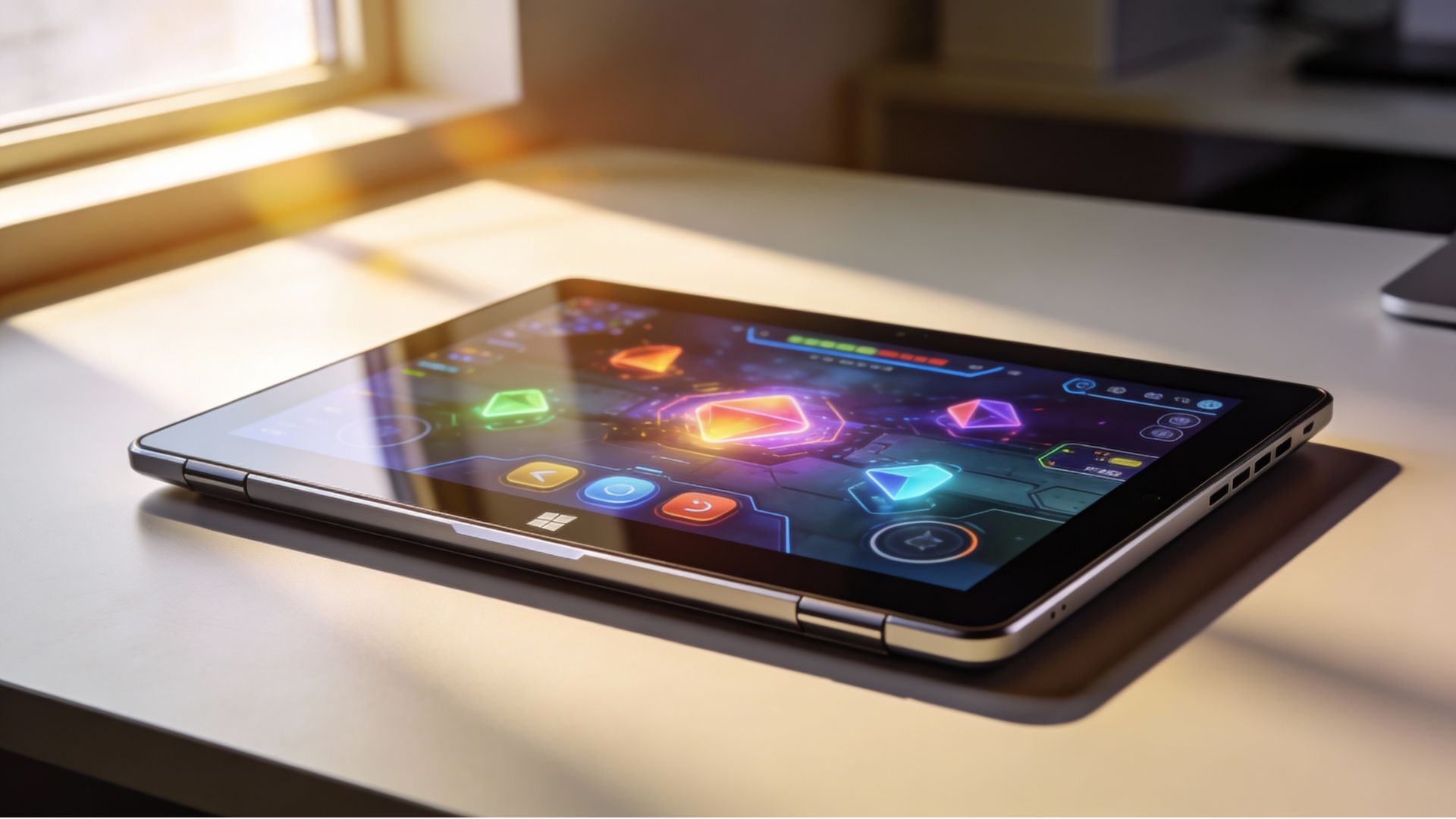
The walls between Windows gaming and mobile efficiency just got a lot thinner.
Microsoft announced this week that the Xbox PC app has officially launched on all Arm-based Windows 11 devices, marking the end of its Insider Program testing phase and the beginning of something potentially much bigger. More than 85% of Xbox Game Pass titles now run on these devices, powered by Microsoft’s Prism translation layer that continues to close the gap between legacy x86 software and the Arm architecture that dominates mobile computing.
This isn’t just a software update. It’s a strategic repositioning that could reshape where and how PC gaming happens.
The Arm advantage nobody talks about
For years, Windows gaming has been tethered to traditional Intel and AMD processors. These chips deliver raw power, but they guzzle battery life like it’s going out of style. Arm architecture flips that equation entirely.
Every modern smartphone runs on Arm. Apple’s M-series chips, which transformed MacBook performance and battery life practically overnight, are Arm-based. The technology prioritizes efficiency without sacrificing meaningful performance, making it ideal for laptops, tablets, and portable devices that need to last more than a few hours unplugged.
Microsoft has watched Apple eat into the laptop market with these advantages. The response has been a sustained push to make Windows fully Arm-compatible, with recent Surface devices abandoning x86 and x64 entirely for Qualcomm’s Snapdragon processors. The missing piece was always gaming.
Why gaming was the holdout
Legacy compatibility is Windows’ superpower. Decades of software, stretching back to the 70s in some cases, still runs on modern Windows machines. Gamers especially benefit from this, enjoying libraries that span generations without needing emulators or workarounds.
But that same compatibility created a problem. Many system-level features required for gaming simply didn’t function on Windows Arm devices. Anti-cheat software, specialized graphics calls, and processor-specific optimizations all assumed x86 architecture. Games would crash, refuse to launch, or run with crippling performance issues.
Prism changes the calculation. Microsoft’s translation layer now supports AVX and AVX2 instruction sets, alongside Epic Games’ Anti-Cheat software. That last addition alone unlocks Fortnite and countless other multiplayer titles that previously wouldn’t touch Arm devices.
The practical result: a Surface Pro or ASUS Arm laptop can now access the vast majority of Game Pass without compromise.
What 85% compatibility actually means
Microsoft’s claim that over 85% of Xbox Game Pass titles work on Arm devices deserves some unpacking. Game Pass currently hosts hundreds of titles across nearly every genre. Having that library mostly functional on battery-efficient hardware isn’t a minor convenience. It’s a fundamental shift in what portable Windows gaming can deliver.
The company’s blog post suggests this percentage will climb with each Windows update. Prism development continues, and Microsoft appears committed to broadening compatibility systematically rather than leaving developers to handle Arm ports themselves.
That last point matters enormously. When platform holders ask developers to do extra work for niche hardware, adoption stalls. When the platform handles translation automatically, libraries grow without friction.
The handheld question nobody’s asking yet
Here’s where the implications get interesting.
The gaming handheld market has exploded over the past few years. Steam Deck proved there’s massive demand for portable PC gaming. Competitors from ASUS, Lenovo, and others have followed with their own x86-based devices. All of them share the same limitation: battery life measured in hours, not days.
Arm architecture could change that equation dramatically. A Windows handheld running Snapdragon silicon, with access to Game Pass and Steam libraries through Prism translation, could potentially offer Steam Deck-level gaming with smartphone-level battery efficiency.
Microsoft hasn’t announced anything in this space. But the infrastructure they’re building points directly toward that possibility. Every Prism update, every compatibility improvement, every anti-cheat integration makes such a device more viable.
The tablet and phone speculation
Microsoft’s history with mobile devices is famously troubled. Windows Phone died a quiet death. Windows tablets never captured meaningful market share against iPads. The wounds are real.
But technology shifts create new opportunities. If Prism reaches the point where most Windows games run acceptably on Arm, the case for Windows-based tablets and even phones becomes harder to dismiss. Not as primary gaming devices, perhaps, but as genuinely versatile machines that happen to play real games when you want them to.
Apple already occupies this space with its iPad lineup and Apple Arcade. Microsoft positioning Game Pass as the answer to that ecosystem makes strategic sense, especially as cloud gaming continues maturing alongside local play options.
What this means for players right now
For anyone currently owning an Arm-based Windows 11 device, the immediate benefit is straightforward: download the Xbox app and start playing. Surface Pro owners, in particular, gain access to a gaming library that was effectively locked away until now.
For everyone else, this announcement signals where Microsoft sees the future heading. Efficient portable devices that don’t sacrifice gaming capability. Laptops that last all day and still run Elden Ring acceptably. Handhelds that might finally solve the battery problem plaguing current options.
The pieces are falling into place faster than most observers expected.
Whether Microsoft can execute on this vision remains the open question. They’ve fumbled mobile transitions before. But the technical foundation now exists in ways it simply didn’t two years ago, and Game Pass gives them a software library worth building hardware around.
If Arm-based Windows gaming reaches true parity with traditional PCs, what does that mean for the next generation of gaming handhelds and portable devices?