




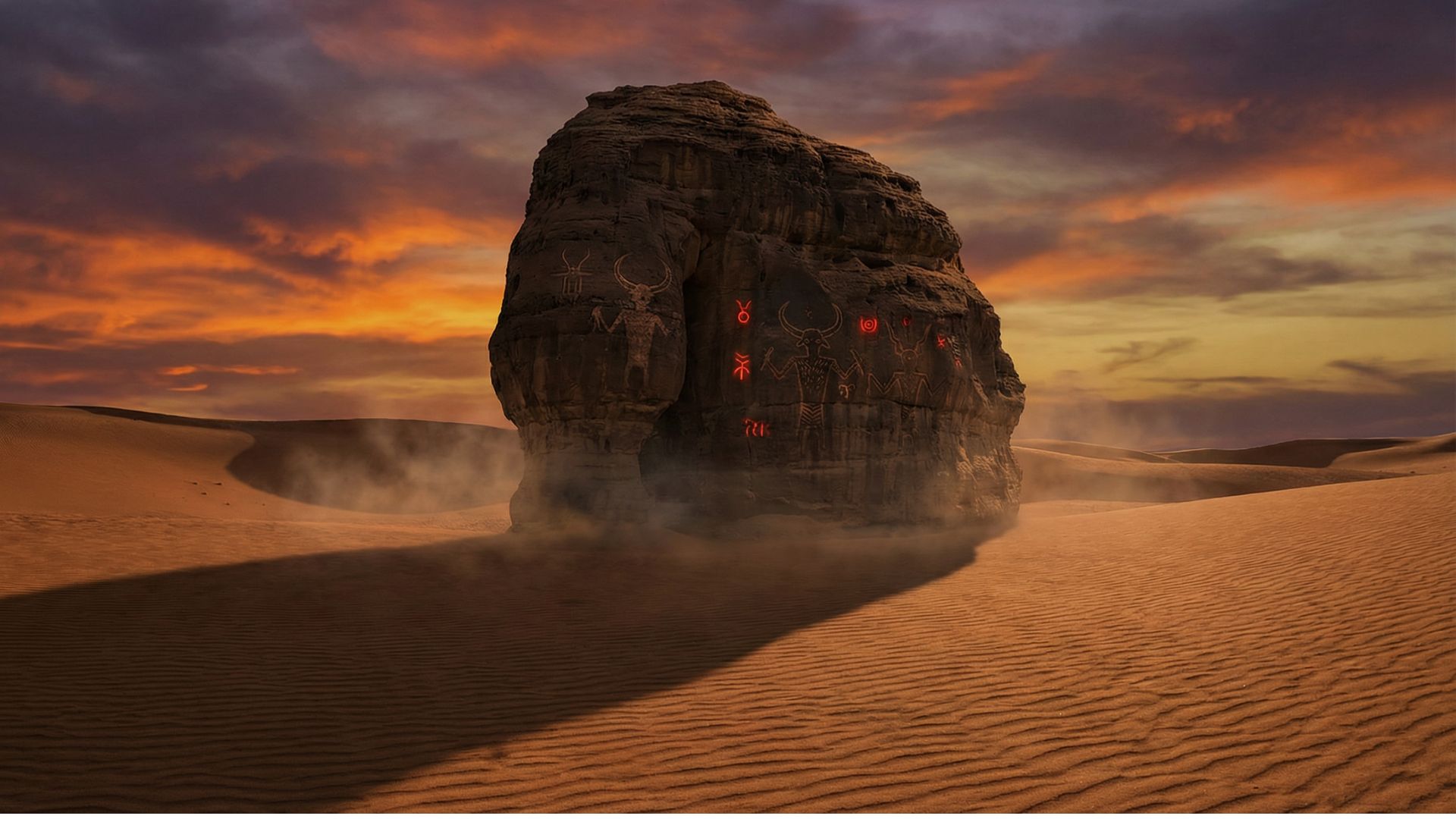
A massive boulder covered in demonic imagery appeared in the middle of a desert. No explanation. No branding. No press release. Just an enormous rock decorated with hellish figures, waiting for someone to stumble across it and start asking questions.
Welcome to the new playbook for video game marketing. Publishers have discovered that mystery sells better than information, and physical installations in remote locations generate more buzz than traditional trailers ever could. The demon rock is just the latest example of an industry embracing spectacle over straightforward announcements.
When rocks become headlines
The gaming community loves a good puzzle. Drop something unexplained into the world, and thousands of internet detectives will mobilize within hours. Reddit threads multiply. YouTube analysts publish speculation videos. Twitter becomes a wall of theories. The publisher sits back and watches free marketing materialize from thin air.
This particular installation checks every box for viral success. The demonic imagery suggests horror or dark fantasy, narrowing speculation to specific genres and franchises. The desert location adds mystique while ensuring dramatic photographs. The complete absence of context transforms casual observers into active participants hungry for answers.
“The best marketing doesn’t feel like marketing,” one industry analyst noted in a recent discussion about experiential campaigns. “When fans become investigators, they develop emotional investment before they even know what they’re investigating.”
The approach represents a fundamental shift in how publishers think about announcements. Traditional reveals front-loaded information: title, developer, release window, platforms. Modern viral campaigns invert that structure entirely, leading with intrigue and withholding details as long as possible.
Spectacle first, information later
Gaming has always embraced theatrical reveals. E3 press conferences became legendary for surprise announcements and emotional trailers. But those events followed predictable formats. Audiences knew information was coming even if specific titles remained secret.
Physical installations operate differently. They exist outside controlled environments, appearing in locations where discovery feels accidental rather than orchestrated. A rock in the desert carries different psychological weight than a trailer during a scheduled showcase. One feels like corporate communication. The other feels like uncovering a secret.
Publishers have taken notes from alternate reality games that blurred fiction and reality decades ago. Halo 2’s “I Love Bees” campaign sent players hunting payphones across America. The Dark Knight’s viral marketing transformed moviegoers into Joker henchmen completing real-world missions. These campaigns proved that participation creates deeper engagement than passive viewing.
The gaming industry now applies those lessons to announcement strategies. Why simply tell people about your game when you can make them work for the information? The effort invested in decoding clues translates directly into emotional attachment.
The decoder community springs into action
Within hours of the demon rock’s discovery, online communities had already begun their work. Image analysis identified artistic influences and potential franchise connections. Geographic data pinpointed exact coordinates. Historical research explored whether the location held significance. Language experts examined any visible text for hidden meanings.
This collaborative investigation becomes content itself. Streamers broadcast their analysis sessions. Podcasts dedicate episodes to speculation. Gaming news outlets cover the mystery, spreading awareness far beyond the initial discovery. The publisher achieves weeks of coverage from a single installation that cost a fraction of traditional advertising budgets.
The community aspect matters enormously. Fans solving puzzles together builds camaraderie and shared investment in eventual reveals. When the mystery finally resolves, those who participated feel ownership over the announcement. They promoted it, analyzed it, and decoded it. The game becomes theirs before it even has a title.
Risks and rewards of mystery marketing
Not every cryptic campaign sticks the landing. Fans who invest time decoding clues expect payoffs matching their effort. A disappointing reveal after weeks of speculation generates backlash proportional to the hype. The mystery box only works if something worthwhile waits inside.
Timing presents another challenge. Stretch the mystery too long and interest fades. Resolve it too quickly and the campaign never builds momentum. Publishers must read community engagement in real time, adjusting their reveal schedules based on how speculation develops.
There is also the question of accessibility. Elaborate physical installations primarily benefit fans already embedded in gaming culture and online communities. Casual players scrolling social media might see headlines about mysterious rocks without understanding the context or caring about the resolution.
Still, the economics favor experimentation. A well-executed viral campaign generates earned media coverage that paid advertising cannot match. Journalists write about mysteries because they make compelling stories. They ignore traditional announcement posts because those read like press releases.
The future of game announcements
The demon rock represents broader evolution in how the industry communicates with audiences. Attention has become the scarcest resource in entertainment. Players scroll past hundreds of posts daily, barely registering conventional marketing. Breaking through requires something unexpected, something that demands engagement rather than requesting it.
Physical installations offer advantages digital campaigns cannot replicate. They exist in the real world, creating photo opportunities that spread organically. They reward discovery, making finders feel special for encountering something others missed. They generate local news coverage that reaches audiences outside gaming bubbles.
Expect more boulders, more mysterious structures, more unexplained appearances in unlikely locations. Publishers have found a formula that works: create something strange, place it somewhere interesting, wait for the internet to do the rest.
The demon-covered desert rock will eventually reveal its purpose. Some franchise will claim credit, some game will emerge from the mystery. Until then, the speculation continues, the theories multiply, and thousands of fans remain engaged with a product they cannot yet name.
That is the magic of spectacle-first marketing. The announcement becomes an event before the announcement even happens.
What do you think the demon rock is teasing? And do you enjoy these cryptic marketing stunts, or would you prefer publishers just tell us what they are making? Share your theories in the comments.