




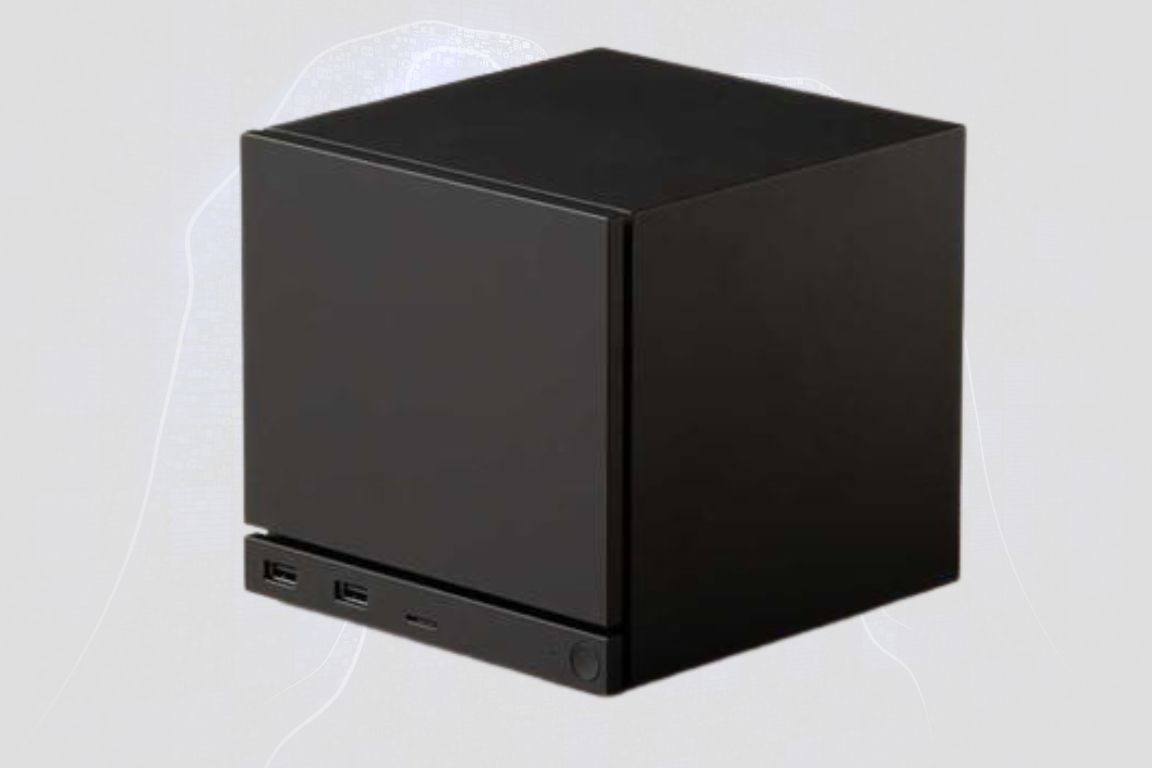
When Valve unveiled its reimagined Steam Machine this week alongside a brand new Steam Controller, the announcement sent ripples through the PC gaming community. This isn’t just another hardware experiment from the company that brought us the Steam Deck. It’s a calculated assault on the traditional console market, positioning a Linux-based living room gaming device as a legitimate alternative to PlayStation and Xbox. But beneath the excitement about specifications and features lurks a fundamental problem that threatens to limit the Steam Machine’s appeal: the platform still can’t run some of the world’s most popular competitive multiplayer games, and nobody seems close to fixing it.
The hardware itself looks genuinely impressive on paper. Valve has packed roughly six times the processing power of the Steam Deck into a compact console-style chassis, targeting 4K gaming at 60 frames per second with AMD’s FidelityFX Super Resolution technology handling the heavy lifting. The specifications include a semi-custom AMD Zen 4 processor paired with an RDNA3 graphics chip, 16GB of DDR5 system memory, 8GB of GDDR6 video memory, and storage options of either 512GB or 2TB solid-state drives.
A console alternative built on familiar foundations
Unlike traditional game consoles that run proprietary operating systems, the Steam Machine operates on SteamOS, Valve’s customized Linux distribution that has already proven itself on millions of Steam Deck handhelds worldwide. This approach brings several advantages that Windows-based gaming PCs struggle to match. Performance overlays offer intuitive controls for frame rate limiting, game suspension works seamlessly, and the overall user experience has been refined to feel more console-like than traditional desktop PC gaming.
The physical design embraces customization with swappable front plates and LED lighting strips, while connectivity options include DisplayPort 1.4, HDMI 2.0, ethernet, USB-A ports, and microSD card expansion. Valve also positions the device as a streaming hub capable of pushing more demanding titles to Steam Deck handhelds, the simultaneously announced Steam Frame VR headset, or any device running Steam Link software.
The accompanying Steam Controller consolidates all the input methods that made the Steam Deck’s controls so versatile. Traditional thumbsticks and face buttons combine with trackpads for mouse-style aiming, gyroscopic motion controls, and the grip buttons that have become signature features of Valve’s hardware designs. Connectivity works through both Bluetooth wireless and wired USB connections, with an included charging dock that doubles as a high-speed wireless transmitter for minimal input latency.
The competitive gaming void that threatens mainstream adoption
Here’s where Valve’s living room ambitions hit a brick wall. Nearly four years after the Steam Deck launched, you still cannot play Fortnite, Rainbow Six Siege, Apex Legends, League of Legends, Valorant, or numerous other massively popular competitive titles on SteamOS. This isn’t an oversight or a temporary compatibility issue. It’s a fundamental security problem that game publishers view as unsolvable without compromising their anti-cheat systems.
The technical explanation centers on Linux’s open-source nature and kernel accessibility. As Riot Games’ Phillip Koskinas explained in a 2024 interview, the Linux kernel can be freely manipulated, and there are no reliable user-mode calls to verify system integrity. In practical terms, someone could theoretically build a Linux distribution specifically designed to facilitate cheating, and anti-cheat systems would struggle to detect the manipulation.
When Electronic Arts blocked Linux access to Apex Legends in 2024, the company stated clearly that they had identified the Linux operating system as a pathway for various impactful exploits and cheats. The decision to block an entire platform wasn’t made lightly, but the publisher determined that eliminating Linux players would meaningfully reduce cheating instances across their player base.
The chicken and egg problem stunting growth
Game publishers face a brutal calculation when evaluating Linux support for their competitive titles. Developing and maintaining robust anti-cheat systems for Linux distributions requires significant engineering resources. When Riot made their Vanguard anti-cheat software mandatory for League of Legends in 2024, they revealed that just over 800 players accessed the game daily through Linux. For context, millions of people play League every single day across Windows and Mac platforms.
From a business perspective, dedicating engineering teams to secure games for a user base representing a fraction of one percent of total players makes little financial sense. But that tiny user base exists partly because popular competitive games don’t support Linux, creating a circular problem where neither publishers nor players want to commit first.
Valve made promising strides toward solving this issue when they announced Proton compatibility with BattlEye anti-cheat near the end of 2021, followed by similar support for Epic’s Easy Anti-Cheat several months later. Valve’s own VAC anti-cheat works perfectly on SteamOS, enabling Counter-Strike 2 and Dota 2 to run without issues on Steam Deck. These developments generated optimism that major competitive titles would eventually embrace Linux support.
That optimism proved premature. While some games with BattlEye and Easy Anti-Cheat integration do function on Steam Deck, the biggest competitive titles continue avoiding Linux like a radioactive hazard. Publishers have determined that the security risks outweigh any potential benefits from supporting the platform.
Why this matters beyond competitive gaming
Some might argue that competitive multiplayer represents just one segment of PC gaming, and plenty of people would happily use a Steam Machine without Fortnite or Valorant. This perspective has merit. The Steam Deck has found massive success despite its competitive gaming limitations, proving that indie titles and single-player AAA experiences provide sufficient value for many users.
However, the living room console market that Valve targets with the Steam Machine operates under different dynamics than the portable handheld market. Console gamers expect their platforms to run the biggest multiplayer hits. PlayStation and Xbox consoles dominate living rooms partly because they offer comprehensive libraries including whatever games currently dominate Twitch viewership and YouTube gaming content.
A Steam Machine that cannot run Fortnite automatically eliminates itself from consideration for families with kids who want to play with their friends. A device that blocks Apex Legends or Rainbow Six Siege loses appeal for the exact demographic most likely to appreciate console-style PC gaming in their living rooms. The competitive gaming gap doesn’t just limit the Steam Machine’s library. It fundamentally restricts the potential audience.
What Valve needs to do differently
Valve finds itself in a unique position to potentially solve this problem. As both a hardware manufacturer and the operator of gaming’s largest digital distribution platform, the company wields influence that typical Linux advocates lack. If Valve genuinely wants SteamOS to become a mainstream gaming platform, they must develop anti-cheat solutions that game publishers trust enough to enable Linux support for their competitive titles.
This likely requires going beyond kernel-level anti-cheat into territory that might make Linux purists uncomfortable. Perhaps it means creating a verified, locked-down version of SteamOS that restricts kernel access in ways that compromise Linux’s open-source philosophy but provide the security guarantees publishers demand. Maybe it involves hardware-based security similar to what modern consoles employ.
Whatever the solution, half-measures won’t suffice anymore. BattlEye and Easy Anti-Cheat compatibility represented important steps, but they haven’t convinced the publishers that matter most. Valve needs to either develop anti-cheat technology so robust that major publishers trust it implicitly, or negotiate individual deals with companies like Epic, EA, and Riot to bring their games to SteamOS regardless of broader Linux support.
Looking ahead at Valve’s console ambitions
The Steam Machine launches in early 2026 according to Valve’s announcement, giving the company months to address the anti-cheat situation before hardware ships. Valve has proven surprisingly capable at executing hardware projects recently. The Steam Deck exceeded expectations and continues selling well years after launch. The company clearly understands how to build desirable gaming hardware at competitive prices.
But hardware excellence alone cannot guarantee success in the brutally competitive console market. The original Steam Machine initiative failed precisely because it offered no compelling reason for console gamers to abandon PlayStation or Xbox. This new generation risks repeating that mistake if it ships without access to the games people actually play in their living rooms.
Microsoft has stumbled badly as a steward of Windows gaming over recent years, focusing on AI features nobody requested while ignoring persistent problems like shader compilation stutter. Many PC enthusiasts would gladly abandon Windows for a Linux-based alternative if one existed that ran all their games reliably. Valve has created that alternative for single-player and indie enthusiasts. The final frontier remains competitive multiplayer, and conquering it requires solving problems that go far beyond hardware specifications and user interface polish.
The verdict remains uncertain
Nobody knows official pricing yet for either the Steam Machine or the new Steam Controller, though early hands-on impressions suggest Valve aims for competitive positioning against equivalent PCs and existing game controllers. Given the specifications and features involved, expecting Steam Deck launch pricing seems unrealistic. The value proposition depends heavily on what games actually run when these devices reach consumers.
For now, the Steam Machine represents enormous potential constrained by stubborn realities. It could genuinely revolutionize PC gaming by bringing SteamOS to living rooms and eventually to desktop PCs, freeing enthusiasts from Microsoft’s increasingly problematic Windows platform. Or it could become another footnote in Valve’s history of ambitious hardware that never quite achieved mainstream success.
The difference between those outcomes likely hinges on whether Valve can convince major publishers that Linux gaming deserves their anti-cheat engineering resources. Without that breakthrough, the Steam Machine launches as a beautiful piece of hardware with a frustratingly incomplete library. With it, Valve might actually change PC gaming forever.
Do you think Valve can solve Linux’s anti-cheat problem in time for the Steam Machine launch, or will competitive multiplayer remain exclusive to Windows and consoles?