



What begins as a technical curiosity quickly reveals itself as one of the most emotionally resonant survival horror experiences in recent memory.
Total Chaos started life as a total conversion mod for Doom II, the kind of ambitious fan project that generates headlines for pushing a 30-year-old engine into territory it was never designed to handle. After spending more than a dozen hours in its decaying world, I can tell you that’s the least interesting thing about it. Trigger Happy Interactive has crafted something that transcends its origins, a game about disease, denial, and the violent catharsis of fighting back against something that cannot be beaten through willpower alone.
a mining town rotting from within
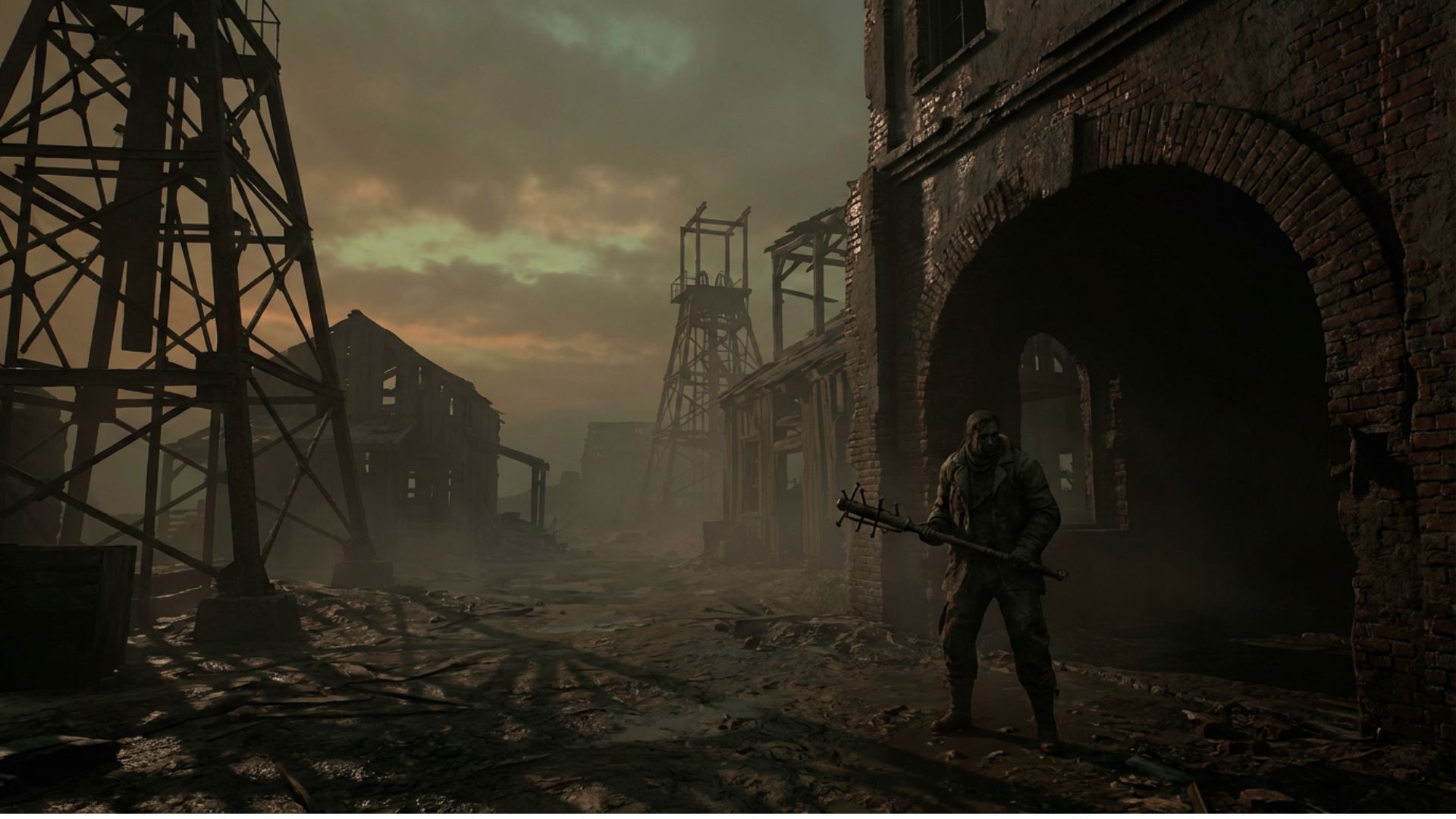
Fort Oasis was once the kind of place people built lives around. Hotel balconies overlooking the sea. Shopping malls where workers spent their paychecks. The infrastructure of community. Now it’s a prison of flesh and rust, its structures crumbling while something far worse spreads through its tunnels and into protagonist Tyler’s mind.
The narrative operates almost entirely through implication. Wall scrawlings hint at what went wrong. Environmental storytelling fills gaps that dialogue leaves open. And gradually, the metaphor becomes impossible to ignore: Tyler isn’t just fighting infected townspeople and grotesque creatures. He’s fighting cancer, his own or someone close to him, the game never makes that distinction entirely clear, and that ambiguity serves the emotional core better than exposition ever could.
As someone who has lost family to cancer, this reading hit with unexpected force. The exhausting, torturous carnage suddenly made sense not as gratuitous violence but as desperate resistance. The slaughter must not stop because stopping means surrender. It’s a bleak framework, but Total Chaos earns its darkness.
crafting weapons from desperation
The combat design reinforces this theme of making do with what’s available. Shotguns and pistols exist, but ammunition is scarce enough that relying on them feels reckless. Instead, the game pushes players toward its crafting system, where nails, hammer heads, lead pipes, wrenches, wooden handles, and scavenged debris combine into improvised weapons.
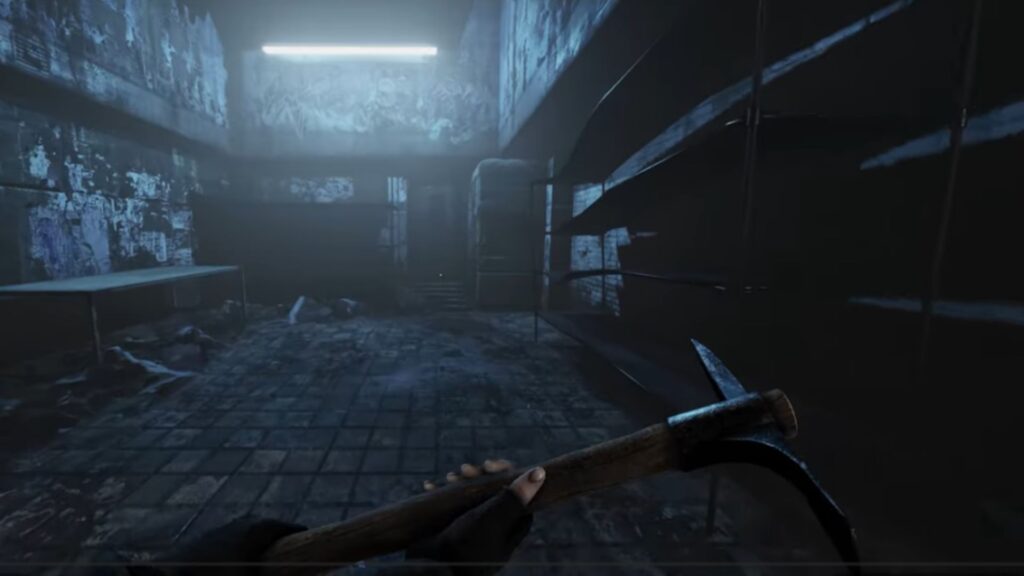
More than 30 recipes offer meaningful variety. Attach a pickaxe head to a wooden pole. Wrap rebar in rags. Combine chemicals into healing compounds or treatments for bleeding. The system creates a rhythm of scavenging and assembly that keeps exploration rewarding even when objectives become unclear.
This makeshift arsenal captures something essential about fighting impossible odds. You’re not a soldier with a loadout. You’re someone grabbing whatever might hurt the thing trying to kill you. The weapons feel desperate in the best way.
where the bones break
Total Chaos borrows heavily from survival horror conventions, and not all of those borrowings work. The save system requires finding vinyl record players scattered through environments, and they’re consistently positioned just far enough from dangerous sections to make death genuinely punishing. I lost hours of progress to instant-death sequences that felt designed to kill on the first attempt.
Some puzzles land as perfunctory, the obligatory key hunts and backtracking that the genre never quite escaped. Monster variety thins out as the game progresses, and certain enemy designs repeat often enough to lose their impact. Voice acting occasionally undercuts emotional moments with flat delivery.
| Strengths | Weaknesses |
|---|---|
| Inventive crafting system | Frustrating save point placement |
| Powerful metaphorical storytelling | Repetitive monster design |
| Atmospheric environmental design | Uneven voice acting |
| Satisfying improvised combat | Instant-death segments feel unfair |
These issues matter, but they don’t define the experience.
symptoms as storytelling
The status system elevates Total Chaos above its mechanical shortcomings. Managing health, bleed, hunger, energy, and stamina during quieter moments creates constant tension even when nothing actively threatens you. Tyler’s body is failing regardless of enemy presence, and the interface never lets you forget it.
A madness meter occasionally warps perception in ways that impose Tyler’s psychological state directly onto the player. It’s underused, appearing less frequently than the concept deserves, but when it activates, self-doubt and paranoia become tangible obstacles rather than abstract narrative concepts.
One sequence traps you in a haunted structure filled with bat-like creatures that can only be stopped by the flicker of your lighter’s flame. Moments like this demonstrate what Total Chaos achieves at its best: horror that emerges from vulnerability rather than jump scares.
the catharsis of destruction
Trigger Happy Interactive’s sophomore release is disgusting, bloody, and genuinely taxing in ways that many survival horror games only gesture toward. But beneath the gore lies real sympathy for what it depicts. The violence isn’t celebratory. It’s therapeutic in the ancient sense of the word, a purgation of something toxic through confrontation.
Total Chaos understands that sometimes the only response to something terrible is to fight it with whatever tools you can assemble, even when winning isn’t really possible. The crafting system, the oppressive atmosphere, the relentless enemy encounters all serve that central truth.
Poor voice acting and design repetition prevent this from reaching the heights of the genre’s best work. But the inventive combat and the emotional weight of its narrative cement Total Chaos as something that will linger long after the credits roll.
For a mod that started as a technical experiment, that’s a remarkable achievement. And it raises an interesting question about where the most affecting horror experiences now come from: is the indie and mod scene doing more interesting work with survival horror’s emotional potential than the studios that defined the genre?