



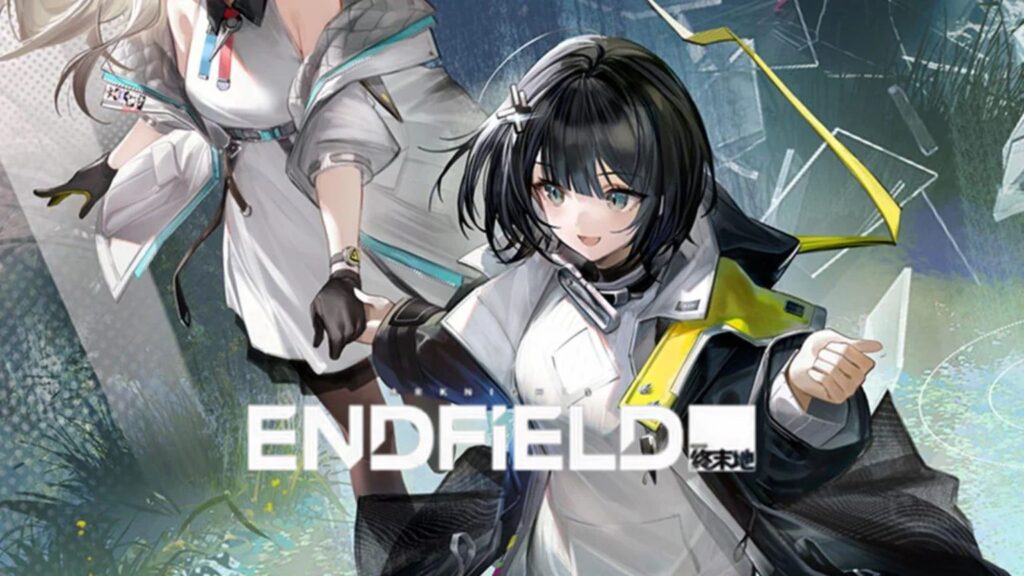
Four years is a long time to wait for anything in gaming. It is an eternity in gacha. When Hypergryph first teased Arknights: Endfield back in March 2022, the premise alone felt like a dare: take one of mobile gaming’s most respected tower defense franchises and rebuild it from the ground up as an open-world action RPG with factory automation baked into the DNA. Now that the game is finally here in 2026, after countless beta cycles and a hype train that never really slowed down, the question is not whether Endfield is good. It is whether “good” is enough in a genre this crowded.
The answer, after dozens of hours on the surface of Talos-II, is complicated. And that complexity is actually one of the most interesting things about it.
A World Worth Exploring, If You Can Survive the Tutorial
Endfield drops you into the boots of the Endministrator, a figure who wakes up after a decade of hibernation with no memory and a planet-sized to-do list. Talos-II is a collapsed cyberpunk frontier, thick with industrial decay, corrupted anomalies, and factional power struggles. The setup borrows from a well-worn sci-fi playbook, amnesiac protagonist, mysterious threats, a fractured civilization in need of a savior, but the execution of the world itself is what earns attention.
Visually, Endfield is a stunner. This is not hyperbole. Multiple reviewers and community voices have pointed to it as the best-looking gacha game currently available, and the claim holds up. The weather systems are remarkably detailed. Rain soaks fabric textures differently depending on the material. Metal stays dry. Sweaters look damp. Ray-traced shadows and reflections give environments a weight and atmosphere that most games in this space simply do not attempt. One content creator, Tennai, captured the sentiment well when he noted that the material-specific rain effects alone made him realize “how serious Endfield is about visual details.” It is one of those small touches that, once you notice, reframes how you see the whole production.
The problem is getting there. Endfield’s opening hours are front-loaded with exposition, forced tutorials, and dialogue sequences that could be trimmed by half without losing anything meaningful. The first region, Valley Pass, functions mostly as an extended onboarding experience. The writing during this stretch leans sterile, stuffed with jargon and repeated exposition that the voice cast, as talented as they are, cannot entirely rescue. Perlica’s unwavering loyalty feels one-note. The Endministrator’s lack of emotional response to a decade of lost memories is oddly flat. For a studio that already delivered a more compelling amnesiac story in the original Arknights, this feels like a missed opportunity.
Things do improve, meaningfully, once you reach the second region. Wuling City introduces bamboo-lined streets, a humid atmosphere heavy with mystery, and characters who actually feel like they have agendas. The villain Nefarith, a leather-clad matriarch with a voice that walks the line between elegant and menacing, is a genuine highlight. The tonal shift between regions is sharp enough that it almost feels like a different writing team took over. If Endfield’s early hours test your patience, the middle game rewards it.
Factory Building Is the Secret Weapon
Strip away the gacha mechanics, the combat loop, and the story, and what you are left with is a genuinely compelling automation game wearing a different skin. This is where Endfield makes its most distinctive play.
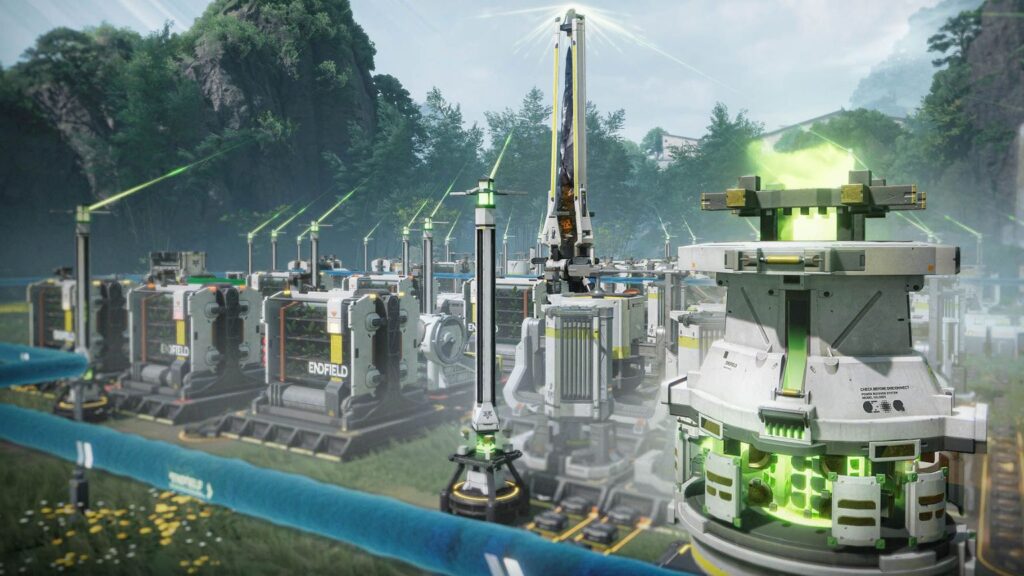
The factory system asks you to mine resources, refine them through increasingly complex production chains, manage power distribution across relay towers, and ultimately build self-sustaining industrial networks that feed into both your combat progression and the broader world. If you have spent any time with Factorio or Satisfactory, the fundamentals will feel familiar. The difference is in the scale. Endfield’s automation sits at roughly half the complexity of those dedicated sims, a deliberate choice that makes the system accessible without stripping away the satisfaction of watching a well-designed production line hum.
What makes it work within the gacha framework is how deeply the factory loop is woven into everything else. Gear is crafted from factory-produced materials. There is no RNG-based gear drop system here, a genuinely refreshing departure from genre norms. Your factories keep running while you are offline, which creates an ongoing incentive to log in, check production, adjust layouts, and push efficiency further. A stock market system lets you sell manufactured goods for profit, which feeds back into expansion and gear crafting. It is a virtuous cycle that, when it clicks, feels like the kind of thing that could hold attention for months.
There is one caveat worth flagging, and it is one the community has not discussed enough. Due to server-side processing limitations, only two regions can have their factories running while you are offline. As new regions are added, older factories may effectively go dormant unless you are actively playing. Hypergryph has not yet clarified how this will scale, and it has real implications for long-term engagement. If your Valley Pass factory becomes obsolete once a third or fourth region introduces better resources, the emotional investment of building it could feel wasted.
For now, though, the factory system is Endfield’s strongest card. It is the feature most likely to hook players who would otherwise never touch a gacha game, and it is the feature most likely to retain them once the novelty of everything else wears thin.
Combat That Shines on the Surface
The action RPG combat is competent and, in its best moments, genuinely satisfying. You control a party of four Operators simultaneously, switching between them to chain combos, trigger elemental reactions, and juggle enemies with coordinated team attacks. The visual payoff on connecting hits is excellent. Animations are fluid, character-specific fighting styles reflect their personalities, and the dodge-and-punish rhythm feels responsive without demanding excessive mechanical skill.
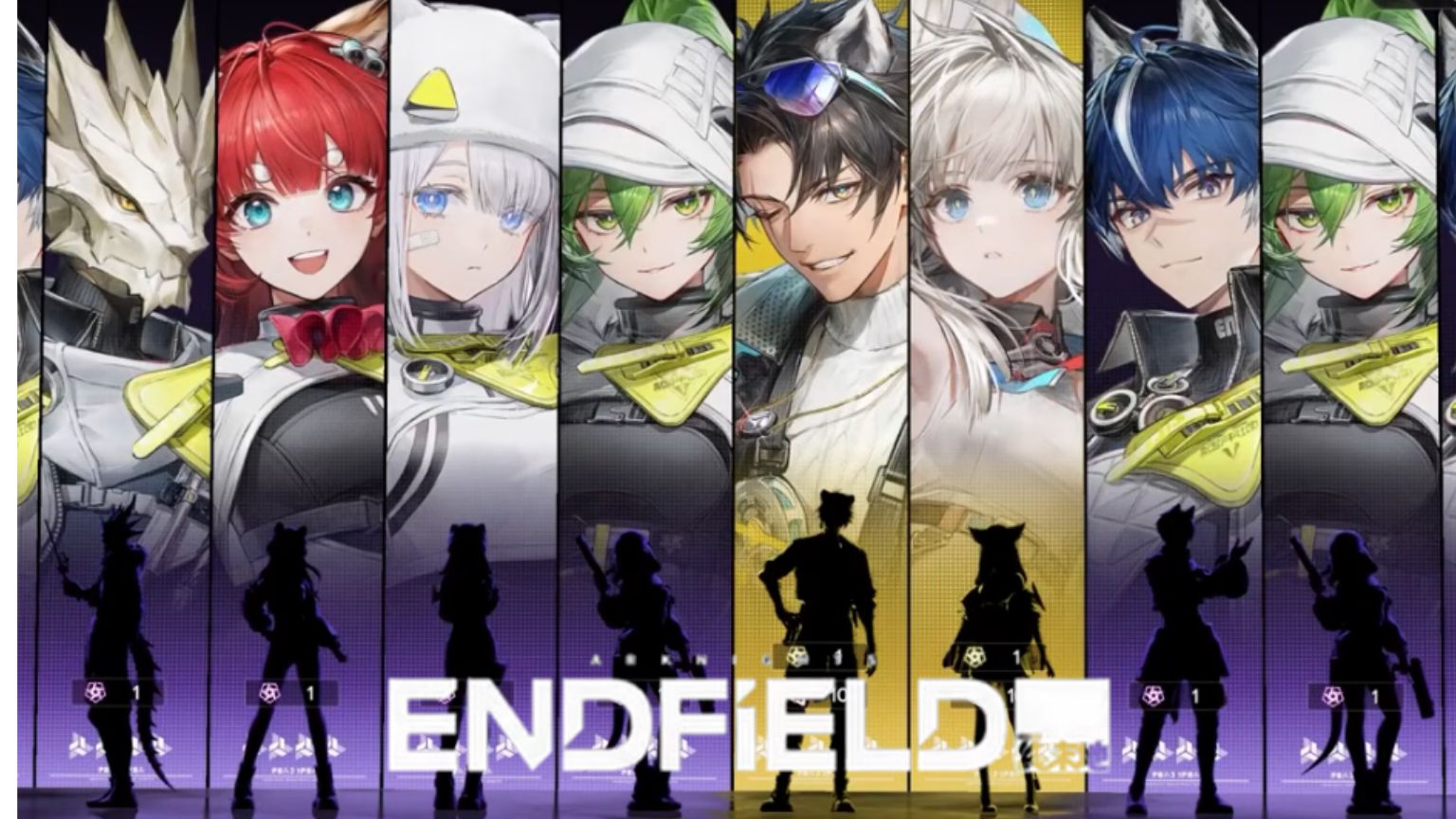
The roster design deserves particular praise. Snowshine, with her oversized buster sword and fuzzy bear shoes, is immediately endearing. Arclight moves like a cyberpunk Energizer bunny, all sparks and sharp angles. Hypergryph clearly invested heavily in making each Operator feel distinct, both aesthetically and kinetically. When you pull a character you wanted, there is a genuine thrill in learning their kit.
The issue is depth. Or rather, the lack of it over time. After the first 15 to 20 hours, combat rotations become largely automated. You figure out the optimal sequence, you execute it, and the variation between encounters narrows considerably. Multiple reviewers have noted this flattening effect. As one put it, the gameplay at level 20 is essentially the same as at level 60. The framework clearly has room to grow, and harder late-game content may eventually demand more tactical consideration. But in its current state, combat is the kind of thing you enjoy in the moment and forget about between sessions.
| Aspect | Strength | Weakness |
|---|---|---|
| Visuals and World Design | Best-in-class for gacha; stunning weather and material detail | Early regions feel angular and repetitive |
| Story and Writing | Improves significantly in region two; strong villain design | Slow, exposition-heavy opening; flat protagonist |
| Factory Building | Deep, rewarding automation loop; no RNG gear system | Offline processing limited to two regions; long-term scaling unclear |
| Combat | Fluid animations; satisfying team combos; great character design | Becomes repetitive; lacks strategic depth over time |
| Gacha and Monetization | Duplicate token system softens bad pulls; deterministic gear | Stingy rates; convoluted pity system; no carryover on spark |
The Gacha Elephant in the Room
Let’s talk about the monetization, because this is where Endfield stumbles most noticeably for a game of this profile.
The base six-star pull rate sits at 0.8%, with a soft pity kicking in at 65 pulls and a hard pity at 80. So far, standard fare. The wrinkle is in the limited banner structure. Losing the 50/50 does not guarantee the featured character on your next six-star pull. Instead, it dumps you into a combined pool that includes standard characters and future limited characters at equal probability. The true safety net is a spark system at 120 pulls, which does not carry over between banners.
At 500 crystals per pull, that is 60,000 crystals to guarantee a single copy of a rate-up character. The weapon banner adds another layer, requiring arsenal tickets earned through character pulls, with its own separate pity system that also does not carry over. It is, to put it plainly, a convoluted structure that asks for significant resource hoarding or spending.
Community sentiment has been vocal. Players who came in expecting something closer to the original Arknights’ relatively generous model, where new Operators periodically joined the standard pool and stat-based dupes were the norm, have found Endfield’s economy noticeably tighter. Beta feedback requesting pity carryover was apparently not implemented.
The saving grace is that Endfield’s deterministic gear system means you are never locked behind RNG for your equipment. And the game does hand out meaningful freebies early: a free six-star healer within three days of login, 40 guaranteed pulls through the New Horizon event, and additional pulls tied to authority level progression. It is enough to get you through the story without hitting a wall. But for players who want to collect and build specific teams across multiple patches, the math is unforgiving.
The Bigger Picture for Gacha in 2026
Endfield arrives at a moment when the open-world gacha space is more competitive than it has ever been. Zenless Zone Zero proved that style and combat depth can carry a game. Wuthering Waves demonstrated that ambitious world design attracts a dedicated audience even with rough edges. And the shadow of Genshin Impact still looms over everything.
What Endfield brings to the table that none of its competitors do is the factory automation layer. That alone makes it worth paying attention to, not just as a game, but as an experiment in genre blending. The question is whether Hypergryph can evolve the formula fast enough. The combat needs more depth. The story needs to maintain the quality jump it makes in region two. The offline factory limitations need a clear long-term solution. And the gacha economy needs to find a balance point that does not alienate the free-to-play audience it needs to sustain the game’s population.
The Arknights brand carries enormous weight in mobile gaming, and Endfield’s production values are undeniable. This is a game that will almost certainly stabilize near the top of revenue charts. But revenue and player satisfaction are not always the same thing, and the gap between a successful launch and a lasting one is measured in the updates that follow.
Endfield has built something genuinely interesting on Talos-II. The foundations are strong, the factory loop is addictive, and the world is beautiful enough to get lost in. Whether it becomes something truly special or settles into the comfortable middle of the gacha rotation depends entirely on what Hypergryph builds next. And in a genre where attention is the scarcest resource of all, how long can a factory sim keep the conveyor belts running before players start looking for the next assembly line?



MARCUS
February 8, 2026THE BEST WAY TO GET PELE ERESTED IN THIS GAME IS NOT REVIEW, BUT TO JUST SHOW EVERYONE THE ENDFIELD GIFTS. OR THAT STARSET (THE BAND) HAS COLLABORATED WITH THEM MULTIPLE TIMES.