




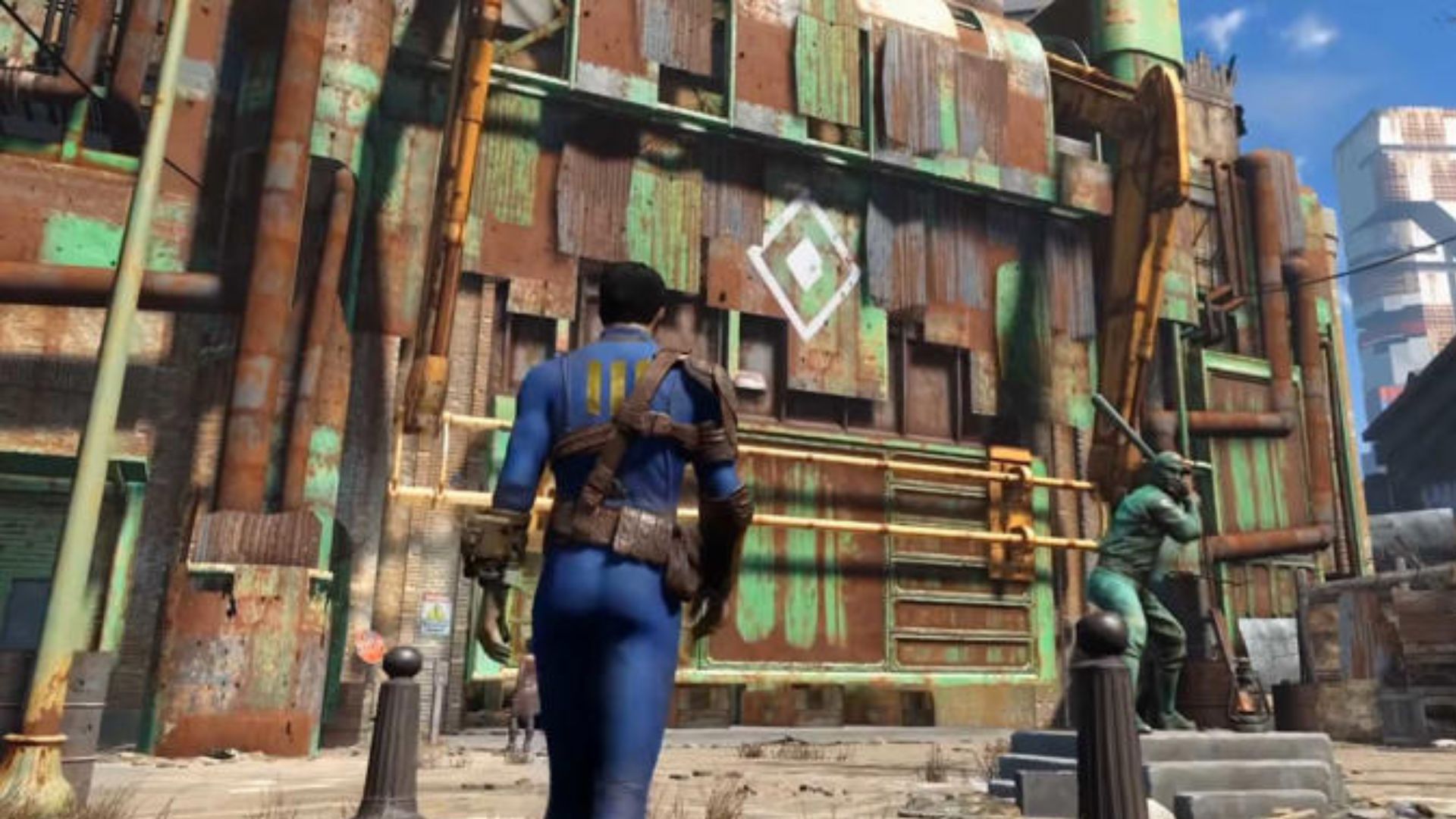
New York City was supposed to be the Fallout 4 wasteland. Bethesda’s team seriously considered it, built early concepts around it, and then walked away. The reason? Too many other games were set there at the time. A decade later, that excuse has expired, and the case for a New York-set Fallout 5 has never been stronger.
The Decision That Shelved New York
In an interview with PC Gamer, Fallout 4 lead designer Emil Pagliarulo explained the original vision plainly. “We wanted to do something grand and American: that’s New York for you,” he said. The team saw what every game designer sees when they think about the Big Apple: density, verticality, iconic landmarks, and a setting that practically writes its own stories.
But the timing wasn’t right. In the early 2010s, New York was saturated in gaming. The Crysis sequels were set there. Prototype had torn through Manhattan. The Division was on the way. Pagliarulo’s reasoning was pragmatic. “At that time, other games were being set in New York,” he told PC Gamer. “Maybe New York’s not the right call.”
So they pivoted to Boston. The Commonwealth was born. And Fallout 4 carved out a distinct identity partly because it wasn’t competing with three other games for the same skyline.
Fair enough. But that was 2015. The landscape in 2026 looks completely different.
Why the Timing Finally Works
The New York oversaturation problem doesn’t exist anymore. Not in the way it did a decade ago. The Division 2 moved to DC. Crysis is dormant. Spider-Man’s Manhattan is fantastic, but it’s a fundamentally different genre and tone. The open-world shooter space hasn’t had a major New York entry in years.
More importantly, the Fallout franchise is operating from a position of cultural dominance it has never held before. The Amazon Prime Video adaptation blew the doors open. Season two has reignited mainstream interest in the universe. The player base has expanded far beyond the core RPG audience. If there was ever a moment where Bethesda could confidently take on New York without worrying about competing for attention, it’s now.
And then there’s the question of what New York offers that previous Fallout settings didn’t.
What a Post-Nuclear New York Actually Gives Bethesda
Every Fallout game draws its identity from its setting. DC gave Fallout 3 monumental scale and political symbolism. Boston gave Fallout 4 colonial history and institutional decay. Las Vegas gave New Vegas its sleaze, glamour, and moral ambiguity. Each city’s real-world personality became the game’s personality.
New York has more of that raw material than any of them.
The faction potential alone is staggering. Fallout has always loved building twisted mirrors of American institutions. New York offers Wall Street, the United Nations, Ellis Island, Tammany Hall, the Five Families, organized labor, media empires, and the Port Authority. Any one of those could anchor a faction questline. Together, they create a political ecosystem dense enough to rival New Vegas.
The environmental design practically builds itself. A flooded or collapsed subway system becomes an underground world of feral ghouls and scavenger settlements. Central Park, overgrown and irradiated, becomes a wilderness zone in the middle of urban ruins. The Bronx Zoo becomes a mutant bestiary. Grand Central Terminal becomes a fortified city-state. Times Square, stripped of its screens and filled with scavengers trading in the glow of salvaged neon, could be one of the most visually striking locations in franchise history.
| Fallout Setting | Real-World City | Core Thematic Identity |
|---|---|---|
| Fallout 3 | Washington, DC | Government, monuments, institutional collapse |
| Fallout: New Vegas | Las Vegas | Gambling, moral compromise, frontier independence |
| Fallout 4 | Boston | Colonial history, technological ambition, rebuilding |
| Fallout 5 (potential) | New York City | Commerce, immigration, cultural density, power |
New York also solves a structural problem Bethesda has struggled with. Fallout 4’s map felt wide but flat. New York is inherently vertical. Skyscrapers, rooftops, subway tunnels, bridges, and underground infrastructure create natural layering that would push the Creation Engine (or whatever succeeds it) into territory the franchise hasn’t explored.
The Wait Is the Real Problem
None of this matters if Fallout 5 is another decade away. Bethesda hasn’t announced anything. The studio is presumably focused on post-launch support for Starfield and whatever comes next in The Elder Scrolls pipeline. Fallout 5 is, at best, a distant priority.
But the Amazon show has created a window. Public interest in Fallout is at a historical peak. The longer Bethesda waits, the more that interest cools. And the longer New York sits unused, the more likely another studio takes a swing at a post-apocalyptic Manhattan and claims the territory first.
Pagliarulo already said the quiet part out loud years ago. New York is the most “grand and American” setting Bethesda could choose. The competition that scared them off in 2015 is gone. The cultural momentum from the TV show is here. The creative possibilities are richer than anything Boston or DC offered.
The concept is sitting on the shelf, fully formed, waiting.
If not New York, what setting could possibly carry the weight of the next Fallout, and would anything else feel ambitious enough for a franchise that just became the biggest thing on streaming?
Done With Pay-to-Win?
This One’s Different.
Open-world tactical RPG. No gacha traps. Cross-save across PS5, PC and Mobile. Your squad, your rules.